
Fully homomorphic encryption in 2026: where it stands now
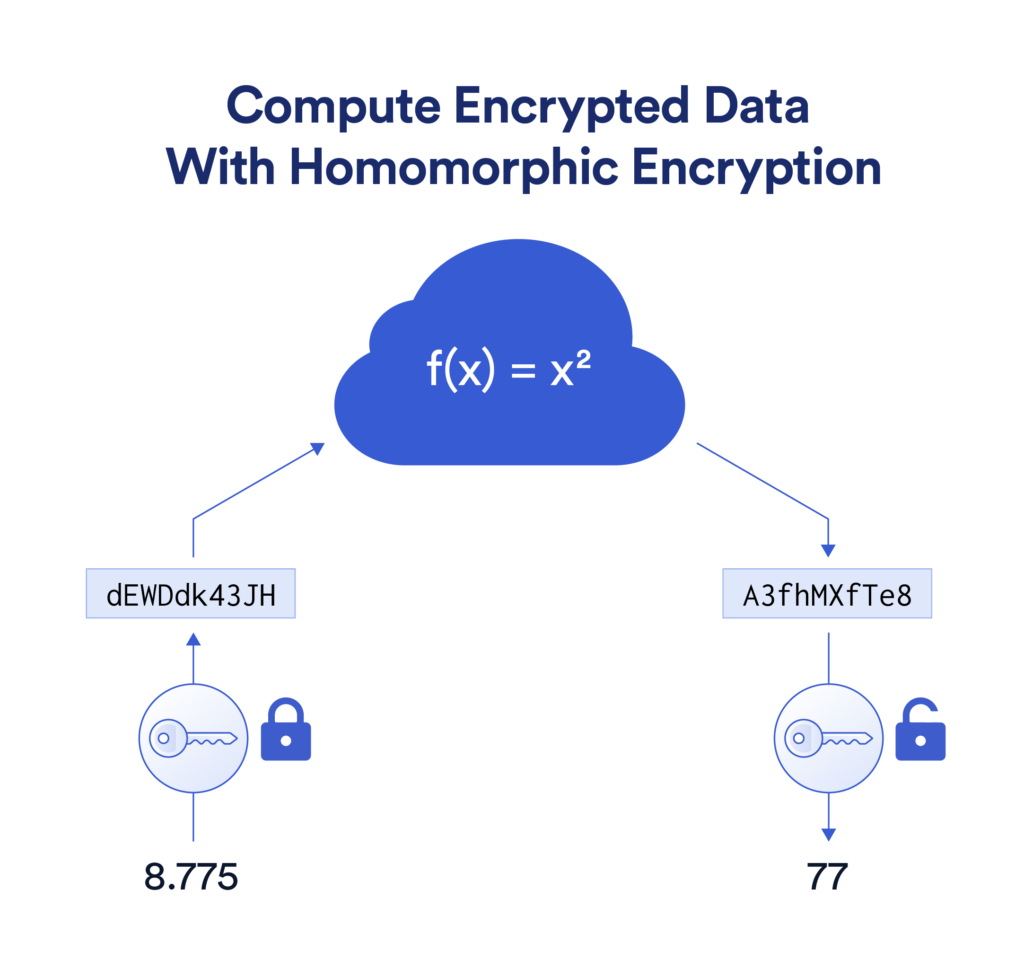
Fully homomorphic encryption (FHE) is moving from theoretical papers to early-stage prototypes in 2026. The technology allows computations on encrypted data without decrypting it first, preserving privacy during processing. However, it is not yet ready for broad consumer adoption due to significant performance constraints.
Current implementations require specialized hardware or substantial CPU overhead. Processing times are often minutes or hours for tasks that take milliseconds on plaintext data. This latency makes FHE impractical for real-time applications like live banking transactions or instant search queries. It remains best suited for batch processing, archival analysis, or high-value data exchanges where privacy outweighs speed.
The 2026 landscape is defined by tradeoffs between security and utility. While FHE offers stronger guarantees than traditional encryption-at-rest, the computational cost limits its scope. Developers must carefully evaluate whether the privacy benefit justifies the performance penalty for their specific use case. For most consumer-facing apps, lighter-weight solutions like secure multi-party computation or trusted execution environments may still be more practical today.
Fully homomorphic encryption 2026 choices that change the plan
FHE lets you compute on encrypted data without ever decrypting it. This offers strong theoretical guarantees for privacy, as noted in recent academic reviews of privacy-preserving analytics. However, the technology comes with significant practical costs. In 2026, the choice to use FHE is rarely about whether it works, but whether your infrastructure can afford the performance hit.
The tradeoffs fall into three main buckets: computational overhead, memory usage, and implementation complexity. Below is a comparison of how FHE stacks up against traditional encryption and plaintext processing.
| Factor | Plaintext | Traditional Enc. | FHE |
|---|---|---|---|
| Speed | Instant | Fast | 100x-1000x slower |
| Privacy | None | Low (key access) | High (no key needed) |
| Memory | Standard | Standard | High (ciphertext expansion) |
| Complexity | Low | Low | High (library support) |
Computational Overhead
FHE operations are orders of magnitude slower than standard arithmetic. A single multiplication can take milliseconds instead of nanoseconds. For high-frequency trading or real-time AI inference, this latency is often prohibitive. You must evaluate if your use case can tolerate batch processing or asynchronous computation.
Memory Expansion
Ciphertexts in FHE schemes are significantly larger than the underlying plaintext. This "ciphertext expansion" can range from 10x to 100x depending on the security level and polynomial modulus degree. Your database and memory infrastructure must be sized accordingly, which increases cloud hosting costs.
Implementation Maturity
While libraries like OpenFHE and Microsoft SEAL are mature, integrating them into existing pipelines requires specialized knowledge. Unlike traditional encryption, which is plug-and-play, FHE often requires rewriting core logic to use homomorphic primitives. This adds development time and potential for subtle bugs.
When to Choose FHE
Use FHE when regulatory or competitive constraints make data decryption impossible during processing. Examples include multi-party medical research or cross-bank fraud detection where no single party can see the raw data. If you can decrypt for processing, stick to traditional encryption or trusted execution environments (TEEs) for better performance.
Choose the next step
The FHE Playbook works best as a clear sequence: define the constraint, compare the realistic options, test the tradeoff, and choose the path with the fewest hidden costs. That order keeps the advice usable instead of decorative. After each step, pause long enough to check whether the recommendation still fits the reader's actual situation. If it depends on perfect timing, unusual access, or a best-case budget, include a simpler fallback.


Spotting Weak FHE Claims
FHE offers strong theoretical guarantees by allowing computations over encrypted data without decryption. However, current consumer applications often mislead users about performance and readiness. Before adopting these tools, distinguish between marketing hype and practical utility.
Red Flags to Watch
"Real-Time" Performance Claims Most FHE implementations still require significant computational overhead. Claims of instant, real-time processing for complex consumer workloads are rarely accurate outside of highly specialized, hardware-accelerated environments. If a vendor promises speed comparable to plaintext operations today, scrutinize their benchmarks closely.
"Zero-Knowledge" vs. "Homomorphic" Confusion Many products conflate zero-knowledge proofs (ZKPs) with FHE. ZKPs verify validity without revealing data; FHE allows computation on encrypted data. They serve different privacy needs. Ensure the tool actually performs homomorphic encryption if that is your specific requirement, rather than accepting a generic "privacy-first" label.
Incomplete Security Audits New FHE libraries may lack third-party security audits. Relying on unverified code for sensitive consumer data introduces unnecessary risk. Look for projects with transparent audit reports from reputable firms, not just internal testing results.
The Reality of Adoption
While the technology is advancing rapidly, as seen in upcoming industry discussions like the FHE.org 2026 conference, widespread consumer adoption is still years away. For now, prioritize solutions with clear, documented limitations over those promising universal privacy magic.
Fully homomorphic encryption 2026: what to check next
FHE has moved from theoretical cryptography to practical deployment in 2026. It allows servers to process encrypted data without ever decrypting it, solving the fundamental privacy-versus-utility dilemma that has long hindered secure AI and blockchain analytics. This section addresses the practical objections readers face when evaluating FHE for consumer privacy applications.
Helpful gear
Use these product recommendations as a starting point, then choose the size, material, and price point that fit how you actually use the gear.


As an Amazon Associate, we may earn from qualifying purchases.
No comments yet. Be the first to share your thoughts!