
What fully homomorphic encryption 2026 actually means
Fully homomorphic encryption (FHE) is finally moving from theoretical cryptography to practical infrastructure. In 2026, the technology enables organizations to run computations on encrypted data without ever decrypting it. This means sensitive information remains protected even while being processed by third-party cloud services or AI models.
The shift is driven by stricter data privacy regulations and the rise of confidential computing. Companies can now outsource heavy workloads—such as machine learning inference or complex analytics—to external servers without exposing raw customer data. The data stays encrypted during transit, storage, and processing, ensuring that only the authorized user with the decryption key can view the final result.
While the concept dates back to Craig Gentry’s 2009 proof, recent hardware optimizations and algorithmic improvements have made FHE viable for real-world applications. The 2026 landscape focuses on overcoming previous performance bottlenecks, making secure computation faster and more cost-effective for enterprise use cases.
Fully homomorphic encryption 2026 choices that change the plan
Choosing to deploy FHE in 2026 is a decision about computational cost versus data sovereignty. You are not just buying a library; you are accepting a performance tax to eliminate the need to trust third-party infrastructure with plaintext data. The tradeoffs are no longer theoretical—2026 implementations are production-ready, but they demand specific hardware and architectural adjustments.
Performance and Latency
FHE operations are significantly slower than plaintext computation, often ranging from 10,000 to 1,000,000 times slower depending on the ciphertext size. This latency makes real-time, high-frequency trading or interactive UI rendering impractical without heavy optimization. However, batch processing and asynchronous AI inference pipelines handle this cost well. If your workload involves heavy matrix multiplications, FHE is viable; if it requires instant response times, the latency will break the user experience.
Hardware Acceleration
Software-only FHE is rarely fast enough for commercial workloads. The industry has shifted toward hardware acceleration, primarily using FPGAs and specialized ASICs. These chips can reduce latency by orders of magnitude, making FHE competitive with encrypted data-at-rest but not yet with plaintext data-in-use. If your organization lacks access to GPU clusters or FPGA instances, the operational cost of FHE may outweigh the privacy benefits. Cloud providers now offer FHE-optimized instances, but these come at a premium.
Data Privacy vs. Complexity
FHE allows computation on encrypted data, meaning the cloud provider never sees the plaintext. This eliminates the "honey pot" risk of centralized data breaches. However, it introduces immense complexity in key management and circuit design. You must design algorithms that work within the constraints of the FHE scheme (e.g., limited multiplicative depth). This requires specialized engineering talent and shifts the security model from perimeter defense to cryptographic proof. If your team lacks FHE expertise, the implementation risk is high.
Cost and Scalability
The computational intensity of FHE drives up cloud costs. A single FHE operation can cost more than thousands of plaintext SQL queries. This makes FHE suitable for high-value, low-volume data (e.g., medical records, financial transactions) rather than high-volume, low-value data (e.g., web analytics). As hardware costs drop in 2026, the economic barrier is lowering, but it remains a significant factor for large-scale deployments.
Comparison: FHE vs. Trusted Execution Environments (TEEs)
| Feature | Fully Homomorphic Encryption (FHE) | Trusted Execution Environments (TEEs) |
|---|---|---|
| Data Visibility | Never decrypted during computation | Decrypted only within hardware enclave |
| Performance | Slow (10k-1Mx slower than plaintext) | Near-native speed |
| Hardware Dependency | FPGAs/ASICs for viable performance | Specific CPU support (Intel SGX, AMD SEV) |
| Trust Model | Mathematically secure (lattice-based) | Relies on hardware vendor security |
| Development Complexity | High (circuit design, key management) | Moderate (SDK integration, enclave coding) |
| Cost | High (compute-intensive) | Low (standard cloud instances) |
Decision Framework
Use FHE when the data is extremely sensitive, the workload is batch-oriented, and you cannot trust the infrastructure provider. Use TEEs or traditional encryption when performance is critical and the hardware vendor is a trusted partner. For most organizations in 2026, a hybrid approach—using TEEs for speed and FHE for high-value data—is the most practical path forward.
How to choose a fully homomorphic encryption strategy
Fully homomorphic encryption (FHE) is no longer theoretical. Since Craig Gentry’s 2009 breakthrough, the technology has moved from academic papers to production-ready libraries. Today, you can run AI inference, SQL queries, and analytics on encrypted data without ever exposing the plaintext. But FHE is not a drop-in replacement for standard encryption. It introduces significant computational overhead and requires careful architectural planning.
To decide if FHE fits your stack, follow this decision framework. It moves from basic feasibility to specific use-case tradeoffs, helping you weigh privacy gains against performance costs.
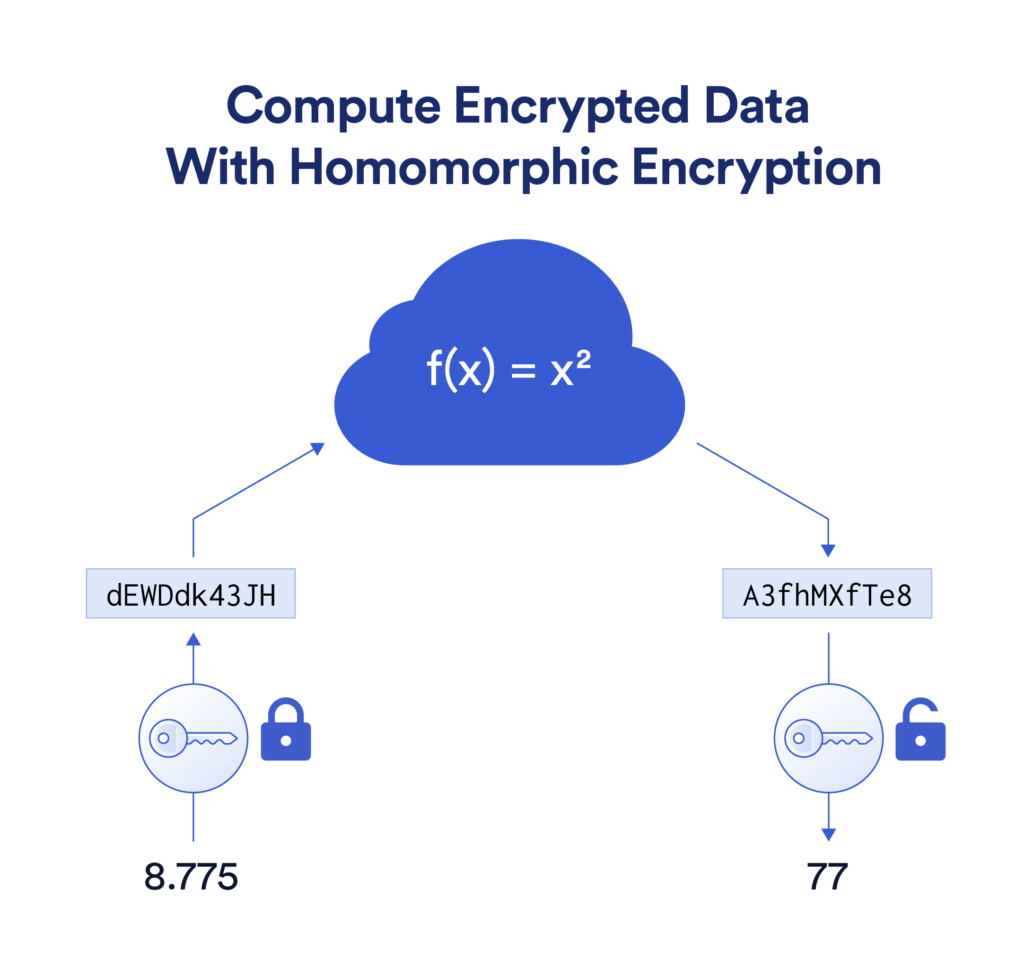
Start by defining what "encrypted processing" actually protects against. FHE shields data while it is being computed, not just at rest or in transit. If your primary risk is a compromised cloud provider or a malicious insider with root access, FHE is highly relevant. If your threat is standard network interception, standard TLS or end-to-end encryption (E2EE) is sufficient and far cheaper. FHE is only necessary when you need to outsource computation to untrusted infrastructure.

FHE performance varies drastically depending on the workload. AI inference (e.g., running a model to classify an image) is currently the most mature use case for FHE, with libraries like Microsoft SEAL and OpenFHE optimized for matrix operations. Database queries (SQL) are harder because they require complex branching logic, which is expensive in FHE. If your goal is secure AI inference, you are ready. If you need full SQL support on encrypted data, expect significant latency and higher infrastructure costs.
Encrypted computation is slower than plaintext. Depending on the operation, you might see a 10x to 1000x slowdown. For real-time applications, this may be unacceptable. However, for batch processing or background analytics, the delay is often negligible. Consider whether your users can tolerate a few seconds of latency for a privacy guarantee. If you need sub-millisecond responses, FHE is likely not the right tool yet. Look into hardware accelerators or specialized FHE-enabled cloud instances if performance is critical.

Don’t build from scratch. Use established libraries like Microsoft SEAL, OpenFHE, or TFHE-based frameworks. Check if your existing tech stack (Python, Go, Rust) has wrappers. Many teams start with a hybrid approach: keep sensitive keys on-premise, send encrypted data to the cloud, and process it there. This minimizes code changes while maximizing privacy. Ensure your development team understands the mathematical constraints of FHE, such as noise management and circuit depth limits.
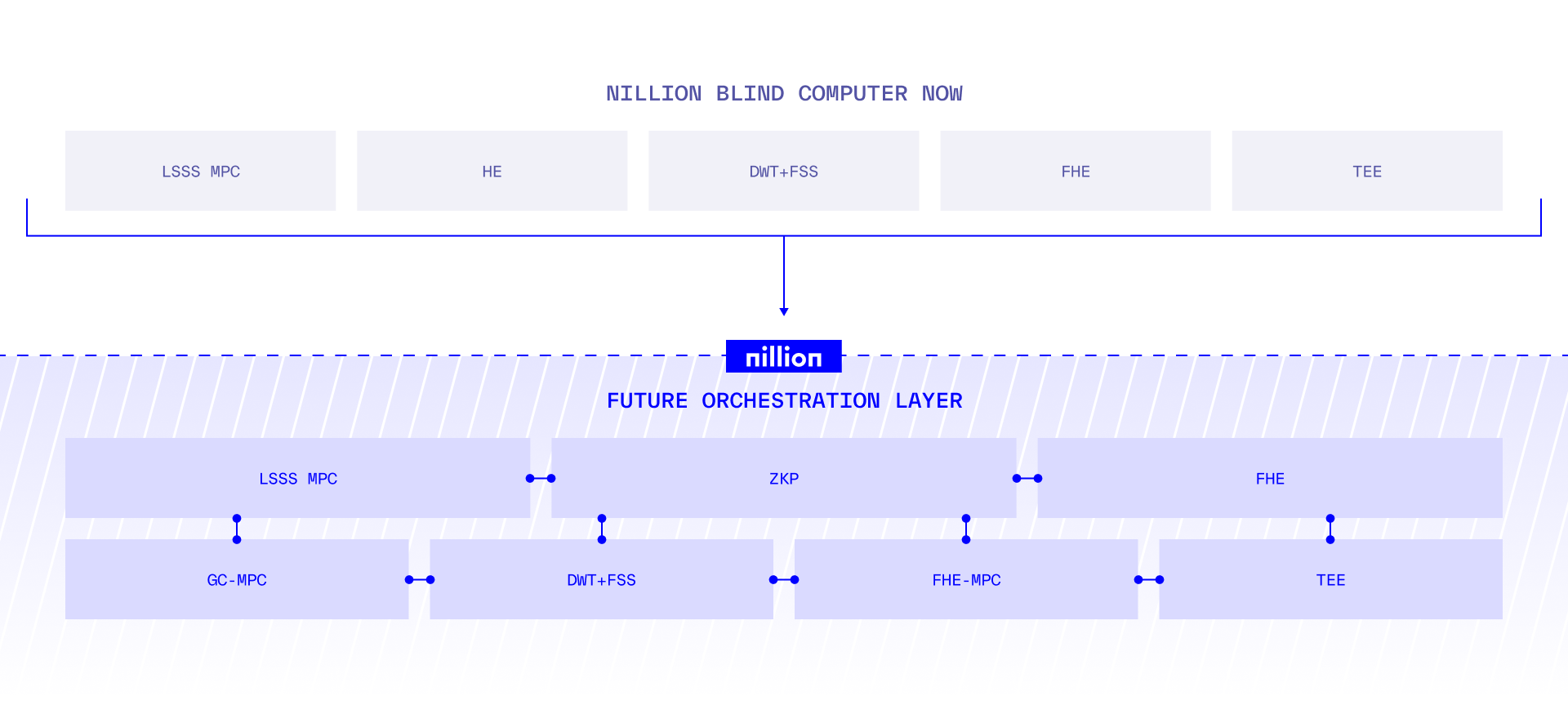
Before rolling out to production, test FHE on a low-stakes task. Run a simple encrypted search or a basic ML prediction. Measure the actual latency, memory usage, and cost. This pilot will reveal bottlenecks in your specific environment. Use these metrics to justify the investment to stakeholders. If the pilot shows that privacy gains outweigh the performance hit, you can confidently expand to more sensitive data pipelines.
Spotting weak options and misleading claims
Fully homomorphic encryption (FHE) is often sold as a silver bullet for privacy, but the reality is a set of steep tradeoffs that many vendors downplay. Before committing to an FHE-based architecture for 2026, you need to separate genuine utility from marketing hype. The technology is viable, but it is not a drop-in replacement for traditional encryption or plaintext processing.
The "End-to-End" Misconception
A common mistake is assuming FHE provides end-to-end encryption (E2EE). They are not the same. E2EE protects data in transit and at rest but requires decryption for processing. FHE allows computation on encrypted data, but it does not inherently secure the transmission layer or the final output unless explicitly designed to do so. Confusing the two leads to false confidence in security postures.
Performance Claims and Hidden Costs
Many proofs-of-concept claim "near-native" performance, which is misleading. While libraries like Microsoft SEAL or OpenFHE have improved, FHE operations remain orders of magnitude slower than plaintext. For AI inference, this means higher latency and cloud costs. If a vendor promises real-time FHE for large language models without disclosing the hardware acceleration requirements, treat their claims with skepticism.
The 2009 Context
Remember that Craig Gentry’s first plausible FHE scheme was published in 2009. It is not new technology, but it is maturing. The trend in 2026 is driven by the need for privacy-preserving AI and secure cloud computing, not because the math suddenly became practical. Use this history to gauge vendor maturity: look for those who have iterated on bootstrapping techniques and lattice-based cryptography for over a decade, not just those launching new wrappers.
Frequently asked questions about fully homomorphic encryption
Fully homomorphic encryption (FHE) solves the "data in use" problem. It allows servers to run computations on encrypted data without ever decrypting it, making it possible to process sensitive information on untrusted infrastructure like public cloud or untrusted AI models. While the math was proven in 2009 by Craig Gentry, 2026 marks a shift from theoretical research to practical, optimized libraries ready for enterprise deployment.
Is fully homomorphic encryption possible?
Yes. FHE is a mature cryptographic primitive. Modern implementations like Microsoft SEAL and OpenFHE allow for complex operations on ciphertext. In 2026, hardware acceleration (GPUs, FPGAs) and algorithmic optimizations have reduced latency enough for real-time applications in healthcare, finance, and privacy-preserving machine learning.
Why is fully homomorphic encryption trending?
The trend is driven by regulatory pressure and the AI boom. Privacy laws like GDPR and CCPA restrict data movement, while AI models require vast datasets to train. FHE allows organizations to collaborate on data without sharing the raw information, enabling secure multi-party computation and confidential AI inference without exposing proprietary or personal details.
Is homomorphic encryption end-to-end?
No. They solve different layers of security. End-to-end encryption (E2EE) protects data during transit and at rest. FHE protects data while it is being processed (in use). You can use both together: E2EE ensures the data arrives safely, and FHE ensures it remains encrypted while the server performs calculations on it.
How new is homomorphic encryption?
The concept is over 15 years old, but practical FHE is new. Craig Gentry’s 2009 paper was the first theoretical construction. For a decade, performance was too slow for real use. Recent breakthroughs in bootstrapping and lattice-based cryptography have made FHE viable for production workloads in 2026, transforming it from an academic curiosity into a deployable technology.
No comments yet. Be the first to share your thoughts!