
Select an FHE toolkit for your stack
Choosing the right software library is the first step toward deploying fully homomorphic encryption (FHE) in production. In 2026, the landscape is defined by a split between general-purpose libraries optimized for CPU execution and specialized accelerators designed for high-throughput data pipelines. Your selection should depend on whether your workload prioritizes low-latency queries or batch processing of large datasets.
Evaluate CPU-Optimized Libraries
For most enterprise applications, starting with a mature CPU-optimized library is the safest path. These libraries support major programming languages and offer stable APIs for standard cryptographic operations. They are well-suited for applications where data volumes are moderate and latency requirements are flexible.
- OpenFHE: An open-source library providing a comprehensive suite of FHE schemes. It supports C++, Python, and Java, making it accessible for diverse engineering teams. Its modular design allows developers to swap underlying cryptographic schemes without rewriting core application logic.
- Microsoft SEAL: A widely adopted C++ library that also offers Python bindings. Known for its performance optimizations on Intel hardware, SEAL is often the default choice for financial institutions and healthcare providers building private search or analytics engines.
Consider Hardware Acceleration
As data volumes grow, CPU-only execution can become a bottleneck. Hardware accelerators, such as FPGAs and GPUs, are increasingly necessary for large-scale FHE workloads. Recent research, including IBM's FHEIns framework, demonstrates how in-storage processing can drastically reduce latency by moving computation closer to the data source.
- GPU Acceleration: Libraries like NVIDIA's cuFHE enable parallelized FHE operations on graphics processors. This approach is ideal for batch processing tasks, such as training encrypted machine learning models or analyzing large encrypted datasets.
- FPGA Solutions: Field-programmable gate arrays offer a balance between flexibility and performance. They are particularly effective for fixed-function FHE operations, such as encrypted database queries, where predictable latency is critical.
Compare Toolkits Side-by-Side
The table below compares key FHE libraries and accelerators based on language support, primary use case, and licensing. Use this to narrow down options before diving into documentation.
| Toolkit | Language Support | Best Use Case | License |
|---|---|---|---|
| OpenFHE | C++, Python, Java | General-purpose FHE applications | Apache 2.0 |
| Microsoft SEAL | C++, Python | Low-latency enterprise queries | MIT |
| NVIDIA cuFHE | C++, Python | GPU-accelerated batch processing | NVIDIA EULA |
| IBM FHEIns | C++ | In-storage data acceleration | Apache 2.0 |
Encrypt data before cloud ingestion
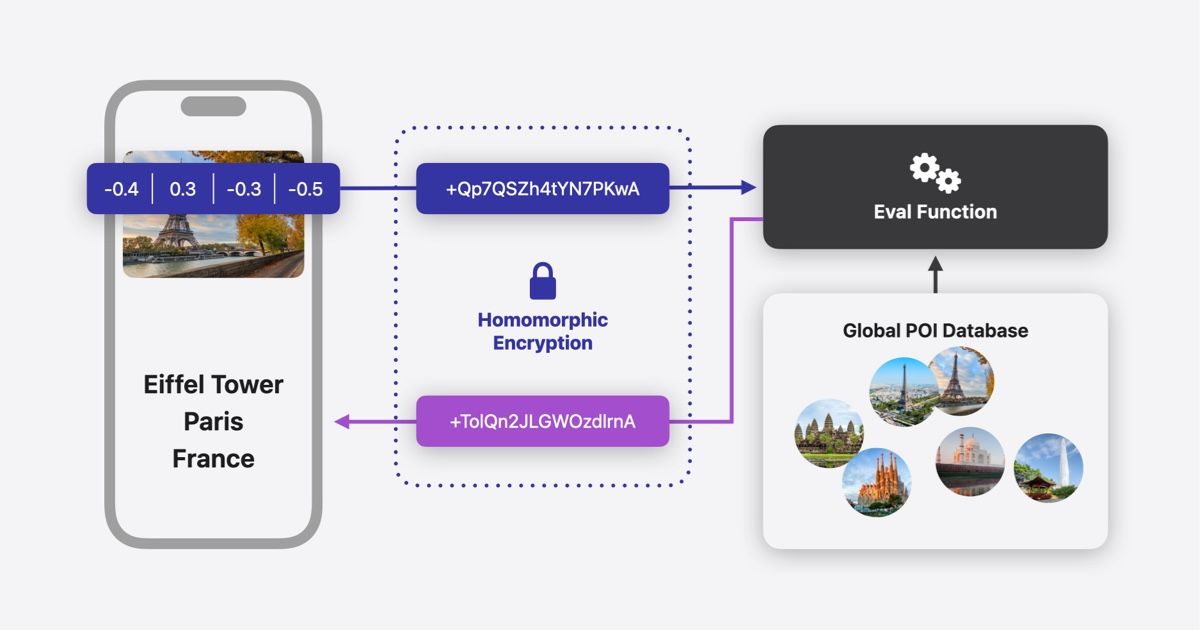
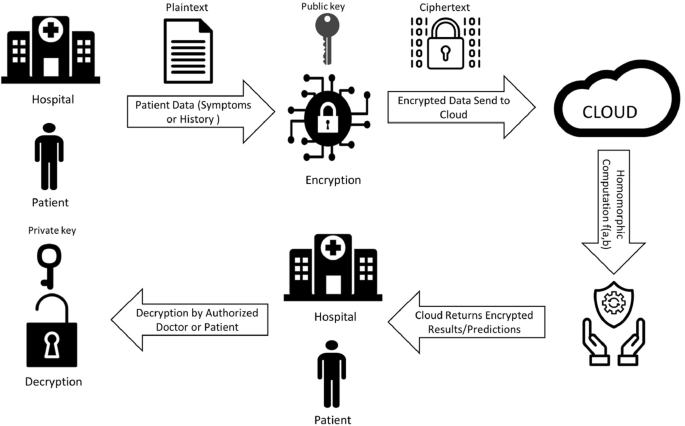
Securing data before it leaves your environment is the foundational step for any fully homomorphic encryption (FHE) workflow. By encrypting locally, you ensure that the cloud provider never sees plaintext, even during the computation phase. This client-side approach shifts the trust boundary entirely to your infrastructure.
1. Select a supported FHE library
Choose an FHE library that aligns with your computational needs and programming language. Popular options include Microsoft SEAL, OpenFHE, or TFHE frameworks. Ensure the library is actively maintained and supports the specific homomorphic operations (addition, multiplication) your analytics require. Compatibility with your target cloud environment is critical for seamless integration.
2. Generate and store encryption keys
Create a key pair consisting of a public key for encryption and a secret key for decryption. Generate these keys locally using a cryptographically secure random number generator. Store the secret key in a secure hardware security module (HSM) or a dedicated key management service. Never transmit the secret key to the cloud; it remains solely in your control.
3. Encrypt data locally
Use the public key to encrypt your raw data on your client machine. This process transforms plaintext into ciphertext. Ensure you handle data batching efficiently, as FHE operations are computationally expensive. Encrypting data in small, manageable chunks can help manage memory usage and processing time before transmission.
4. Transmit ciphertext to the cloud
Send the encrypted data to your cloud environment. Because the data is already encrypted, it is safe to transmit over public networks. The cloud provider receives only ciphertext and cannot decrypt it without the secret key. This step ensures data confidentiality during transit and at rest in the compute environment.
5. Verify encryption integrity
Before initiating computation, verify that the encrypted data has been transmitted correctly. Perform a lightweight integrity check on the ciphertext. This step prevents errors during the heavy computational phase, which can be costly in terms of time and resources if data corruption occurs mid-process.
Optimize computation for latency
FHE performance is no longer just a research curiosity; it is a deployment bottleneck. In 2026, latency is primarily dictated by the number of multiplicative operations your ciphertexts must endure. To keep your applications responsive, you must shift from raw computation to structural optimization.
1. Maximize SIMD batching
Single Instruction, Multiple Data (SIMD) is your most effective lever for throughput. Instead of processing one data point per ciphertext, batch multiple values into a single slot. This parallelism allows you to amortize the heavy cost of bootstrapping and key switching across dozens of operations at once. If your workload involves matrix multiplications or large-scale data filtering, batching should be your first optimization step.
2. Switch to hardware acceleration
Software-only FHE implementations are hitting diminishing returns. For production workloads, move to hardware acceleration. Recent approaches, such as the FHEIns architecture proposed at DATE 2026, demonstrate how in-storage processing can drastically reduce latency by moving computation closer to the data. Whether you use specialized FPGAs or GPU-based accelerators, hardware offloading is now the standard for enterprise-grade FHE. Duality Tech notes that these accelerators are what separate theoretical benchmarks from actual enterprise viability.
3. Prune the circuit depth
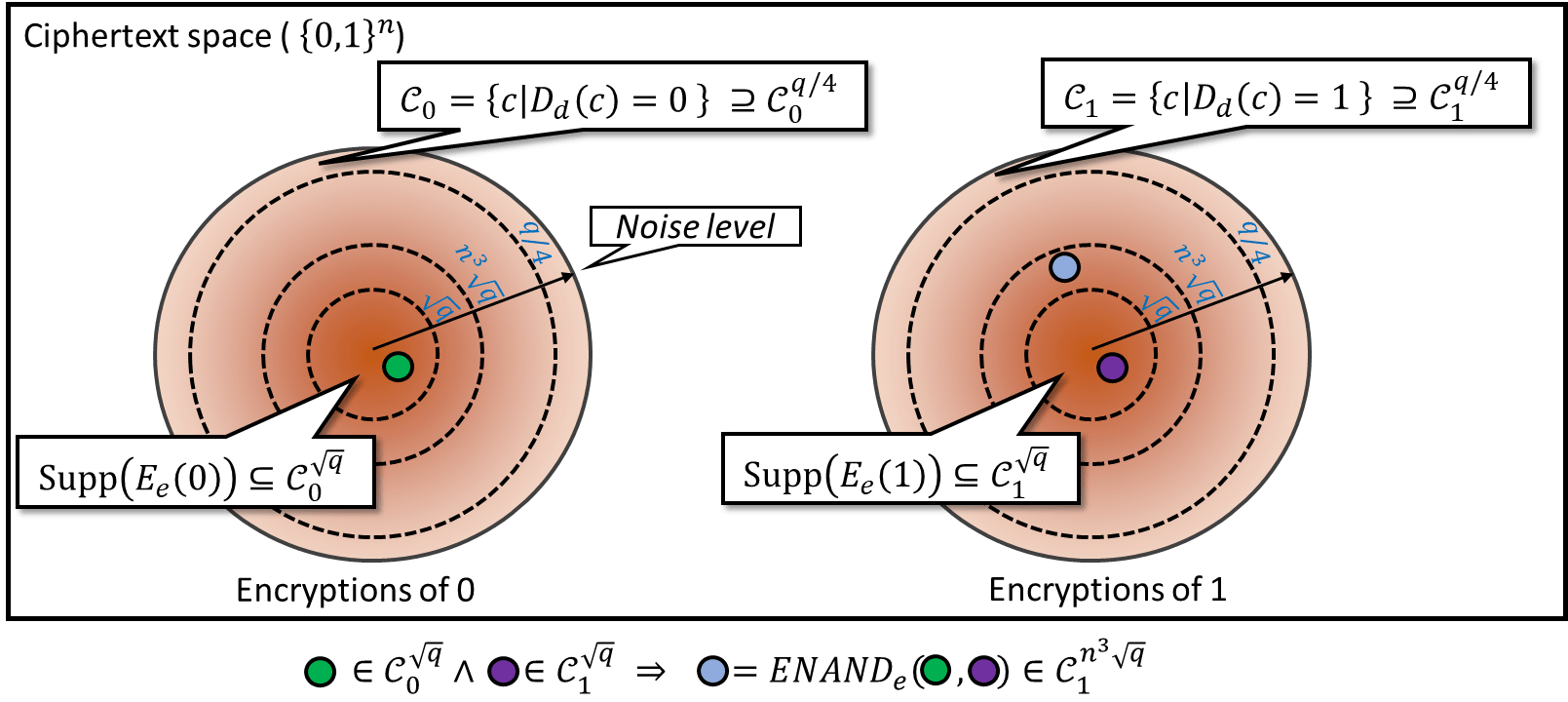
Every multiplication increases the noise budget, requiring costly bootstrapping to reset. Audit your algorithm to minimize multiplicative depth. If a linear operation suffices, do not use a multiplicative one. Use homomorphic addition where possible, as it is computationally cheap and does not consume the noise budget in the same way. A shallower circuit means fewer bottlenecks and faster final decryption.
Validate results with decryption keys
Once the encrypted computation completes, the final step is to decrypt the ciphertext and verify the output. This phase ensures that the FHE operations were executed correctly and that the resulting data matches the intended logic. Without this verification, you cannot trust the integrity of the analytics or insights derived from the encrypted dataset.
1. Retrieve the authorized private key
Access the decryption key using your secure key management system. In production environments, this key is typically stored in a hardware security module (HSM) or a trusted execution environment (TEE) to prevent unauthorized access. Ensure that the key retrieval follows your organization’s strict access control policies.
2. Decrypt the result ciphertext
Apply the private key to the final ciphertext generated by the FHE computation. Modern libraries like OpenFHE or Microsoft SEAL handle the mathematical reversal of the encryption scheme. This process transforms the noisy ciphertext back into the plaintext result, provided the noise budget was managed correctly during the computation phase.
3. Verify computation integrity
Compare the decrypted output against expected values or checksums if available. For complex queries, you might use a small subset of unencrypted data to validate the logic of the FHE operations. This spot-checking helps confirm that no errors occurred during the heavy lifting of homomorphic evaluation.
4. Deliver results to authorized users
Once verified, deliver the plaintext results to the requesting application or user. Ensure the transmission channel is encrypted (e.g., TLS) to maintain data confidentiality in transit. Log the decryption event for audit purposes, recording who accessed the key and when, without logging the sensitive data itself.
5. Securely discard intermediate data
After decryption, securely erase any intermediate ciphertexts or temporary keys used during the process. This prevents residual data from being recovered through memory dumps or disk forensics. Use secure deletion tools that overwrite memory blocks to meet compliance standards.
6. Audit the decryption event
Generate an audit trail that confirms the successful decryption and delivery of results. This record should include the timestamp, user ID, and the specific computation job ID. Regular audits help identify potential security breaches or performance bottlenecks in the FHE pipeline.
Access the decryption key from your HSM or TEE. Verify permissions before proceeding.
Apply the private key to the final ciphertext using your FHE library to recover the plaintext.
Compare the result against expected outputs or checksums to ensure computational accuracy.
Send the result to the user via a secure channel and log the event for compliance.
Audit FHE compliance and standards
Before moving fully homomorphic encryption (FHE) into production, verify that your implementation aligns with emerging industry standards and regulatory expectations for privacy-preserving computation. Unlike traditional encryption, FHE introduces unique operational complexities that standard security audits often miss. You need a specialized review process to ensure the cryptographic primitives are implemented correctly and that data handling protocols meet legal requirements.
Start by validating the cryptographic libraries against the guidelines developed by the Homomorphic Encryption Standardization community. This group, active through workshops like WAHC 2026, is working toward formalizing best practices for encrypted computing. Ensure your codebase uses libraries that have undergone independent peer review and are actively maintained within this ecosystem. Relying on custom or outdated implementations introduces significant risk.
Next, map your data flow against relevant privacy regulations such as GDPR or HIPAA, depending on your jurisdiction. FHE allows for computation on encrypted data, which can simplify compliance by keeping raw data protected at rest and in use. However, you must document how keys are managed and how the plaintext results are handled after decryption. Create a clear audit trail for every data access event.
Finally, perform a comprehensive risk assessment focused on the FHE-specific attack surface. This includes testing for side-channel vulnerabilities, verifying parameter selection for your chosen scheme, and ensuring that the performance overhead does not lead to operational shortcuts that compromise security. Use the checklist below to track your progress through these critical compliance steps.
-
Validate cryptographic libraries against active standardization community guidelines
-
Map data flows to specific privacy regulations (GDPR, HIPAA, etc.)
-
Document key management and plaintext handling procedures
-
Test for side-channel vulnerabilities and parameter correctness
Common questions about FHE deployment
Is fully homomorphic encryption fast enough for production use?
FHE performance has improved significantly, but it remains computationally intensive compared to plaintext processing. According to recent research on efficient privacy-preserving analytics, the high computational cost is the primary barrier to widespread adoption [1]. In 2026, hardware acceleration and optimized libraries are making FHE viable for specific high-value workloads, such as secure AI inference and financial compliance, rather than general-purpose data processing.
Which FHE libraries should I evaluate for my stack?
The ecosystem is consolidating around a few major open-source projects. Developers typically choose between Microsoft SEAL, OpenFHE, and HElib depending on their language requirements and performance needs. The FHE.org community maintains a directory of active projects and conferences, which serves as the best starting point for evaluating the current state of the art [2]. Look for libraries that support your specific cryptographic primitives, such as BFV or CKKS schemes.
How does FHE compare to other privacy-preserving techniques?
Unlike secure multi-party computation (MPC) or trusted execution environments (TEEs), FHE allows computation on data without ever decrypting it or relying on hardware trust boundaries. This makes it uniquely suited for scenarios where data sovereignty is critical, such as cross-institutional healthcare analytics. However, this security comes at the cost of significant latency and memory overhead [3].
What is the current standardization status of FHE?
Standardization efforts are actively progressing within academic and industry groups. The Workshop on Encrypted Computing & Applied Homomorphic Cryptography (WAHC) was formally accepted as an official workshop for ACM CCS 2026, signaling growing institutional interest in defining best practices and interoperability standards [4]. While no single global standard exists yet, these initiatives are laying the groundwork for enterprise-grade adoption.
No comments yet. Be the first to share your thoughts!