
Why fully homomorphic encryption matters for agents
Integrating AI Agents with fully homomorphic encryption (FHE) works best as a clear sequence: define the constraint, compare the realistic options, test the tradeoff, and choose the path with the fewest hidden costs. That order keeps the advice usable instead of decorative. After each step, pause long enough to check whether the recommendation still fits the reader's actual situation. If it depends on perfect timing, unusual access, or a best-case budget, include a simpler fallback.
Setting up the FHE toolkit for AI workflows
Integrating FHE into an AI agent pipeline requires more than just installing a library. You must configure the cryptographic parameters and manage the key lifecycle to ensure the agent can perform computations without exposing sensitive data. This section outlines the essential steps to establish a functional FHE environment.
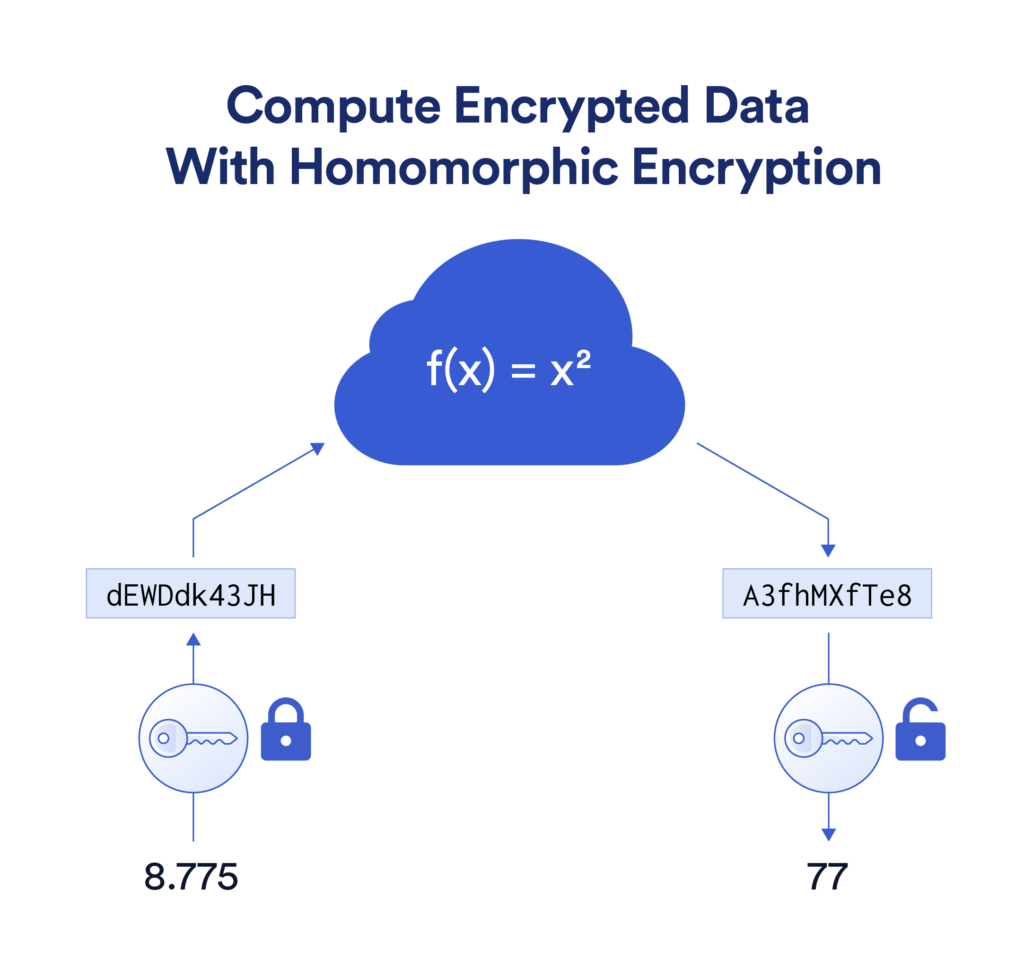
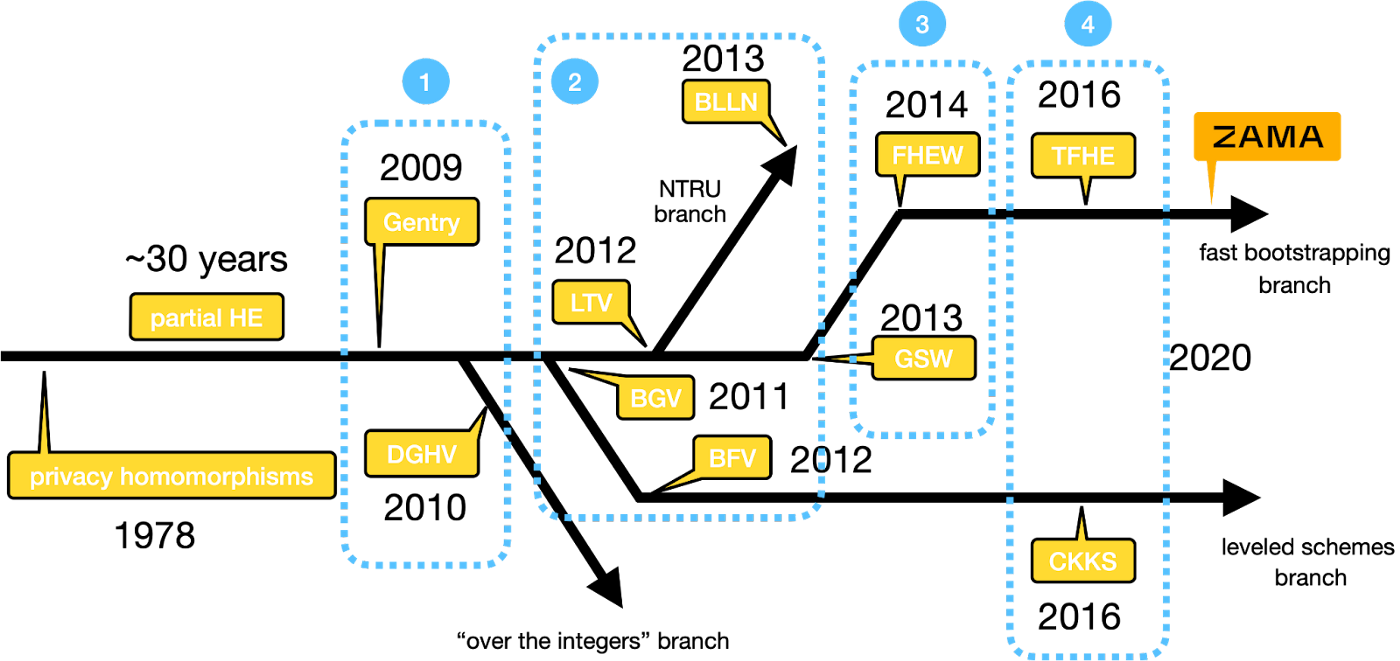
The first decision is choosing a library that supports both the desired encryption scheme and your AI framework. Libraries like TFHE (Torus Fully Homomorphic Encryption) are optimized for low-latency operations, making them suitable for real-time AI inference. Others, such as those based on the BFV scheme, may offer higher precision for numerical computations. Ensure the library has native bindings for Python or Rust, as these are the primary languages for AI agent development. Official documentation from providers like Zama offers detailed comparisons of these schemes to help you select the right tool for your specific latency and precision requirements.

Once the library is installed, you must define the cryptographic parameters that dictate security and performance. These parameters include polynomial degree, coefficient modulus, and noise budget. A higher polynomial degree increases security but significantly slows down computation. For AI workflows, balancing these parameters is critical; too low a budget will cause noise to overflow during complex neural network operations, while too high a budget will make the system unusably slow. Start with the library’s recommended defaults for your target hardware and adjust based on benchmark results.
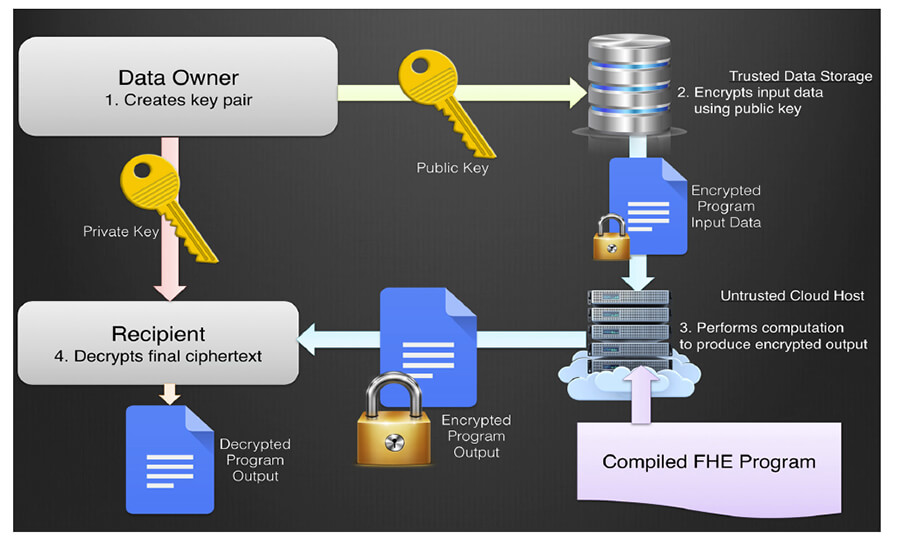
FHE relies on a key pair: a public key for encryption and a secret key for decryption. Your AI agent must securely store the secret key to decrypt results after computation. Use a hardware security module (HSM) or a secure enclave if available to protect the key from unauthorized access. The public key can be distributed to data sources, but it must be verified to prevent injection attacks. Establish a rotation policy for these keys to limit the impact of potential breaches, ensuring that old keys are securely destroyed after their lifecycle ends.
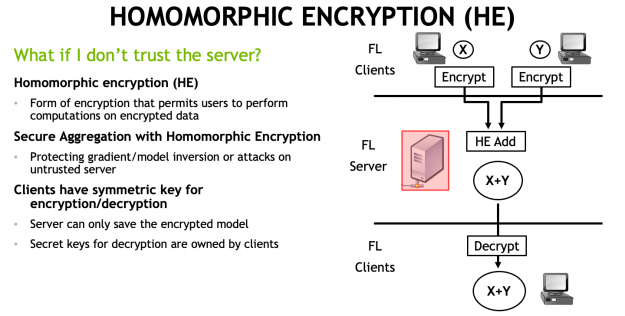
Before deploying the agent into production, run a validation test using known plaintext-ciphertext pairs. Encrypt a simple dataset, perform a basic operation (such as addition or multiplication) on the encrypted data, and decrypt the result. Compare the decrypted output with the expected plaintext result. This step confirms that your parameter configuration and key management are functioning correctly. If the output deviates, check your noise budget and parameter settings for errors.
Running encrypted inference on sensitive data
The core promise of fully homomorphic encryption is that an AI agent can process data without ever seeing the plaintext. This allows sensitive information to remain encrypted while the model performs necessary computations. The result is an encrypted output that only the data owner can decrypt, ensuring privacy throughout the inference pipeline.
Matrix multiplication on ciphertext
Neural networks rely heavily on matrix multiplication to transform inputs into outputs. In an FHE system, the AI agent performs these same linear algebra operations directly on the encrypted vectors. The mathematics ensures that the encrypted result, when decrypted, matches the result of multiplying the original plaintext matrices.
This process is not instantaneous. FHE operations are significantly more computationally expensive than standard arithmetic. Each multiplication introduces "noise" into the ciphertext. If this noise grows too large, it corrupts the data. To manage this, the system must carefully plan the computation depth or use techniques like bootstrapping to refresh the ciphertext without decryption.
Non-linear activations and complexity
Beyond linear layers, neural networks use non-linear activation functions like ReLU or sigmoid to introduce decision boundaries. Performing these operations on encrypted data is far more complex than matrix multiplication. It often requires approximating non-linear functions with polynomials or using specialized protocols that can handle comparisons and thresholds safely.
The AI agent executes these steps sequentially. Each layer adds more computational overhead and noise. The system must balance model accuracy with the practical limits of FHE performance. As the inference progresses, the encrypted output remains secure, preserving the integrity of the sensitive data until the final decryption step.
Common integration pitfalls and fixes
Deploying AI agents with fully homomorphic encryption introduces three immediate hurdles: computational overhead, noise growth, and precision loss. These constraints turn theoretical security into engineering trade-offs that can stall production pipelines if unmanaged.
Noise growth and precision loss
FHE operations add "noise" to ciphertexts with each computation. If the noise exceeds a threshold, decryption fails. This is particularly acute for neural networks, where thousands of multiplications are required.
To mitigate this, use bootstrapping to refresh ciphertexts before noise becomes critical. For inference tasks, consider approximate arithmetic or lower-precision data types (e.g., Q15 instead of Q31) to reduce the noise budget consumption per operation.
Computational cost
FHE is orders of magnitude slower than plaintext. A single matrix multiplication that takes milliseconds in plaintext can take seconds or minutes in FHE. This latency makes real-time agent responses challenging.
Mitigate by offloading non-sensitive computation to plaintext environments and using FHE only for the most sensitive data segments. Batch operations where possible to amortize the high fixed cost of ciphertext initialization.
Performance comparison
The following table illustrates the typical overhead when comparing standard AI inference against FHE-protected inference for a basic linear regression task.
| Metric | Plaintext | FHE (BFV) |
|---|---|---|
| Latency (ms) | 12 | 4,500 |
| Memory (MB) | 64 | 2,048 |
| Accuracy | 1.00 | 0.99 |
Verifying results and securing the pipeline
Validating fully homomorphic encryption requires proving computational integrity without decrypting the underlying data. Zama’s framework enables this trustless verification, allowing stakeholders to confirm that an AI agent processed encrypted inputs correctly while maintaining strict confidentiality [[src-serp-5]].
To secure the pipeline, you must monitor three critical vectors: the noise budget, decryption consistency, and key rotation policies. Each step ensures the encrypted computation remains within safe parameters and that the final output is mathematically sound.
-
Verify the noise budget has not exceeded the threshold during computation
-
Validate decryption consistency against a known plaintext sample
-
Audit key rotation policies to ensure no stale keys are in use
No comments yet. Be the first to share your thoughts!