
Choose the right FHE toolkit
Selecting a Fully Homomorphic Encryption (FHE) library requires matching the tool’s mathematical structure to your SaaS workload. In 2026, the landscape is dominated by three primary options: OpenFHE, TFHE, and Microsoft SEAL. Each offers distinct trade-offs between latency, ciphertext expansion, and supported operations.
OpenFHE serves as a unified frontend for several backend libraries, offering broad compatibility with standard cryptographic primitives. Microsoft SEAL remains the standard for polynomial arithmetic, particularly in scenarios requiring heavy linear algebra. TFHE (and its modern derivative, FHEw) specializes in low-latency bootstrapping, making it ideal for complex logic gates and conditional branching over encrypted data.
| Toolkit | Latency Profile | Ciphertext Expansion | Best For |
|---|---|---|---|
| OpenFHE | Moderate | High | General purpose primitives |
| TFHE | Low (logic gates) | Very High | Boolean circuits & branching |
| Microsoft SEAL | High (heavy math) | Moderate | Linear algebra & dot products |
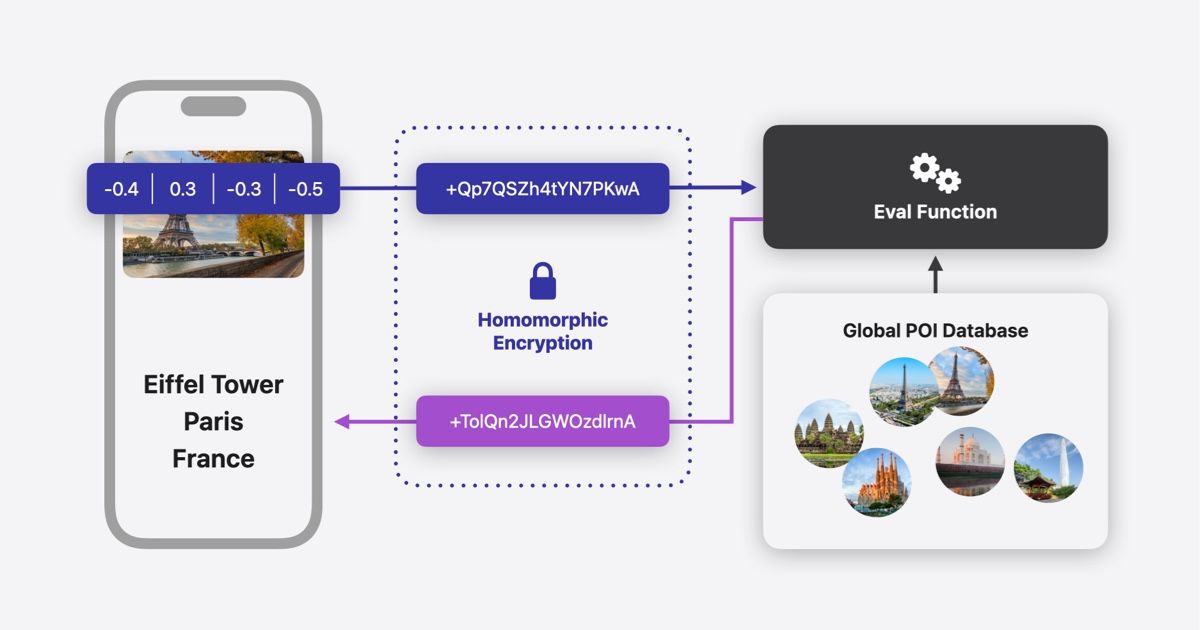
Your choice should depend on the dominant operation in your pipeline. If your SaaS application performs simple aggregations or comparisons, TFHE’s low-latency bootstrapping often yields better real-time performance. For heavier numerical computations, such as those found in financial modeling or AI inference, SEAL or OpenFHE’s polynomial backends are typically more efficient.
Always benchmark against your specific data distribution. Theoretical guarantees are consistent, but runtime performance varies significantly based on ciphertext size and the number of homomorphic operations executed per request.
Set up the encryption environment
Configuring a Fully Homomorphic Encryption (FHE) environment requires balancing security parameters with computational performance. Before writing code, you must select a toolkit and define the security level that matches your data sensitivity. This setup ensures your SaaS application can process encrypted data efficiently without compromising privacy.
Select a library that supports your programming language and deployment target. Popular options include Microsoft SEAL, OpenFHE, and TFHE. For SaaS developers, prioritize libraries with clear documentation and active maintenance. Verify that the toolkit supports the specific homomorphic operations you need, such as polynomial evaluation or linear algebra.
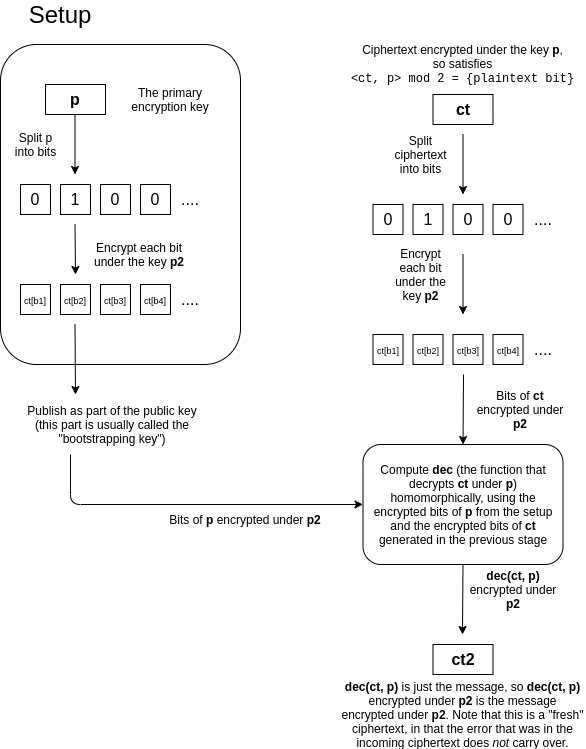
Choose a security level, typically 128-bit or 256-bit, based on your threat model. Higher security levels increase ciphertext size and computation time. Use the toolkit’s parameter generator to select the polynomial modulus degree and plaintext modulus. These settings directly impact the noise budget available for your computations.
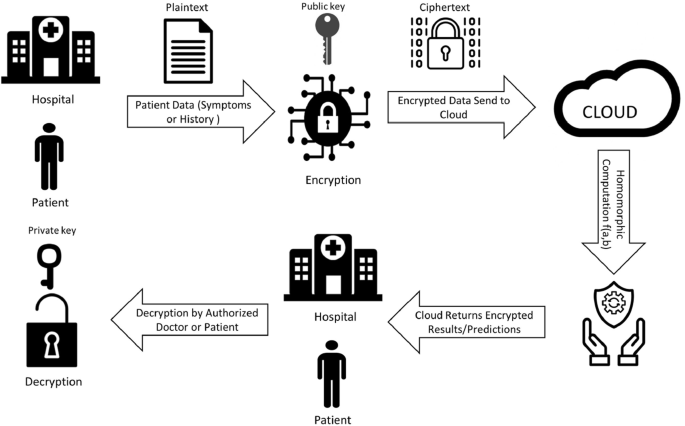
Create the encryption context with your chosen parameters. This object manages keys, polynomials, and memory allocation. In most toolkits, you instantiate a context or ciphertext object that holds the state for all subsequent operations. Ensure the context is thread-safe if your SaaS backend handles concurrent requests.
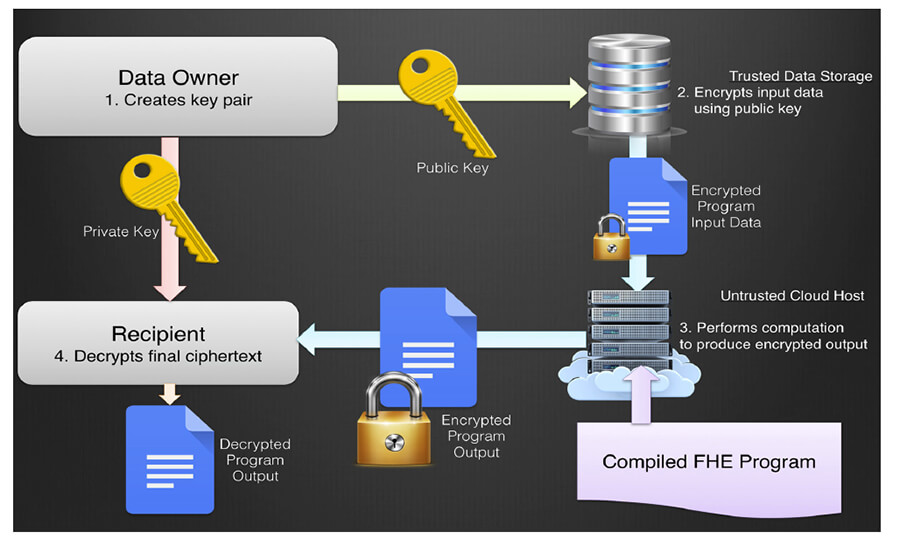
Generate a public key for encryption and a secret key for decryption. In FHE, you may also need evaluation keys for homomorphic operations like rotation or bootstrapping. Store the secret key securely, preferably in a hardware security module (HSM) or a dedicated secrets manager. Never hardcode keys in your application source code.
Encrypt a small value, perform a basic homomorphic addition, and decrypt the result to verify correctness. This smoke test confirms that your key generation and parameter settings are working. If the decryption fails or returns noise, review your noise budget and parameter choices. Adjust the polynomial degree if the noise grows too quickly during operations.
FHE is computationally intensive. Start with small datasets and monitor memory usage. As you move to production, consider using bootstrapping to refresh the noise budget for deeper computations. This setup phase is critical for ensuring your FHE implementation is both secure and performant.
Encrypt data before onchain submission
Before sensitive SaaS data touches a blockchain, it must be wrapped in FHE ciphertext. This ensures that the network nodes processing the transaction cannot read, modify, or leak the underlying plaintext. You are essentially moving from a "trustless but visible" model to a "trustless and private" one.
1. Serialize and prepare the payload
Raw JSON objects cannot be encrypted directly by FHE libraries. You must first serialize your sensitive fields (e.g., user_id, balance, health_data) into a standardized format. Most FHE SDKs require fixed-size byte arrays or specific integer representations.
- Extract only the fields that require privacy.
- Convert strings or floats to fixed-point integers if the FHE scheme requires it.
- Ensure the data length matches the FHE scheme's capacity (e.g., 64-bit or 128-bit slots).
2. Encrypt with the public key
Use your chosen FHE library (such as TFHE, CKKS, or BGV) to encrypt the serialized data. You will need the public key associated with the target blockchain network or compute node.
const ciphertext = fhe.encrypt(publicKey, serializedData);
This step transforms your plaintext into a complex ciphertext that looks like random noise. Even if intercepted, the data is computationally infeasible to decrypt without the secret key held by the authorized off-chain compute node.
3. Format for blockchain transmission
Blockchains have strict payload size and format requirements. You cannot send raw large ciphertext blobs directly in a standard ERC-20 transfer. Instead, you typically:
- Hash the ciphertext to create a small commitment (optional, for verification).
- Encode the ciphertext into a compact hex string or binary format.
- Attach the encrypted data to your smart contract call as a parameter or store it in IPFS/Arweave and pass the hash on-chain.
4. Submit the transaction
Send the transaction to the blockchain. The smart contract receives the ciphertext. It does not decrypt it. Instead, it may:
- Verify the ciphertext against a zero-knowledge proof (if using zkFHE).
- Forward the ciphertext to an off-chain FHE compute node for processing.
- Store the ciphertext for later retrieval by the user with the secret key.
The key takeaway: the blockchain only sees encrypted noise. The actual data remains hidden until the authorized party decrypts it off-chain.
Optimize for privacy-preserving AI 2026
Running inference or analytics on encrypted data requires shifting from theoretical guarantees to practical efficiency. In 2026, the barrier to entry for FHE in AI workloads has lowered significantly, but only if you align your architecture with current hardware capabilities. The following sequence outlines how to structure your pipeline for viable performance.
Select an efficient FHE scheme
Choose a scheme that balances security with computational cost. BFV and BGV are standard for integer arithmetic, while CKKS is the de facto choice for floating-point operations common in machine learning models. CKKS supports approximate arithmetic, which aligns with the inherent noise in neural network activations. Avoid generic "fully homomorphic" labels; verify that the library you select natively supports the specific polynomial degree and modulus chain required for your model depth.
Pre-process data for encrypted inference
Optimize the input data before encryption. Quantize your model weights and activations to fixed-point or low-bit integer representations. This reduces the number of homomorphic multiplications required, which are the most expensive operations in FHE. Ensure that all preprocessing steps are deterministic and reversible, as errors introduced before encryption cannot be corrected once the data is sealed.
Leverage hardware acceleration
Deploy your inference engine on hardware that supports FHE-specific optimizations. Look for libraries that utilize AVX-512 instructions on CPUs or CUDA cores on GPUs for parallelized polynomial multiplication. The 2026 landscape favors hybrid approaches where the heavy lifting of bootstrapping and key-switching is offloaded to dedicated accelerators. This reduces latency from minutes to seconds for typical model sizes.
Validate with benchmarked workloads
Test your pipeline against standard benchmarks like MNIST or ResNet-18 on encrypted inputs. Measure both latency and memory consumption. Compare your results against baseline unencrypted runs to quantify the FHE overhead. If the overhead exceeds 100x for your target use case, revisit your scheme selection or model quantization strategy. Resources from the FHE.org community provide updated benchmarks for 2026 hardware configurations.
Verify results with decryption keys
Once the encrypted computation finishes, you must decrypt the output to confirm it matches the expected plaintext. This step is critical because fully homomorphic encryption (FHE) does not guarantee correctness by default; errors can accumulate during the ciphertext operations. You need a secure channel to retrieve the result and validate it against your known inputs.
Extract the final ciphertext from the FHE-enabled service. Ensure the data is transmitted over an encrypted channel (TLS) to prevent interception before decryption.

Use your private key to decrypt the ciphertext. This operation must occur in a trusted execution environment or on your local machine, never in the cloud or shared infrastructure.
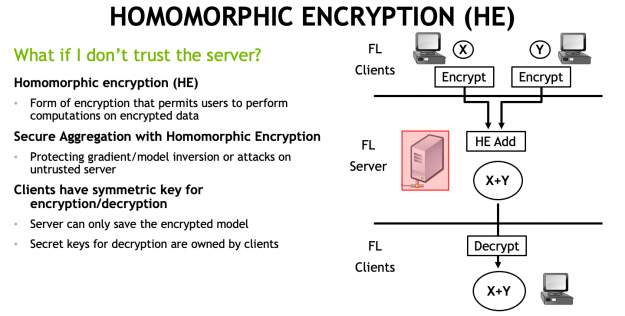
Compare the decrypted output with the expected result from a plaintext reference calculation. If the values differ, the computation may have suffered from noise growth or bit-flip errors common in FHE schemes.
If the decrypted result is incorrect, do not expose the intermediate plaintexts. Instead, review the noise budget and re-run the computation with optimized parameters. IBM research highlights that single bit-flips can disrupt FHE outcomes, so verifying the integrity of the final output is more reliable than trusting the process blindly 1.
Common implementation pitfalls
Even with correct algorithms, a single configuration error can collapse the security model. Fully homomorphic encryption (FHE) is sensitive to parameter choices and memory handling. Misconfiguring these elements introduces vulnerabilities that negate the benefits of encrypted computation.
Parameter misconfiguration
Choosing parameters that are too small for your data size causes ciphertext noise to overflow, resulting in decryption failures. Conversely, overly large parameters waste compute resources. Always validate your ring dimension and polynomial degree against the expected noise growth for your specific circuit depth.
Key leakage and storage
The secret key is the single point of failure. Storing it in plaintext memory or logs exposes the entire system. Use secure enclaves or dedicated key management services to handle key generation and rotation. Never log key material or intermediate states during computation.
Memory management errors
FHE operations create large ciphertexts that grow with each homomorphic evaluation. Failing to manage memory correctly leads to buffer overflows or data leakage through side channels. Profile your memory usage rigorously and use constant-time algorithms to prevent timing attacks.
-
Validate parameters against noise growth models
-
Store secret keys in secure enclaves
-
Use constant-time memory access patterns
-
Audit logs for accidental key exposure
No comments yet. Be the first to share your thoughts!