
Choose the right FHE toolkit
Selecting a Fully Homomorphic Encryption (FHE) library requires matching the tool to your specific workload. There is no single best library; OpenFHE, TFHE, and SEAL each excel in different areas. Your choice depends on whether you prioritize low-latency logic operations for AI inference or high-throughput arithmetic for analytics.
Start by defining your primary operation. If you are building a privacy-preserving AI model that relies heavily on boolean logic (e.g., decision trees or neural network activation functions), TFHE is the standard. Its gate bootstrapping allows for very fast logical operations, though it can be slower for large integer additions. For financial analytics or statistical models that require heavy polynomial arithmetic, OpenFHE or Microsoft SEAL are better fits. OpenFHE offers a unified API that supports multiple schemes, making it easier to switch backends if performance needs change.
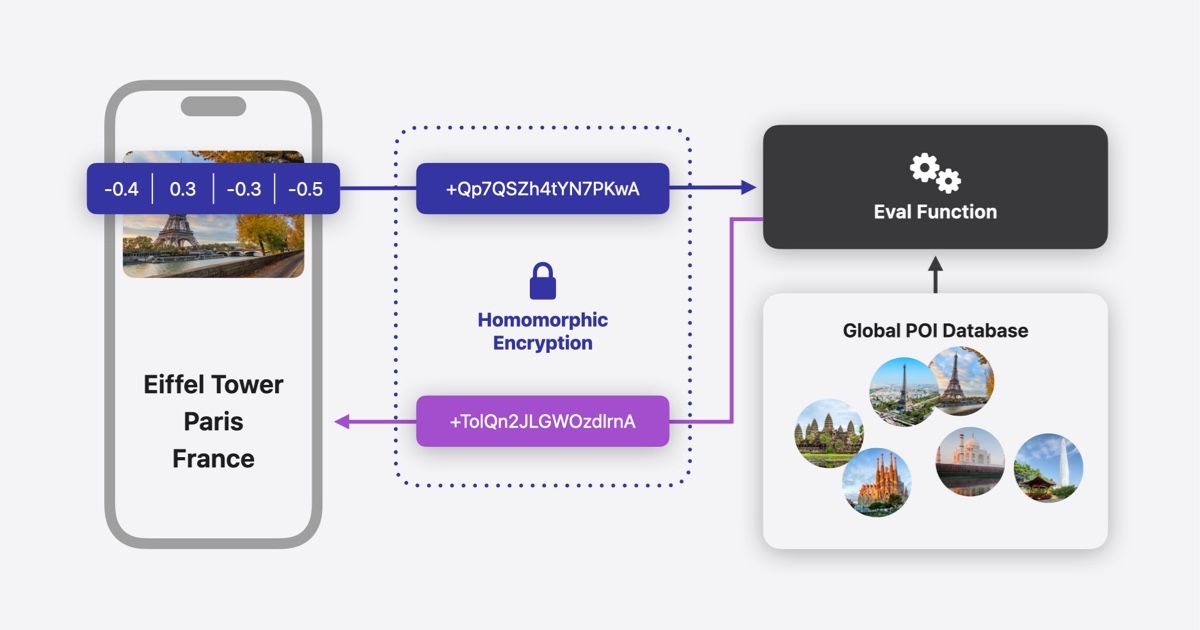
Consider ciphertext expansion and memory overhead. FHE data is significantly larger than plaintext. TFHE typically has lower ciphertext expansion for small data types but higher computational overhead for bootstrapping. SEAL and OpenFHE often require more memory for large polynomial rings but handle batched operations efficiently. Benchmark your specific dataset against these libraries using tools like OpenFHE’s benchmark suite or SEAL’s performance tests.
| Feature | TFHE | OpenFHE | Microsoft SEAL |
|---|---|---|---|
| Primary Strength | Low-latency boolean logic | Multi-scheme flexibility | High-performance arithmetic |
| Best Use Case | AI Inference, Logic Gates | Analytics, Mixed Workloads | Statistical Analysis, ML Training |
| Ciphertext Expansion | Low (for small data) | Medium | Medium-High |
| Learning Curve | Steep (specialized) | Moderate | Moderate |
For most on-chain compute applications, hybrid approaches are emerging. You might use TFHE for the decision layer and SEAL for the data processing layer. Check the latest research from the IACR for recent acceleration techniques, as performance characteristics evolve rapidly. Always test with your actual data distribution, as theoretical benchmarks may not reflect real-world performance.
Key Takeaways
Optimize parameters for speed
Balancing security levels with computational efficiency requires tuning the ring dimension and polynomial degree. FHE provides strong theoretical guarantees by allowing computations over encrypted data, but its high computational cost can make on-chain processing unviable if parameters are not carefully selected. The goal is to find the sweet spot where privacy is maintained without introducing prohibitive latency or gas costs.
The ring dimension, often denoted as $N$, is a power of two that defines the size of the polynomial ring used in the encryption scheme. A larger $N$ increases security and supports more complex computations (higher multiplicative depth) but significantly increases ciphertext size and computation time. Start with the standard $N=2^14$ or $2^15$ for most on-chain applications, then scale up only if your circuit requires deeper operations. Smaller dimensions like $N=2^12$ may suffice for simple arithmetic but risk insufficient security margins against lattice attacks.
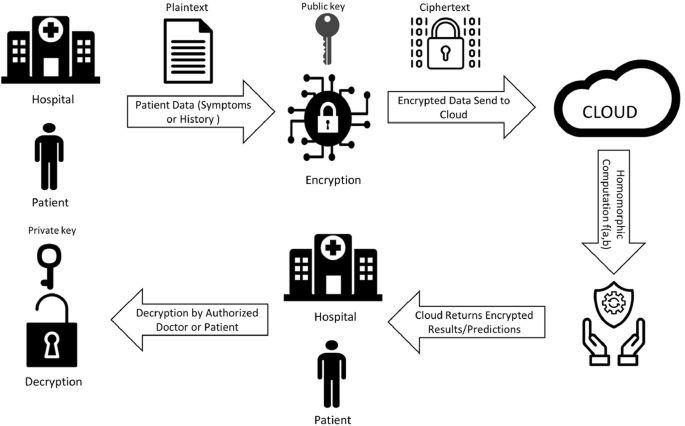
The polynomial degree is directly tied to the ring dimension. You must also configure the modulus chain, which determines the number of primes used in the ciphertext. Each modulus in the chain allows one more multiplication operation before noise grows too large. For on-chain compute, minimize the modulus chain length by optimizing your circuit to use fewer multiplications. This reduces the overhead of key switching and bootstrapping operations, which are the primary drivers of computational expense.
Ciphertext expansion refers to the ratio of encrypted data size to plaintext data size. Higher security parameters lead to larger expansion, which increases storage and transmission costs on-chain. Use the most efficient FHE scheme variant available (e.g., BFV or BGV for integer arithmetic, CKKS for approximate real numbers) that matches your data type. Avoid unnecessary padding or excessive precision in CKKS schemes, as this directly inflates the ring dimension and slows down homomorphic operations.
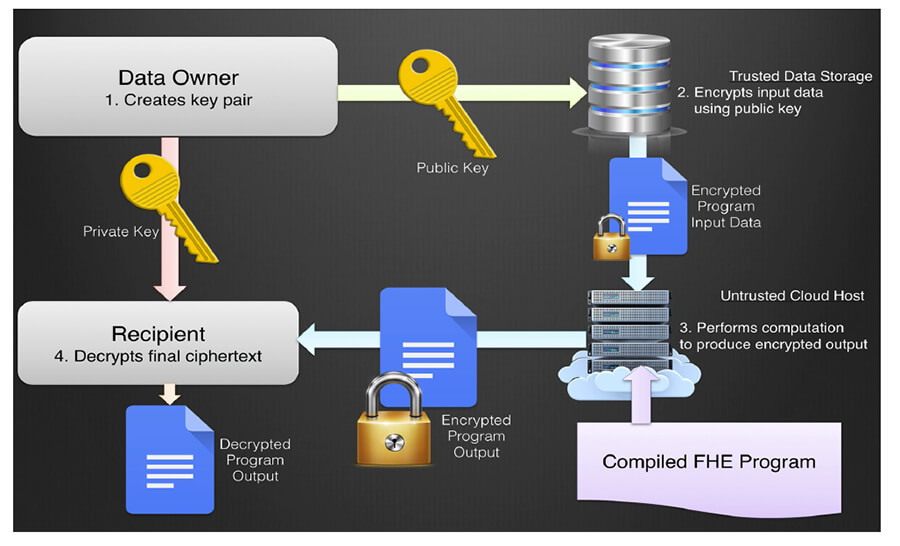
Theory often diverges from practice. Run your specific on-chain compute tasks against your chosen parameter set using a standard FHE library (such as OpenFHE or SEAL). Measure the time for both homomorphic evaluation and decryption. Compare these metrics against your on-chain gas limits or block time constraints. If the evaluation time is too high, reduce the multiplicative depth or switch to a more efficient parameter set, then re-benchmark.
By iteratively tuning these parameters, you can significantly reduce the computational burden of FHE on-chain. The key is to start with conservative, secure defaults and then aggressively prune any excess capacity that your specific application does not require.
Run private AI inference
Running machine learning models on encrypted data requires shifting from standard floating-point arithmetic to techniques that preserve privacy without collapsing computational speed. The process involves quantizing the model, approximating non-linear functions, and executing the inference within an encrypted environment.
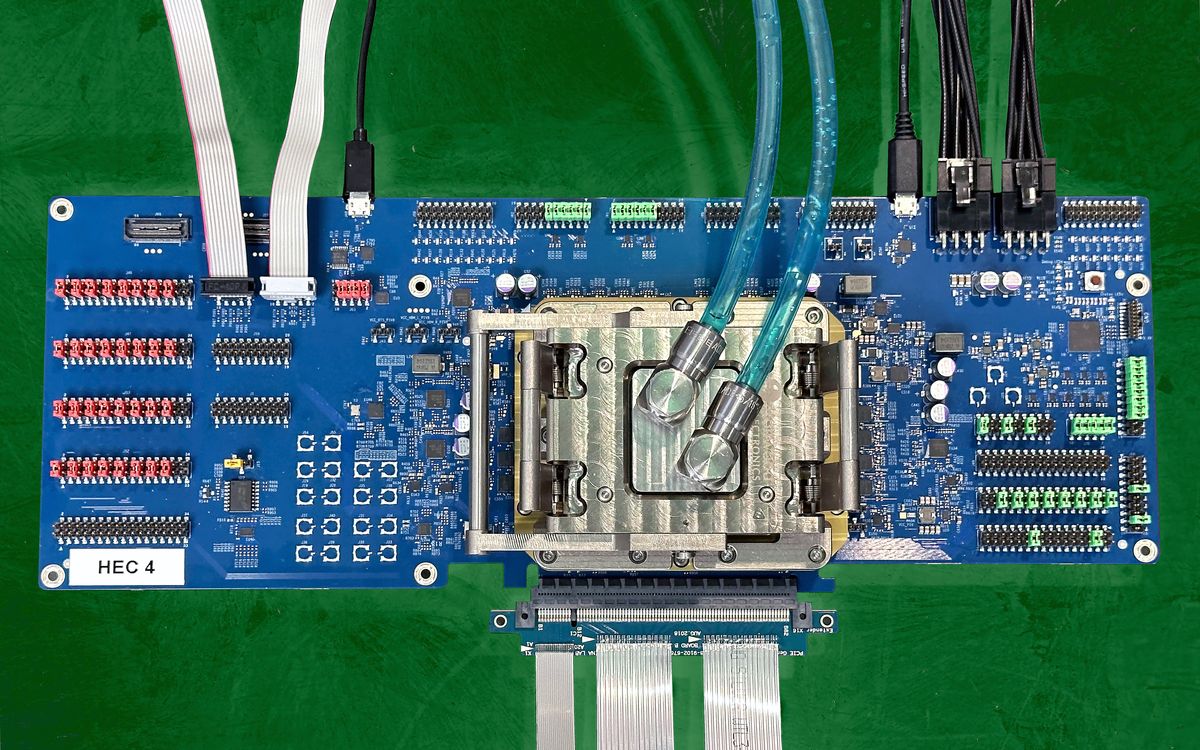
FHE operations are computationally expensive. To make inference viable, you must quantize your neural network weights and input data from 32-bit floating-point to low-bit integers (typically 8-bit or lower). This reduction significantly lowers the noise growth in ciphertexts, allowing more operations to be performed before the data becomes unreadable. Use frameworks like Concrete ML or OpenFHE to apply quantization layers that approximate the original model's accuracy.

Standard neural networks rely on non-linear functions like ReLU or Sigmoid, which are difficult to compute directly on encrypted data. You must replace these with polynomial approximations or lookup tables that FHE schemes can handle efficiently. For example, approximate ReLU using a piecewise linear polynomial. This step is critical because it allows the model to maintain its decision-making capabilities while operating entirely within the encrypted domain.
Before sending data to the inference engine, encrypt the quantized inputs using the public key generated for your specific model. Ensure the encryption scheme matches the parameters of your quantized model (e.g., the number of slots and noise budget). This step guarantees that the cloud provider or on-chain compute node never sees the raw data, only the ciphertext.
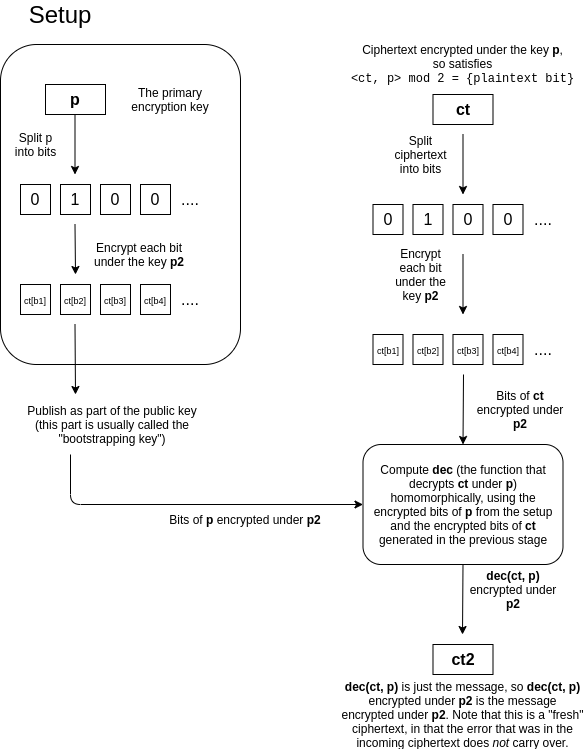
Run the encrypted inputs through the approximated neural network layers. Each matrix multiplication and activation approximation adds noise to the ciphertext. Monitor the noise budget closely; if it depletes, the result will fail to decrypt correctly. Use bootstrapping techniques if necessary to refresh the noise, though this adds significant latency. The output will be an encrypted prediction score.
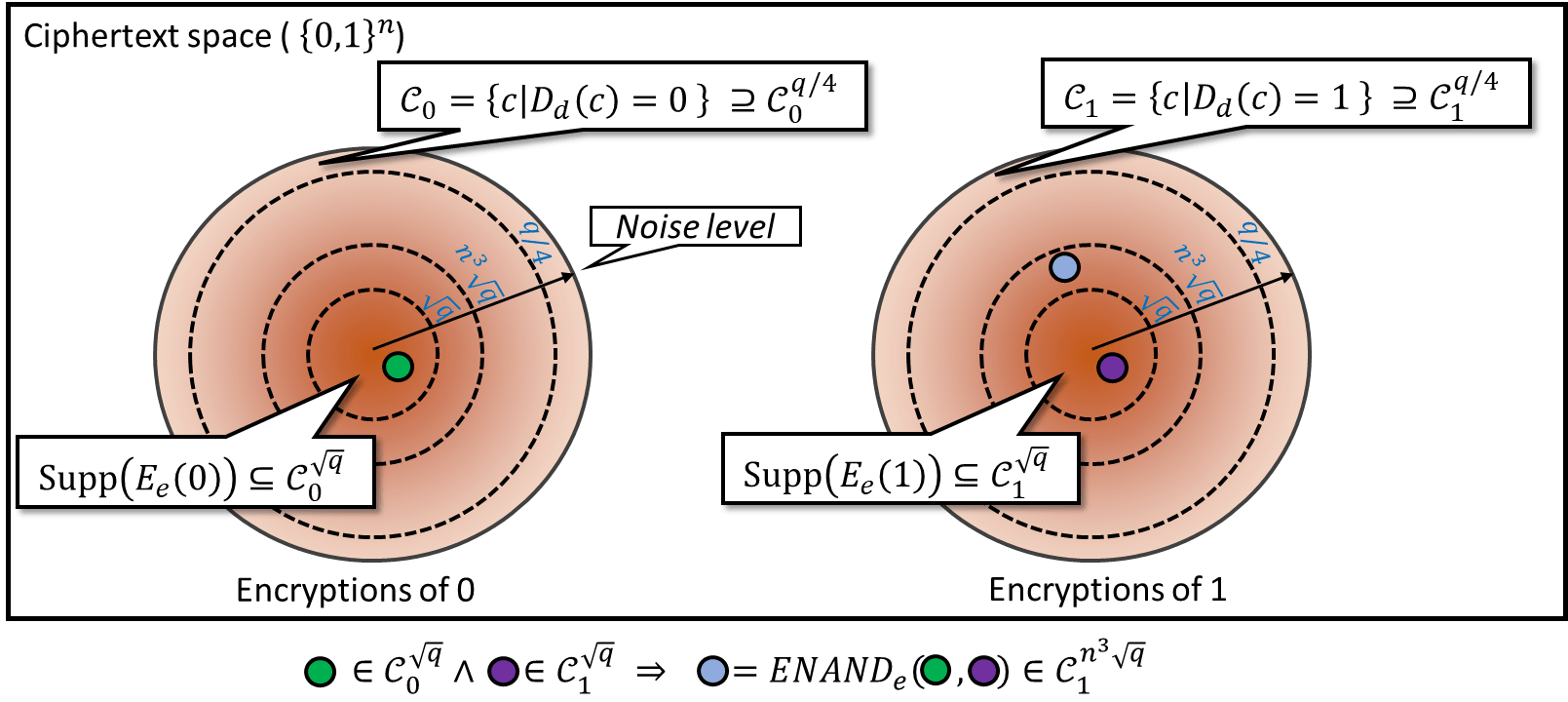
Decrypt the final ciphertext using the private key to retrieve the plaintext prediction. Compare the decrypted result against the unencrypted model's output to verify accuracy. Minor deviations are expected due to quantization and approximation errors, but they should remain within acceptable bounds for your specific use case. If the error rate is too high, revisit the quantization precision or polynomial degree in the approximation step.
By following this sequence, you enable private AI inference that keeps sensitive data secure while still delivering actionable insights. The key is balancing precision with performance, ensuring the model remains useful without compromising privacy.
Secure on-chain data processing
Integrating FHE into blockchain environments requires a shift from trusting data visibility to verifying computational correctness. The goal is to allow smart contracts to process encrypted inputs and return encrypted outputs without ever exposing the underlying plaintext. This preserves privacy while maintaining the deterministic nature required by consensus mechanisms.
1. Establish the encryption parameters
Before deploying any logic, define the FHE scheme and noise budget. Different schemes (e.g., TFHE, BFV) offer trade-offs between latency and computational depth. Ensure your smart contract can handle the specific ciphertext formats generated by your off-chain or on-chain FHE libraries. Mismatched parameters will cause verification failures during transaction execution.
2. Implement zero-knowledge proofs for verification
Since the blockchain cannot decrypt the data to verify its accuracy, you must use zero-knowledge proofs (ZKPs). The prover generates a proof that the computation was performed correctly on the encrypted data. The smart contract verifies this proof on-chain. This step ensures that the encrypted output is valid without revealing the input data or the intermediate states of the computation.
3. Deploy the verification contract
Deploy a smart contract that accepts the ciphertext, the ZKP, and the public parameters. The contract verifies the proof against the provided ciphertext. If the proof is valid, the contract accepts the encrypted result. This result can then be used by other parts of your protocol, such as triggering a payout or updating a state variable, all while the data remains encrypted.
4. Handle decryption securely
To use the results, the encrypted output must be decrypted. This is typically done via a threshold decryption scheme or a trusted execution environment (TEE). Ensure that the decryption keys are distributed securely and that the decryption process itself does not introduce new privacy leaks. The final decrypted value should only be accessible to authorized parties.
Avoid Common FHE Implementation Errors
Even with robust algorithms, FHE systems fail when implementation details are overlooked. The most critical pitfalls involve side-channel attacks and improper key handling, which can expose data that should remain hidden.
Recent research highlights how fragile FHE can be under certain conditions. A study from IBM Research demonstrated that a single bit-flip during computation can disrupt the entire encryption process, leading to data corruption or leakage [[src-serp-7]]. This finding underscores the need for rigorous error-checking and fault tolerance in FHE pipelines.
To mitigate these risks, developers must prioritize:
- Side-Channel Resistance: Ensure constant-time execution to prevent timing attacks.
- Key Management: Use hardware security modules (HSMs) for key storage and rotation.
- Error Handling: Implement robust validation to detect and correct bit-flips or computational errors.
Ignoring these steps can compromise the entire system, regardless of the underlying cryptographic strength.
No comments yet. Be the first to share your thoughts!