
Get fully homomorphic encryption 2026 right
Start to FHE in Healthcare with the constraint that matters most in real life: space, timing, budget, skill level, maintenance, or availability. That first constraint should shape the rest of the plan instead of appearing as an afterthought. Keep the first pass simple enough to verify. Compare the main options against the same criteria, remove choices that only work in ideal conditions, and save optional upgrades for later.
The simplest way to use this section is to write down the real constraint first, compare each option against it, and choose the path that still works outside ideal conditions.
Work through the steps
to FHE in Healthcare works best as a clear sequence: define the constraint, compare the realistic options, test the tradeoff, and choose the path with the fewest hidden costs. That order keeps the advice usable instead of decorative. After each step, pause long enough to check whether the recommendation still fits the reader's actual situation. If it depends on perfect timing, unusual access, or a best-case budget, include a simpler fallback.

Fix common mistakes
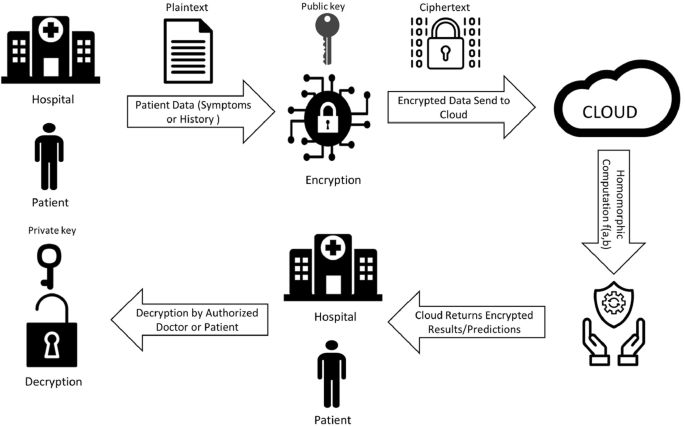
Even with strong theoretical guarantees, FHE deployments in healthcare often fail due to implementation gaps rather than cryptographic flaws. The computational cost of homomorphic operations is high, and small errors in setup or key management can expose patient data or render analytics useless. Below are the most frequent pitfalls and how to avoid them.
Skipping the noise parameter calculation
FHE schemes rely on a "noise" budget that grows with each operation. If the noise exceeds the threshold, decryption fails. In healthcare, where genomic or imaging data requires deep circuit depths, underestimating this budget leads to corrupted results. Always simulate your specific workload with tools like Microsoft SEAL or OpenFHE before production. Verify that your ciphertext capacity matches the complexity of your queries.
Ignoring performance trade-offs
Many teams treat FHE as a drop-in replacement for plaintext databases. It is not. Homomorphic encryption adds significant latency and memory overhead. Deploying FHE for real-time patient monitoring without proper hardware acceleration or batching strategies will cause system timeouts. Use hybrid approaches: keep sensitive keys offline and only encrypt the most critical data fields, or use FHE for batch analytics rather than live streams.
Neglecting key lifecycle management
FHE requires careful handling of public and secret keys. Storing keys in plain text or using weak random number generators defeats the purpose. Use hardware security modules (HSMs) or dedicated key management services. Rotate keys according to your security policy, and ensure that key derivation functions are resistant to side-channel attacks. Regular audits of key access logs are essential for HIPAA compliance.
Fully homomorphic encryption 2026: what to check next
Before deploying fully homomorphic encryption (FHE) in healthcare, teams must address performance limits, integration friction, and compliance realities. The following answers clarify the practical tradeoffs for 2026 deployments.
These questions highlight that FHE is a specialized tool for specific privacy challenges, not a universal fix for healthcare data security.
No comments yet. Be the first to share your thoughts!