
The Shift to Encrypted Computation
Fully Homomorphic Encryption (FHE) is no longer confined to academic papers. By 2026, it has become the foundational layer for privacy-preserving infrastructure, bridging the gap between AI utility and data confidentiality.
The technology allows computations on encrypted data without ever decrypting it. This solves the "decryption bottleneck" that previously forced organizations to expose raw data to process it. Instead of moving data to the computation, the computation moves to the data, leaving it encrypted at every stage.
This shift is driven by two converging forces. First, AI models require massive datasets that cannot be shared openly due to privacy regulations. FHE allows these models to learn from encrypted inputs. Second, blockchain networks need confidential smart contracts that can process private transactions without revealing them on a public ledger.
The result is a new class of infrastructure where data utility does not come at the cost of exposure. As toolkits mature, this capability is moving from experimental prototypes to production systems in healthcare, finance, and decentralized identity.
How Private Compute Works in Practice
The theoretical promise of Fully Homomorphic Encryption (FHE) is finally meeting real-world architectural demands. In 2026, the leading toolkits are moving beyond proof-of-concept demos to handle production-scale workloads. These projects solve the historical bottleneck of FHE—computational overhead—by leveraging specialized hardware acceleration and optimized cryptographic primitives.
The following examples illustrate the distinct architectural approaches currently setting the benchmark for performance and usability. Each toolkit targets a specific layer of the privacy stack, from database integration to AI inference.
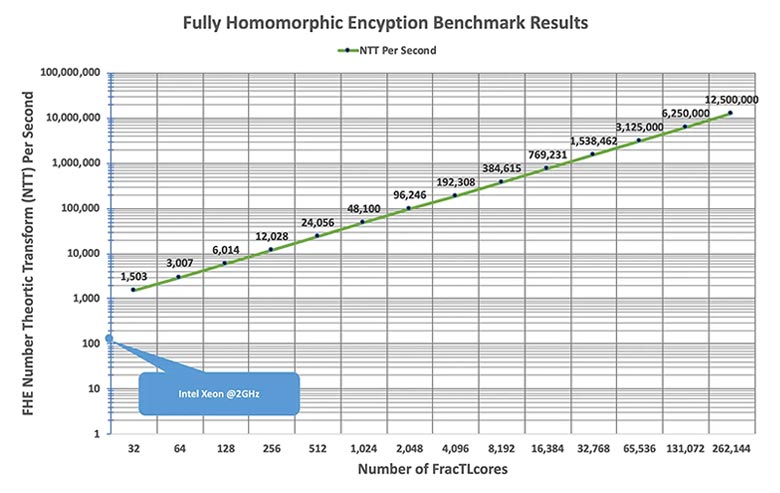
In-Storage Processing: FHEIns
Traditional FHE requires data to be decrypted for complex queries, breaking the privacy loop. FHEIns addresses this by performing computations directly on encrypted data stored within the database itself. This "in-storage" architecture eliminates the need to transfer raw ciphertexts to a central processing unit, significantly reducing network latency and exposure windows.
By integrating FHE acceleration directly into the storage layer, this approach allows large-scale data applications to query encrypted records with minimal overhead. It is particularly effective for financial compliance and medical record searches where data residency and privacy are non-negotiable. The method shifts the computational burden from the application server to the storage engine, streamlining the data flow for enterprise workloads.
Standardized Cryptographic Primitives
The Homomorphic Encryption Standardization initiative, led by the IACR, is defining the interoperable protocols that allow different FHE toolkits to communicate. In 2026, adherence to these standards is no longer optional for serious projects. It ensures that encrypted data generated by one toolkit can be processed by another, preventing vendor lock-in and enabling modular privacy stacks.
This standardization effort focuses on defining clear interfaces for encryption, evaluation, and decryption operations. It provides a common language for developers building privacy-preserving applications, reducing the friction of integrating FHE into existing infrastructure. Projects that align with these standards benefit from a growing ecosystem of compatible libraries and tools.
AI-Inference Optimized Toolkits
The demand for private AI inference has driven the development of toolkits specifically optimized for neural network operations. These projects use techniques like bootstrapping optimization and parallel execution to handle the heavy matrix multiplications required by machine learning models. They allow businesses to run AI predictions on encrypted data without exposing the underlying model or the input data.
This approach is critical for industries like healthcare and finance, where AI models must analyze sensitive patient or transaction data without violating privacy regulations. By enabling secure inference, these toolkits use the value of private data for machine learning while maintaining strict confidentiality. The result is a new class of AI applications that can operate entirely within an encrypted environment.
Key Metrics for Evaluation
When selecting an FHE toolkit for 2026, focus on these concrete performance indicators:
Evaluation Metrics
-
Ciphertext Throughput
Measures the number of encrypted operations processed per second. Higher is better for real-time applications. -
Bootstrapping Latency
The time required to refresh encrypted data. Lower latency enables deeper circuit depths for complex computations. -
Memory Overhead
The ratio of encrypted data size to plaintext size. Lower overhead reduces storage and transmission costs.
These metrics provide a clear picture of a toolkit's readiness for production use. They move the conversation beyond abstract security guarantees to tangible performance characteristics that impact system design and user experience.
Hardware acceleration and standardization
Fully Homomorphic Encryption (FHE) has moved from theoretical cryptography to tangible infrastructure, driven by the need to process encrypted data at scale. The performance constraints that once limited FHE to small datasets are being addressed through specialized hardware acceleration and emerging standardization efforts. In 2026, the focus is no longer just on whether FHE can work, but on how efficiently it can run on existing and new hardware.
The primary bottleneck in FHE has always been computational overhead. Homomorphic operations are significantly slower than plaintext equivalents, often by orders of magnitude. To bridge this gap, researchers and companies are turning to hardware acceleration. This includes optimizing FHE operations on GPUs, FPGAs, and specialized ASICs. These accelerators handle the heavy lifting of polynomial arithmetic and bootstrapping, allowing FHE to become viable for real-time applications.
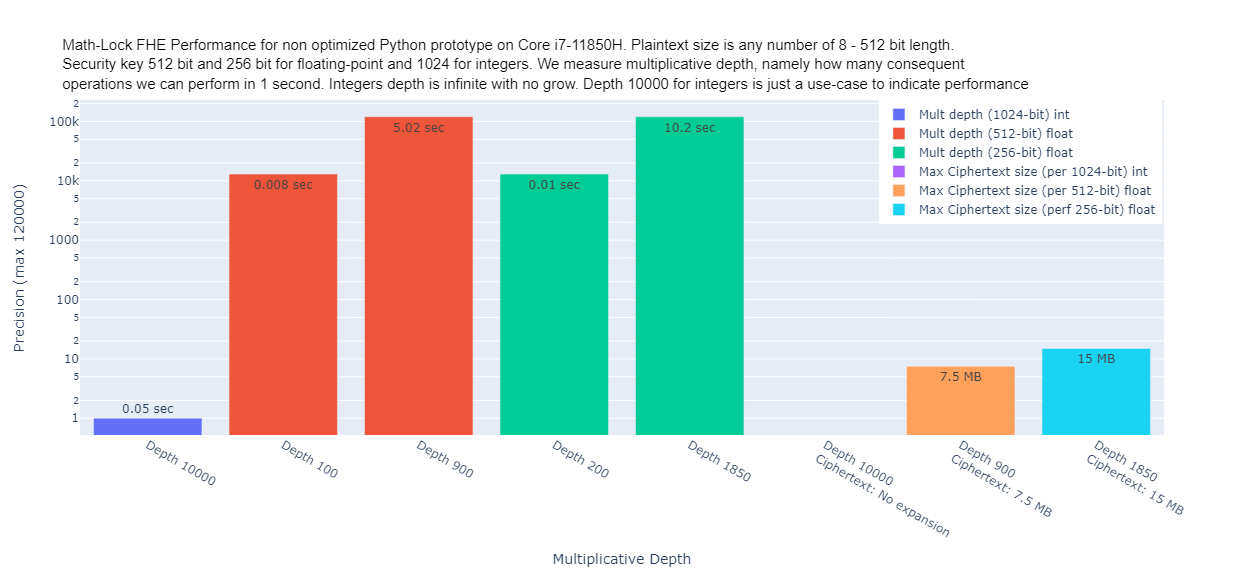
One notable development is the integration of FHE into in-storage processing. By performing computations directly on encrypted data within the storage layer, systems can reduce data movement and leverage parallel processing capabilities. This approach minimizes latency and bandwidth usage, making FHE more practical for large-scale data analytics and cloud environments. The goal is to make encryption transparent to the application while maintaining strong security guarantees.
Standardization efforts are also gaining momentum. Organizations like NIST and the FHE.org consortium are working to establish benchmarks and best practices for hardware performance. These standards help developers choose the right tools and configurations for their specific use cases. As hardware becomes more specialized and software stacks mature, the gap between theoretical potential and practical application continues to narrow. This convergence is critical for FHE to achieve widespread adoption in privacy-sensitive industries.
Real-world applications in finance and AI
Fully homomorphic encryption is moving from theoretical cryptography into high-stakes production environments. Two sectors are driving this adoption: financial auditing and private machine learning. In both cases, the goal is the same—process sensitive data without ever exposing it in plaintext.
Financial Auditing and Regulatory Compliance
Traditional financial audits often require sending raw transaction logs to third-party analysts. This creates massive attack surfaces for data breaches. With FHE, banks can encrypt their ledgers before sending them to auditors. The auditors can then perform calculations—such as summing balances or checking for anomalies—on the encrypted data. The result is returned in encrypted form, and only the bank can decrypt the final audit report.
This approach satisfies strict regulatory requirements like GDPR and CCPA without slowing down the audit process. It turns the auditor from a potential data risk into a trusted processor who never actually sees the customer’s money.
Private Machine Learning
AI models are hungry for data, but healthcare and finance providers are legally barred from sharing patient records or client histories. FHE solves this by allowing models to run inference on encrypted inputs. A hospital can train a diagnostic model on encrypted patient data. The model learns patterns without ever seeing a single name, social security number, or diagnosis in clear text.
Similarly, financial institutions can use encrypted data to detect fraud. The model analyzes transaction patterns in the dark, flagging suspicious activity without exposing the underlying customer behavior. This enables collaboration across institutions that would otherwise be siloed by privacy laws.
Why This Matters Now
The barrier to entry for these applications was previously the computational cost. Early FHE implementations were too slow for real-time use. However, recent advancements in toolkits like Concrete and OpenFHE have reduced latency significantly. As hardware accelerators become more common, these once-theoretical use cases are becoming practical business assets.
Common questions about FHE adoption
Developers considering fully homomorphic encryption (FHE) in 2026 often face practical hurdles regarding performance and ecosystem maturity. While the technology promises privacy-preserving computation, integrating it into legacy systems requires understanding current limitations and upcoming standards.
No comments yet. Be the first to share your thoughts!