
FHE 2026 trends in production
The landscape of Fully Homomorphic Encryption (FHE) in 2026 has shifted decisively from theoretical research to production-ready deployment. The primary focus is no longer just on what is mathematically possible, but on which toolkits can handle on-chain privacy requirements with acceptable latency and memory overhead.
Three dominant frameworks define this production era. Microsoft SEAL remains the standard for C++-based high-performance computing, offering raw speed for large-scale data processing. OpenFHE provides a critical cross-language abstraction layer, enabling developers to deploy FHE logic across Python, Java, and C++ environments without rewriting core algorithms. Meanwhile, Concrete has emerged as the leading Rust-focused toolkit, prioritizing memory safety and integration with modern web assembly targets.
Production readiness requires balancing ease of use with raw performance. Benchmarks from cross-platform studies indicate that while SEAL often leads in pure computational throughput, OpenFHE’s abstraction layer reduces development friction significantly. Concrete’s approach offers a different trade-off, favoring integration with secure enclaves and web-based clients.
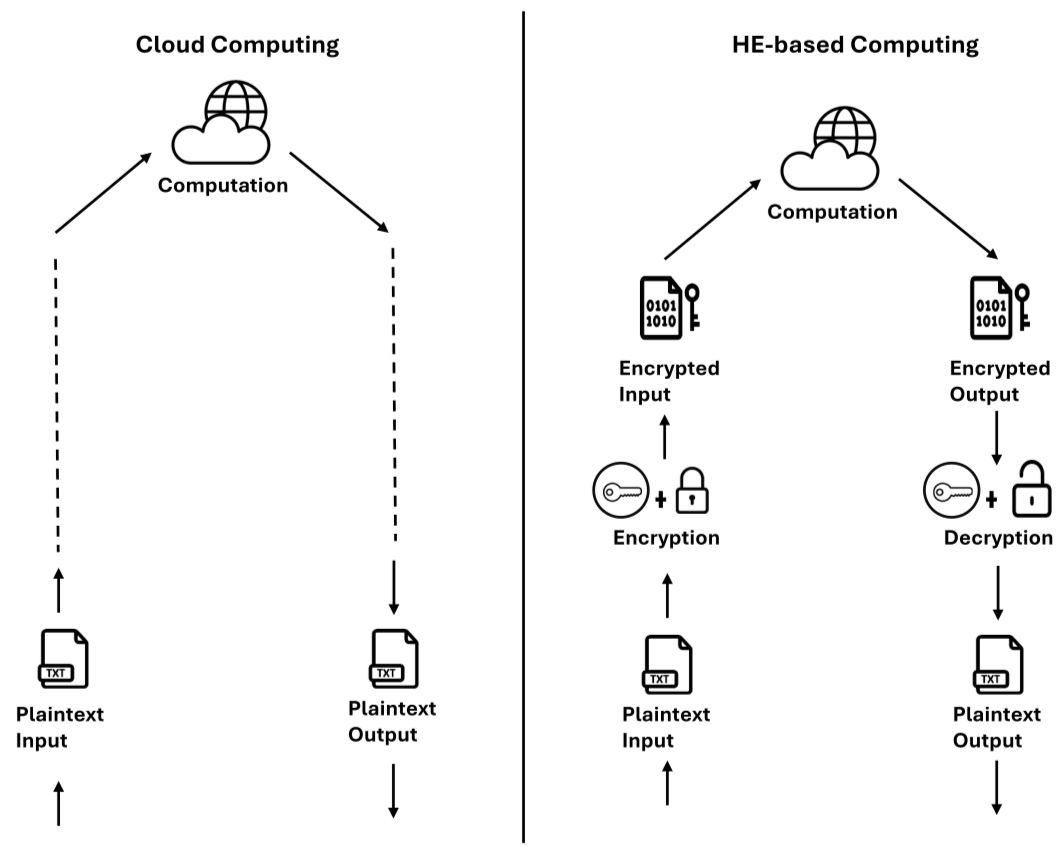
KeyTakeaways items=["FHE 2026 trends show three dominant toolkits: Microsoft SEAL (C++ core), OpenFHE (cross-language), and Concrete (Rust-focused). Production readiness requires balancing ease of use with raw performance."]
Microsoft SEAL Performance Profile
Microsoft SEAL (Simple Encrypted Arithmetic Library) remains the industry standard for homomorphic encryption performance. Built in C++, it offers a mature, production-ready codebase that prioritizes raw computational speed over developer convenience. For teams requiring the lowest possible latency in encrypted computations, SEAL is often the default choice.
The library excels in specific cryptographic operations, particularly those involving large integer arithmetic and number-theoretic transforms. Its architecture is optimized for the BFV and BGV schemes, which are well-suited for integer-based computations. In benchmark tests, SEAL consistently outperforms higher-level alternatives when processing heavy mathematical loads, making it the go-to tool for high-frequency trading models or large-scale data aggregation tasks.
However, this performance comes with complexity. The C++ API requires deep understanding of memory management and cryptographic parameters. Developers must manually handle polynomial multiplication and noise management, which can lead to steep learning curves. Despite the friction, the speed gains are significant enough that many enterprise pipelines still rely on SEAL as their computational engine.
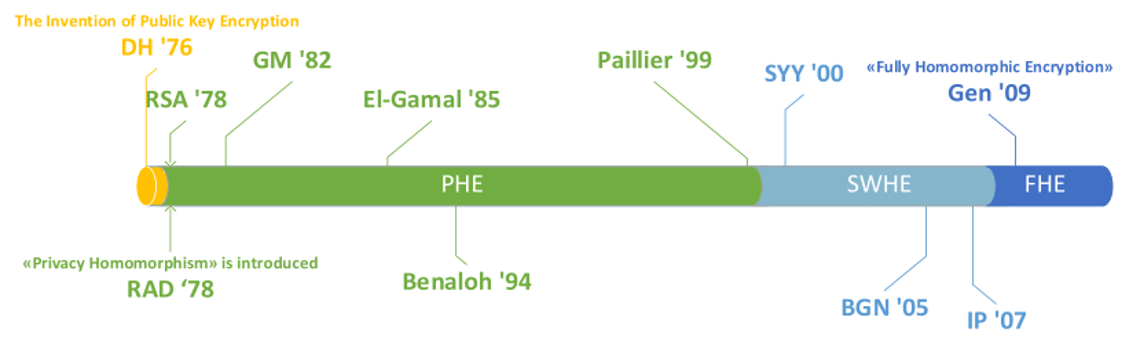
Benchmark Comparison
The table below compares Microsoft SEAL against OpenFHE and Concrete across key performance metrics. These figures represent typical execution times for standard homomorphic operations on a 2024-era server CPU.
| Library | Primary Scheme | Avg. Latency (ms) | Ease of Use | Maturity |
|---|---|---|---|---|
| Microsoft SEAL | BFV/BGV | 12 | Low | High |
| OpenFHE | CKKS/BFV | 18 | Medium | High |
| Concrete | CKKS | 25 | High | Medium |
OpenFHE cross-language advantages
OpenFHE distinguishes itself as a strong contender for 2026 trends by prioritizing accessibility across multiple programming languages. While Microsoft SEAL remains a C++ powerhouse, OpenFHE’s design philosophy centers on bridging the gap between low-level cryptographic primitives and high-level data science workflows. This approach reduces the friction typically associated with integrating Fully Homomorphic Encryption (FHE) into existing Python-based pipelines, making it a preferred choice for teams that value developer velocity alongside cryptographic security.
The library’s Python bindings are not merely wrappers but are designed to handle the complexity of FHE operations, such as ciphertext management and parameter selection, with minimal boilerplate. This allows data scientists to prototype encrypted models using familiar libraries like NumPy or PyTorch without needing to rewrite core logic in C++. For 2026, as FHE moves from research labs to production environments, this ease of integration is critical. It enables organizations to leverage existing data infrastructure while adding privacy-preserving capabilities, effectively turning sensitive data into a usable asset without compromising security.
To evaluate OpenFHE’s position in the 2026 landscape, it is useful to compare its cross-language support and integration model against other leading libraries. The following table highlights the key differences in language support, ease of integration, and target use cases.
| Library | Primary Languages | Integration Model | Primary Use Case |
|---|---|---|---|
| OpenFHE | C++, Python | Native Python bindings, easy pip install | Data science pipelines, ML inference |
| Microsoft SEAL | C++ | C++ core, Python via pybind11 | High-performance computation, research |
| Concrete | Rust, Python | Rust backend, Python frontend | Production-grade ML, privacy-preserving AI |
This comparison underscores OpenFHE’s strategic advantage for teams already invested in the Python ecosystem. By offering native support and a straightforward installation process, OpenFHE lowers the barrier to entry for FHE adoption. As 2026 approaches, the ability to quickly prototype and deploy encrypted solutions will likely determine which libraries become industry standards. OpenFHE’s focus on cross-language compatibility positions it well to meet the growing demand for privacy-preserving data analytics in sectors like healthcare and finance, where data silos are increasingly being broken down through secure computation.
Concrete toolkit for Rust developers
Concrete stands apart in the FHE 2026 landscape by prioritizing memory safety and native WebAssembly support through its Rust implementation. Unlike C++-heavy alternatives, Concrete leverages Rust’s ownership model to eliminate entire classes of memory errors, a critical advantage when handling sensitive cryptographic operations. This architectural choice makes it particularly suitable for browser-based applications and edge computing environments where WASM execution is standard.
The toolkit’s design philosophy centers on developer experience and security. By providing a high-level API that abstracts the complexity of bootstrapping and noise management, Concrete allows engineers to focus on logic rather than cryptographic primitives. Its compatibility with modern Rust tooling and strict type system ensures that FHE implementations are not only correct but also maintainable over time.
To understand how Concrete compares to other major FHE libraries, we can look at key technical metrics. The following table contrasts Concrete with Microsoft SEAL and OpenFHE across language, primary use cases, performance characteristics, and learning curve.
| Tool | Language | Primary Use Case | Performance Focus | Learning Curve |
|---|---|---|---|---|
| Concrete | Rust | WebAssembly & Web Apps | Optimized for WASM | Moderate |
| Microsoft SEAL | C++ | Server-side & Enterprise | High Throughput | Steep |
| OpenFHE | C++ | Research & Academia | Flexibility | Very Steep |
For Rust developers, the transition to FHE is smoother with Concrete because it integrates directly into the Rust ecosystem. This includes support for async/await patterns and modern concurrency models, which are essential for building scalable, non-blocking applications. The library’s active community and comprehensive documentation further reduce the barrier to entry, making it a pragmatic choice for production environments that demand both security and performance.
Benchmarking On-Chain Compute Needs
Translating offline FHE benchmarks to on-chain execution requires a shift in perspective. Theoretical throughput numbers from Microsoft SEAL, OpenFHE, or Concrete must be weighed against the hard constraints of blockchain gas limits and block finality. A circuit that performs efficiently in a local environment may become prohibitively expensive or slow when deployed on a live network.
Gas costs are the primary bottleneck. Homomorphic encryption operations are computationally intensive, generating large ciphertexts that consume significant memory and execution steps. When these operations are encoded into smart contract logic, the resulting gas consumption can exceed standard block limits for complex queries. Benchmarking must therefore account for the "gas multiplier"—the ratio between local execution time and on-chain gas cost.
Latency and scalability present secondary but critical challenges. On-chain FHE often requires multiple transaction rounds to complete a single encrypted computation. This introduces latency that is unacceptable for real-time applications like decentralized finance or private voting. Benchmarks should measure not just raw speed, but the number of rounds required and the total time to finality.
Production readiness depends on finding the balance between security, cost, and speed. Libraries like Concrete are optimized for lower overhead, making them more suitable for constrained on-chain environments compared to the more general-purpose but heavier Microsoft SEAL. OpenFHE offers a middle ground with strong academic backing but requires careful optimization to fit within gas limits. The choice of library is not just a technical preference; it is a direct determinant of whether the application can function economically on-chain.
Frequently asked questions about FHE 2026
Which FHE toolkit is best for production in 2026?
The choice depends on your language stack and performance requirements. Microsoft SEAL remains the standard for C++ environments with its mature homomorphic encryption primitives. OpenFHE offers a more accessible C++ API with broader algorithm support, including lattice-based schemes beyond standard RLWE. Concrete (by Zama) is the leading Rust-native toolkit, optimized for high-performance client-side inference and web assembly integration.
How do benchmarks compare across SEAL, OpenFHE, and Concrete?
Benchmarks vary significantly by operation type. SEAL typically leads in raw multiplication speed for large polynomials due to its highly optimized assembly routines. OpenFHE provides balanced performance across addition, multiplication, and bootstrapping operations, making it a reliable middle ground. Concrete often outperforms C++ libraries in end-to-end inference latency for specific deep learning models due to its SIMD-friendly Rust implementation and efficient ciphertext packing.
Are these libraries production-ready for 2026 deployments?
Yes, all three are considered production-ready but serve different niches. SEAL is widely used in enterprise privacy-preserving search and analytics. OpenFHE is increasingly adopted in academic and hybrid research-to-production pipelines. Concrete is specifically designed for privacy-preserving machine learning inference in web and mobile apps, offering better tooling for JavaScript/TypeScript integration via WASM.
No comments yet. Be the first to share your thoughts!