
Choose the right FHE toolkit
Selecting a Homomorphic Encryption (FHE) library in 2026 requires matching your specific AI workload to the underlying cryptographic scheme. The landscape has matured, but trade-offs between bootstrapping capabilities and raw performance remain the primary decision factor. Open-source libraries like OpenFHE and TFHE offer distinct advantages depending on whether your priority is general-purpose polynomial operations or high-speed logic circuits.
Before committing to a toolkit, verify hardware acceleration support. Modern FHE implementations in 2026 leverage SIMD instructions and GPU offloading to mitigate latency. A library that lacks optimized kernels for your target hardware will render encryption impractical for real-time inference, regardless of its theoretical efficiency.
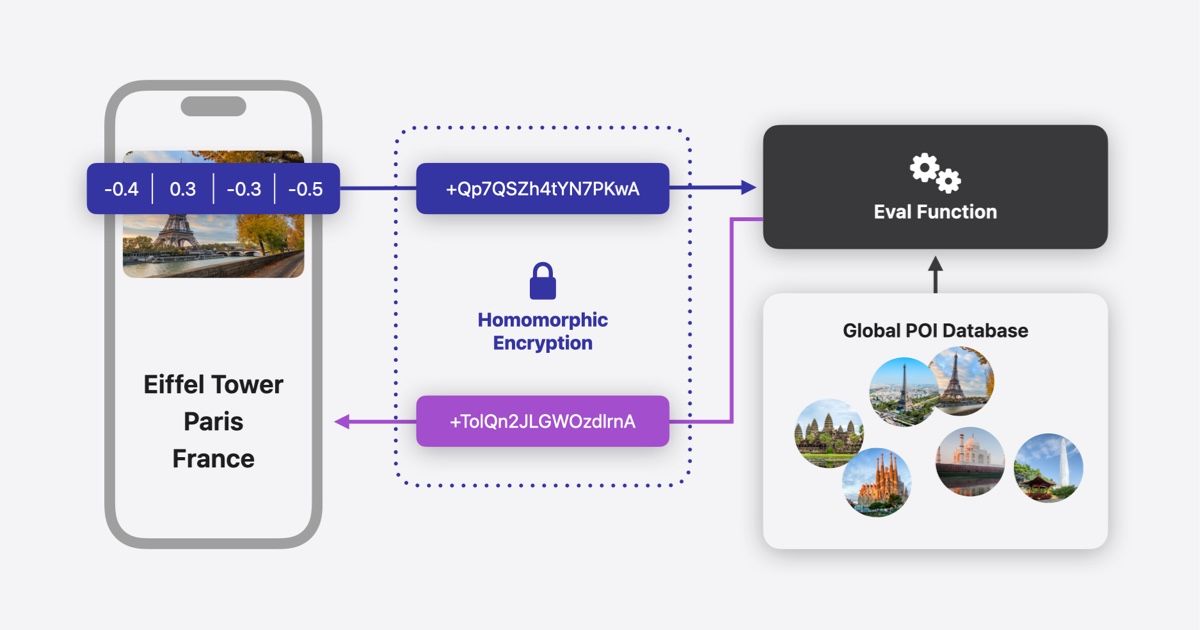
The table below compares the two most prominent open-source toolkits available for enterprise integration. Use this data to guide your initial prototype selection.
| Library | Primary Scheme | Bootstrapping | Best For | Integration Ease |
|---|---|---|---|---|
| OpenFHE | CKKS | Built-in (Optimized) | Deep Learning (DNN/CNN) | High (Python/C++) |
| TFHE | RLWE/GGHP | Native (Fast) | Logic Gates & Boolean | Medium (C++/Rust) |
| Microsoft SEAL | CKKS/BFV | Experimental | General Purpose Math | High (C++) |
| PALISADE | Multiple | Limited | Academic Research | Medium (C++) |
OpenFHE is currently the preferred choice for developers implementing convolutional neural networks. Its CKKS scheme natively supports approximate arithmetic, which aligns with the floating-point requirements of most modern AI models. The library includes optimized bootstrapping routines that significantly reduce the noise growth during complex inference tasks.
Conversely, TFHE excels in scenarios requiring precise boolean logic or small-scale computations. If your AI workflow involves heavy use of comparators, multiplexers, or discrete decision trees, TFHE’s gate-by-gate evaluation offers lower latency. However, it lacks the native floating-point convenience of OpenFHE, requiring more manual conversion of data types.
For 2026 deployments, prioritize toolkits with active standardization contributions. The Homomorphic Encryption Standardization effort is finalizing interoperability protocols that will likely dictate library compatibility in the near future. Choosing a toolkit aligned with these standards ensures your infrastructure remains viable as cross-library data exchange becomes commonplace.
Prepare encrypted data inputs
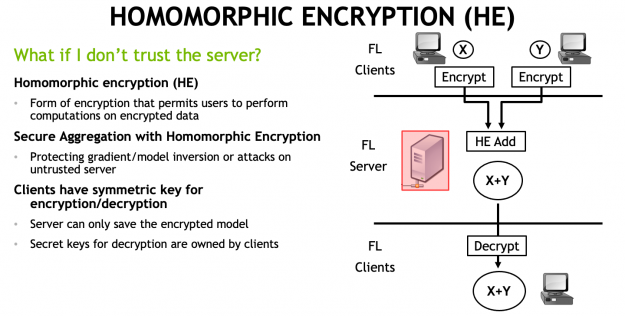
Before any model training or inference begins, raw data must be converted into ciphertext. In a homomorphic encryption workflow, this is the most critical boundary: the cloud server must never see plaintext. For 2026 implementations, this step has shifted from manual vector manipulation to standardized API calls, often leveraging hardware acceleration to keep latency manageable.
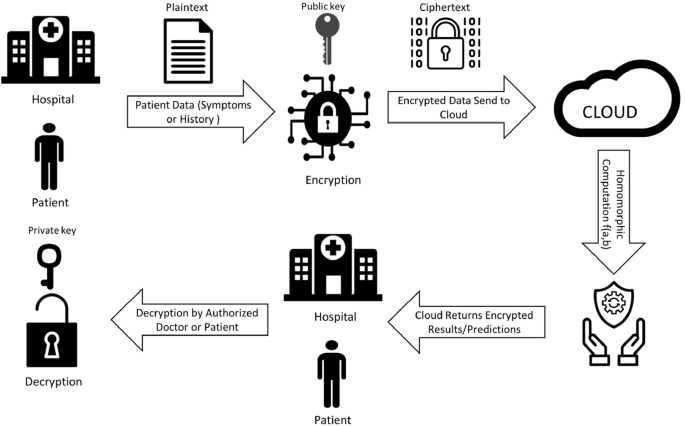
Start by initializing your encryption library (e.g., OpenFHE, Microsoft SEAL) and generating a public/private key pair. The public key is used for encryption; the private key remains securely on your local machine for decryption. In 2026, look for libraries that support CKKS or BFV schemes optimized for AI tensor operations, and ensure your hardware supports AVX-512 or Intel AMX instructions for faster key generation.
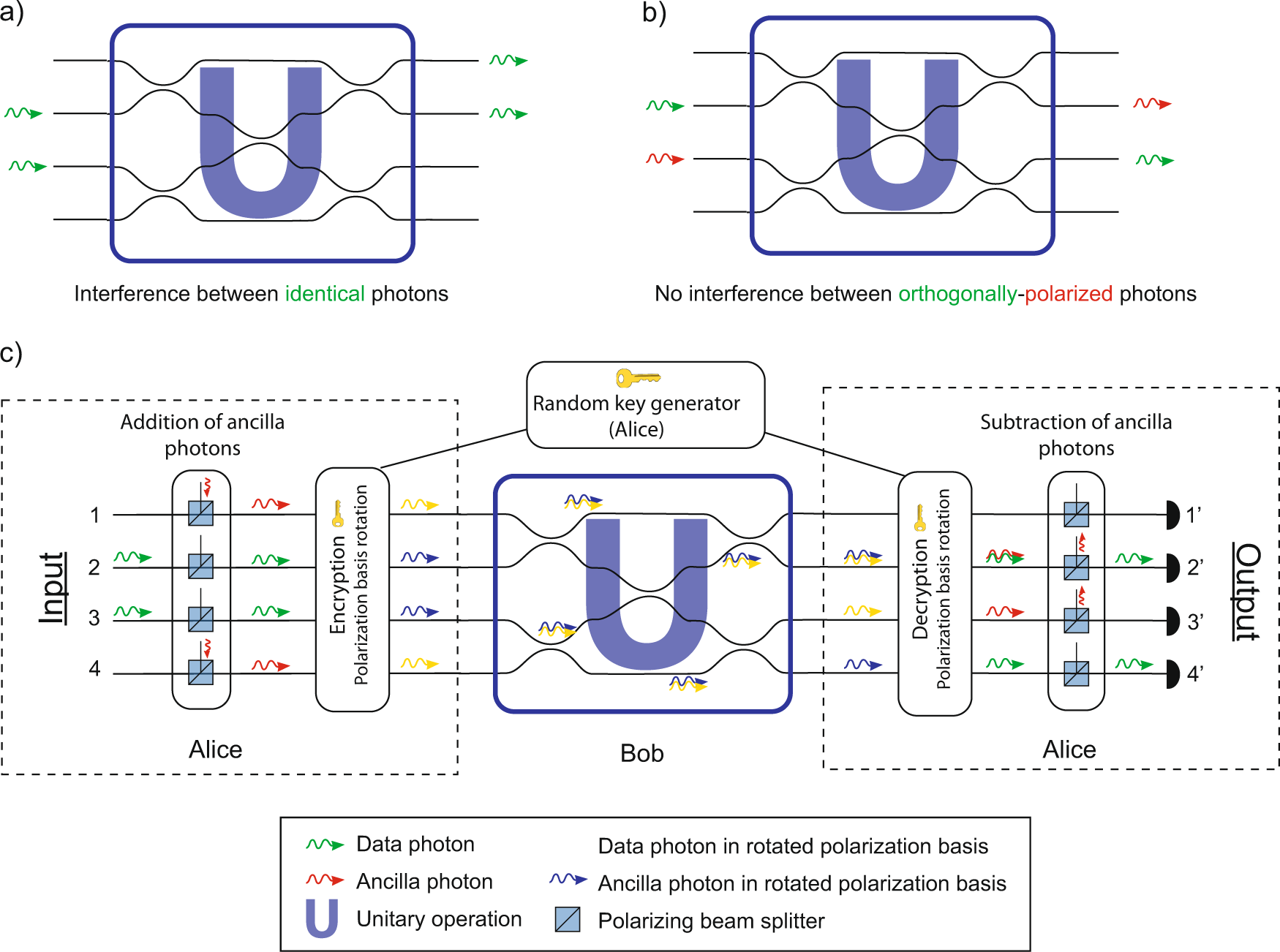
Homomorphic encryption works best with fixed-point numbers rather than arbitrary-precision floats. Convert your raw input vectors into fixed-point representations, ensuring you maintain enough precision bits to avoid rounding errors during computation. This step is crucial for AI models, where slight numerical drift can significantly degrade model accuracy. Scale your data to fit within the ciphertext modulus limits defined by your chosen scheme.
Using the public key, encrypt your preprocessed tensors directly on your local environment. This ensures the plaintext data never leaves your secure perimeter. Modern 2026 toolchains allow batch encryption, enabling you to encrypt multiple data points simultaneously, which improves throughput when preparing large datasets for federated learning or private inference.
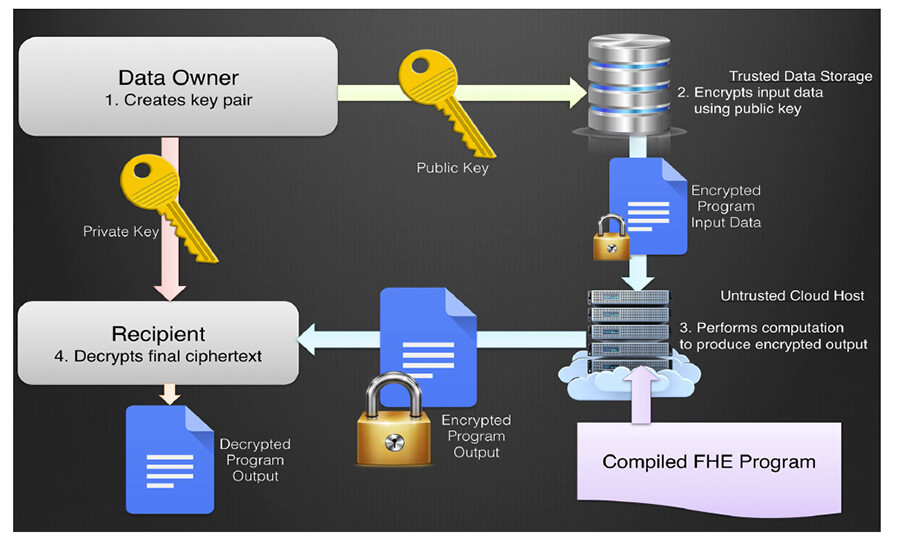
Once encrypted, the data becomes a series of opaque ciphertext blocks. Send these blocks to the cloud server. The server can now perform matrix multiplications, convolutions, or other AI operations directly on these ciphertexts. Because the data is encrypted, the server computes on it without ever knowing the underlying values, preserving privacy while leveraging the cloud's computational power.
By following this sequence, you establish a secure foundation for privacy-preserving AI. The key takeaway is that encryption happens locally, before any data interacts with the external environment. This approach aligns with 2026 standards where hardware acceleration makes FHE viable for production AI workloads, reducing the historical overhead that once made it impractical.
Run inference on ciphertexts
In 2026, the gap between theoretical privacy and practical AI inference has narrowed, but it remains the most computationally expensive phase of the FHE lifecycle. Unlike plaintext operations that execute in nanoseconds, homomorphic operations on ciphertexts involve complex polynomial arithmetic and noise management. Running an AI model—such as a neural network or logistic regression—directly on encrypted data requires translating standard arithmetic into a sequence of homomorphic additions and multiplications.
The performance overhead is significant. A single matrix multiplication, which is the backbone of deep learning inference, can be thousands of times slower than its plaintext equivalent. However, hardware acceleration and optimized libraries in 2026 have made this feasible for specific, high-value use cases. Developers must account for this latency when designing system architectures, often relying on specialized accelerators or cloud-based FHE services to maintain acceptable response times.
To execute inference successfully, you must ensure your model is compatible with the specific FHE scheme (e.g., BFV, CKKS) you are using. This often involves quantizing weights and activations to fixed-point or integer representations that the scheme can handle efficiently. The following steps outline the process of preparing and running inference on encrypted inputs.
Before encryption, your AI model’s parameters must be converted from floating-point to fixed-point or integer formats compatible with your chosen FHE scheme. This quantization process reduces precision but is essential for maintaining manageable ciphertext sizes and computational complexity. In 2026, standard libraries often provide automated quantization tools that preserve model accuracy while aligning with the discrete nature of homomorphic arithmetic.

Once the model is quantized, the input data (such as an image pixel vector or text embedding) must be encrypted using the public key. This process, known as bootstrapping or simple encryption depending on the scheme, transforms your plaintext inputs into ciphertext slots. Ensure the encoding strategy matches the structure of your model’s expected input dimensions to avoid padding errors or data misalignment during the homomorphic operations.
The core of the inference process involves performing matrix multiplications entirely within the encrypted domain. Each layer of the neural network is evaluated by multiplying the encrypted input vector by the encrypted weight matrix. This step generates intermediate ciphertexts that accumulate noise. In 2026, optimized libraries handle the complex polynomial arithmetic required for these multiplications, but developers must monitor noise levels to prevent premature decryption errors.

After each matrix multiplication, non-linear activation functions (like ReLU or Sigmoid) must be applied to the resulting ciphertexts. This is the most challenging part of FHE inference, as these functions are not natively supported by most homomorphic schemes. Developers typically use polynomial approximations or lookup tables to simulate these activations. The accuracy of these approximations directly impacts the final inference result, so careful calibration is required.
Once the final layer has been processed, the resulting ciphertext is decrypted using the private key to reveal the plaintext output. This output, such as a classification label or a regression value, can now be safely interpreted. Compare this result against a plaintext inference run to verify accuracy and ensure that quantization and approximation errors did not degrade the model’s performance beyond acceptable thresholds.
Decrypt and verify results
Once the cloud provider finishes the computation on the encrypted data, they return the ciphertext. This is not the final answer yet; it is a locked box that only you can open. In 2026, this final step has become significantly faster thanks to hardware acceleration. Modern CPUs with AES-NI and specialized FHE instruction sets reduce the decryption latency that used to make this step a bottleneck. You are no longer waiting minutes for a simple inference result.
1. Decrypt with your private key
Take the returned ciphertext and run it through your local decryption function using your private key. This operation transforms the encrypted noise back into the original plaintext structure. Because FHE preserves mathematical operations, the result of the cloud computation decrypts directly to the same value as if you had run the model on your raw data. Ensure your local environment has the correct library bindings for your chosen scheme (e.g., BFV or BGV).
2. Validate the inference output
After decryption, compare the result against your expected schema. For AI models, this usually means checking that the output tensor matches the expected dimensions and data types. If you are running a classification model, verify that the probabilities sum to one. In 2026, standardized verification libraries often include built-in checksums or MAC (Message Authentication Codes) to ensure the cloud provider didn’t tamper with the ciphertext during transit or computation.
3. Handle edge cases and errors
Decryption failures are rare but possible if the ciphertext is corrupted or the key mismatch occurs. Implement strict error handling to catch decryption exceptions. If the result is garbage, it likely indicates a mismatch in the parameters between encryption and decryption. Log these events for debugging but never expose the raw error details to external users to avoid leaking structural information about your encryption scheme.
Note: Always keep your private key secure. If the key is compromised, the entire privacy guarantee of the homomorphic encryption process is void, regardless of how secure the cloud infrastructure is.
Common Implementation Mistakes
Even with the hardware acceleration and standardization maturity available in 2026, homomorphic encryption (FHE) remains unforgiving to poor parameter selection. Developers often treat FHE libraries like standard cryptography, ignoring the unique constraints of ciphertext capacity and noise growth. These oversights don’t just slow down your AI model; they break the computation entirely.
The most frequent error is exceeding the ciphertext capacity. Unlike traditional encryption, FHE ciphertexts carry a "noise" budget that degrades with every operation. When you run complex AI inference tasks, this noise accumulates rapidly. If you select parameters that don’t account for the depth of your circuit, the noise will overwhelm the plaintext, causing decryption to fail. Always benchmark your circuit depth against your chosen security level before deploying.
Another critical pitfall is ignoring the performance cost of bootstrapping. In 2026, hardware acceleration has made bootstrapping faster, but it is still the most expensive operation in an FHE scheme. Developers often underestimate the latency impact, leading to unacceptably slow inference times. Plan your architecture to minimize the number of bootstrapping operations by optimizing your polynomial degree and using efficient approximation techniques for non-linear functions.
Finally, testing with dummy data is not enough. You must validate your implementation against known ground-truth outputs to ensure the noise budget is managed correctly. Use a pre-deployment checklist to verify your parameters, benchmark latency, and test with realistic data distributions. This diligence prevents costly rework and ensures your AI privacy solution is both secure and performant.
-
Verify noise budget against circuit depth
-
Benchmark latency with hardware acceleration
-
Test with realistic dummy data distributions
Frequently asked questions about 2026 FHE implementation
Is Fully-Homomorphic Encryption fast enough for production AI workloads in 2026? Yes, but only with specific hardware acceleration. By 2026, standard CPUs are no longer the bottleneck. Modern implementations rely on GPU and FPGA offloading to handle the heavy lattice arithmetic. If you are still targeting general-purpose CPUs for real-time inference, the latency remains prohibitive. Use hardware-accelerated libraries like Microsoft SEAL or OpenFHE with CUDA support to achieve viable throughput.
Has NIST finalized a standard for FHE? NIST has not selected a single FHE standard for general-purpose encryption like it did for Post-Quantum Cryptography (PQC). However, the standardization landscape is maturing. The NIST WPEC 2026 workshop and the FHE.org 2026 conference are actively driving interoperability standards. You should design your stack to be library-agnostic, abstracting the cryptographic backend so you can swap implementations as formal standards emerge.
Can I run transformer models using FHE? Yes, but you must approximate the model. FHE struggles with non-linear operations like ReLU or Softmax. In 2026, the industry standard is to use piecewise polynomial approximations for these activations. You will need to quantize your model weights and biases to lower bit-widths (e.g., 8-bit) before encrypting them to keep the noise growth manageable during multiplication.
What is the best starting library for 2026? Start with OpenFHE or Microsoft SEAL. OpenFHE offers a more unified API across different schemes (BFV, CKKS, TFHE), making it easier to prototype. Microsoft SEAL is highly optimized for specific use cases. Avoid low-level C++ implementations unless you are building a custom backend. Use the Python bindings provided by these libraries to integrate with your existing PyTorch or TensorFlow pipelines.
Is FHE suitable for training AI models? Currently, no. FHE is primarily viable for inference. The computational overhead for training—especially backpropagation through many layers—is still too high for most practical applications. Focus your 2026 implementation on protecting the inference stage, where you can leverage hardware acceleration to mask the model and inputs from the cloud provider.
No comments yet. Be the first to share your thoughts!