
Get fully homomorphic encryption 2026 right
Before deploying fully homomorphic encryption (FHE) in production, you need a clear map of your constraints. FHE is powerful but expensive. It trades computation speed for privacy. If you skip the prerequisites, you will hit performance walls or compliance gaps later.
Start by auditing your data types. FHE libraries support specific data structures—integers, fixed-point numbers, and booleans. If your model relies on complex floating-point operations, you must first quantize or discretize the data. This step is non-negotiable for most healthcare and financial use cases.
Next, choose your hardware strategy. FHE workloads are CPU-bound and memory-intensive. Cloud instances with large RAM allocations are essential. GPU acceleration is emerging but not yet standard for all FHE primitives. Budget for higher compute costs upfront to avoid latency issues during inference.
Finally, verify your regulatory alignment. FHE keeps data encrypted during processing, which helps satisfy GDPR and HIPAA requirements. However, it does not replace access controls or audit logs. Ensure your encryption keys are managed securely and that your legal team has reviewed the new data handling workflows.
Work through the steps
FHE works best as a clear sequence: define the constraint, compare the realistic options, test the tradeoff, and choose the path with the fewest hidden costs. That order keeps the advice usable instead of decorative. After each step, pause long enough to check whether the recommendation still fits the reader's actual situation. If it depends on perfect timing, unusual access, or a best-case budget, include a simpler fallback.
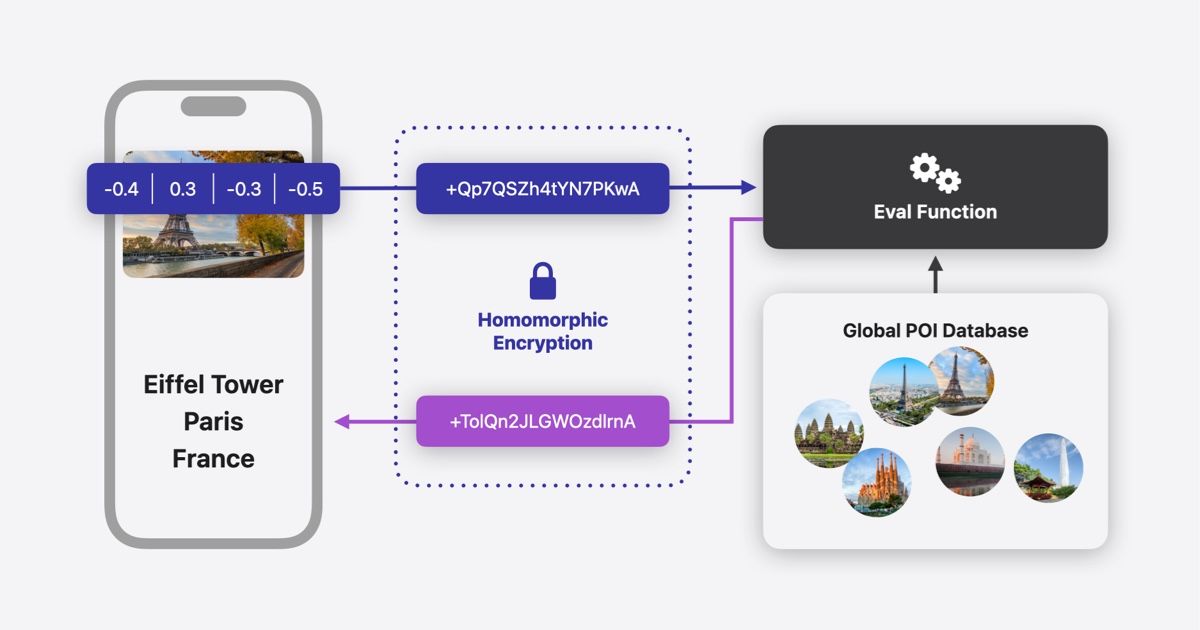
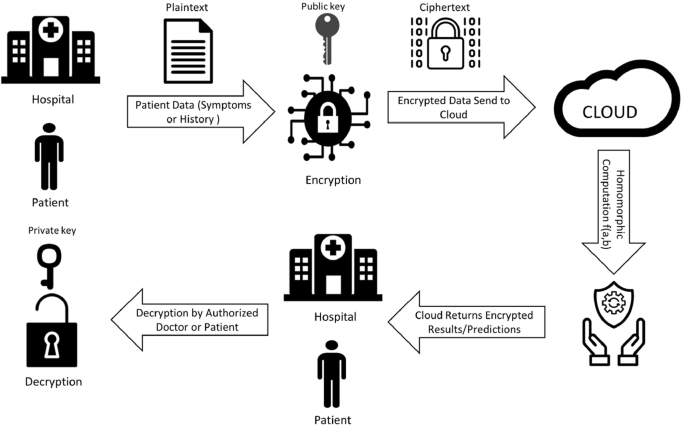
Fix Common Mistakes in FHE Implementation
Full homomorphic encryption (FHE) promises to run AI models on encrypted data, but the gap between theory and production is wide. Most projects fail not because the math is wrong, but because engineers ignore the hidden costs of computation. Before you deploy FHE in healthcare or finance, avoid these three critical errors.
Ignoring Latency Costs
FHE is exponentially slower than plaintext processing. A single matrix multiplication in a neural network can take seconds or minutes instead of milliseconds. Assuming FHE will match the speed of standard cloud inference is a fatal planning error. You must benchmark specific operations against your latency budgets. If your use case requires real-time responses, FHE may not be viable without significant architectural changes or hybrid approaches.
Underestimating Memory Footprint
Encrypted data is much larger than plaintext. A single float can expand to kilobytes of ciphertext. Loading a large AI model into memory with FHE can exhaust server RAM instantly. Always calculate the memory expansion ratio for your specific library (e.g., OpenFHE, TFHE). If you cannot fit the model in memory, you must implement complex paging or chunking strategies that further degrade performance.
Skipping Precision Analysis
FHE operations introduce noise that accumulates with each calculation. If you do not carefully manage precision, the output becomes garbage. Many developers use standard 32-bit floats without adjusting for FHE’s limitations. You must determine the maximum number of multiplications your circuit can support (bootstrapping frequency) and choose the right precision (e.g., 16-bit vs. 32-bit) to balance accuracy and speed. Test your model’s output accuracy rigorously before trusting it for any patient or financial decision.
Fully homomorphic encryption 2026: what to check next
Before committing infrastructure to privacy-preserving AI, teams need to separate shipping capabilities from theoretical hype. The technology has moved past the lab, but specific constraints remain around performance and standardization.
No comments yet. Be the first to share your thoughts!