
Get fully homomorphic encryption 2026 right
Before you deploy Fully Homomorphic Encryption (FHE) in a production environment, you must establish a clear boundary between theoretical capability and operational reality. FHE allows computations over encrypted data, offering strong privacy guarantees, but it comes with significant computational overhead and complexity that can disrupt existing workflows if not planned for correctly.
Start by defining the specific data sensitivity and regulatory requirements that necessitate FHE over simpler methods like TLS or database-level encryption. Not every workload benefits from FHE; it is most effective for scenarios where data must remain encrypted during processing, such as third-party analytics or multi-party collaborations. If your data is only at rest or in transit, standard encryption protocols are likely more efficient and sufficient.
Next, assess your infrastructure readiness. FHE workloads are CPU-intensive and often require specialized libraries or hardware acceleration to perform at acceptable speeds. Ensure your cloud providers or on-premise servers can handle the increased latency and resource consumption. Without proper benchmarking, you risk deploying a system that is too slow for real-time use or too expensive to scale.
Finally, verify that your development team has the necessary expertise. FHE libraries are not as ubiquitous as standard encryption tools, and debugging encrypted code requires a different mindset. Choose a well-maintained library with active community support, such as those discussed in recent FHE.org conferences, to ensure long-term maintainability and security updates.
Work through the steps
Deploying fully homomorphic encryption (FHE) in a production environment is not a simple library installation. It requires careful orchestration of key generation, data encryption, and computation management. The process transforms raw data into a form that can be processed without decryption, preserving privacy while enabling utility. This section walks through the practical sequence for implementing FHE in cloud security workflows.
1. Select the appropriate FHE scheme
FHE schemes vary significantly in their capabilities and performance characteristics. The most common approach uses the BFV (Brakerski/Fan-Vercauteren) scheme for integer arithmetic or CKKS (Cheon-Kim-Kim-Song) for approximate real-number computations. Your choice depends entirely on the data types you need to process. If you are building a privacy-preserving analytics engine, CKKS is often the better fit for handling floating-point precision. For integer-based cryptographic operations or exact counting, BFV provides stronger guarantees. Review the official specifications for both to understand their noise budget limits.
2. Generate and manage the key pair
Every FHE system relies on a public key for encryption and a secret key for decryption. In a cloud context, you must decide where these keys reside. A common pattern is to keep the secret key in a secure enclave or a hardware security module (HSM) while distributing the public key to client applications. This separation ensures that the cloud provider never sees the decryption key. You should also implement key rotation policies. Long-lived keys increase the risk surface if a breach occurs. Automate the generation of fresh key pairs for each tenant or session where possible.
3. Encrypt data before transmission
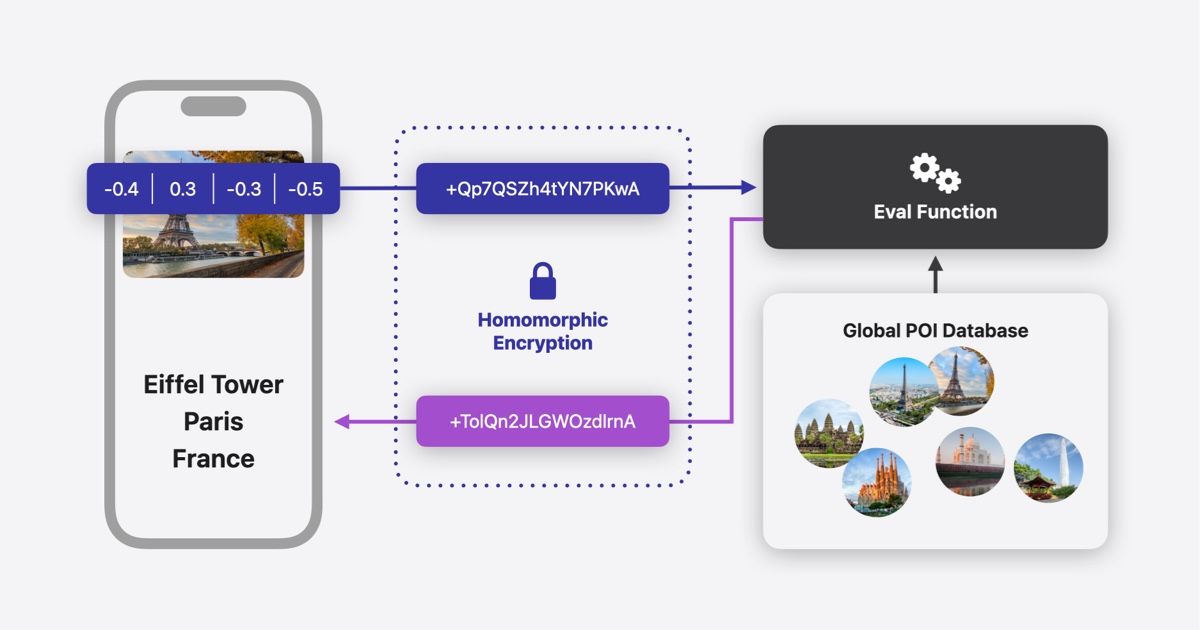
Once the public key is available, client applications must encrypt data before it leaves the user’s device or on-premise server. This step is critical because FHE only protects data in use, not just at rest. Ensure that your encryption library supports the specific polynomial modulus degree required by your chosen scheme. Higher security levels require larger moduli, which directly impact performance. Test the encryption latency under load. If the encryption step becomes a bottleneck, you may need to batch multiple data points into a single ciphertext to amortize the computational cost.
4. Perform computations on ciphertexts
The cloud server receives the encrypted data and executes the desired logic directly on the ciphertexts. This is the core advantage of FHE: the server never sees the plaintext. However, operations are significantly slower than on unencrypted data. Multiplication is particularly expensive compared to addition. To mitigate this, simplify your algorithms. Avoid complex control flows that require deep multiplication circuits. Instead, use linear approximations or lookup tables where possible. Monitor the "noise" level in the ciphertexts. Each operation adds noise, and if it exceeds a threshold, the result becomes invalid.
5. Implement bootstrapping for long computations
If your computation involves multiple multiplication steps, the noise will eventually overwhelm the ciphertext. Bootstrapping is a technique that refreshes the ciphertext by reducing the noise without decrypting the data. It is computationally intensive but necessary for deep circuits. In practice, you should structure your workflows to minimize the need for bootstrapping. Only enable it when absolutely required. Some modern libraries offer optimized bootstrapping routines that can reduce the overhead by an order of magnitude. Benchmark these routines against your specific use case to determine if the latency cost is acceptable.
6. Decrypt and verify results
The final step involves sending the encrypted result back to the client for decryption using the secret key. Before revealing the plaintext, verify the integrity of the computation. FHE schemes often include authentication tags or checksums to detect tampering or errors during the cloud processing phase. If the verification fails, reject the result and request a re-computation. This step ensures that the privacy guarantees of FHE are not undermined by computational errors or malicious server behavior.
7. Audit the implementation
Security is not a one-time setup. Regularly audit your FHE implementation against the latest threats and library updates. The field is evolving rapidly, with new schemes and optimizations emerging frequently. Join communities like FHE.org to stay informed about best practices. Review your key management practices and ensure that access logs are maintained for all decryption events. A comprehensive audit helps identify vulnerabilities before they can be exploited.
-
Selected BFV or CKKS scheme based on data type
-
Generated key pair with secret key in HSM or enclave
-
Encrypted data at the client edge before transmission
-
Optimized algorithms to minimize multiplication depth
-
Enabled bootstrapping only for necessary deep circuits
-
Verified ciphertext integrity upon decryption
-
Scheduled regular security audits and key rotations
Mistakes to Avoid in FHE Implementation
Fully homomorphic encryption (FHE) offers strong theoretical guarantees by allowing computations over encrypted data, but its high computational cost makes implementation unforgiving. Small architectural errors compound quickly, turning a viable prototype into an unusable production system. Avoid these common pitfalls to maintain performance and security.
Ignoring Computational Overhead
FHE operations are significantly slower than plaintext calculations. Treating encrypted data as if it were standard memory leads to unacceptable latency. You must profile your specific workload against hardware acceleration options early. If your application requires real-time responses, FHE may not be the right tool unless you optimize for batch processing.
Neglecting Parameter Selection
The security and performance of FHE depend heavily on parameter sets. Choosing parameters that are too weak compromises privacy, while overly complex sets drain resources. Always validate your ciphertext size against your cloud provider’s memory limits. Use established libraries that allow you to adjust these parameters based on your security requirements.
Underestimating Key Management
Managing keys in an FHE system is more complex than traditional encryption. Incorrect handling of public and secret keys can expose data during computation. Ensure your key rotation policies align with the lifecycle of the encrypted data. Store keys in hardware security modules (HSMs) where possible to prevent unauthorized access.
Skipping Proof of Correctness
Running computations on encrypted data introduces the risk of incorrect results if the underlying logic is flawed. Without verification, you cannot trust the output. Implement proof-of-computation mechanisms or cross-check critical results with decrypted samples in a secure environment. This step is essential for high-stakes applications like financial analytics.
Treating FHE as a Drop-in Replacement
FHE is not a direct substitute for standard encryption at rest or in transit. It enables computation on encrypted data, which is a different use case. Do not assume existing security protocols will work seamlessly. Redesign your data flow to isolate FHE workloads, ensuring that plaintext data is only exposed when absolutely necessary.
Fully homomorphic encryption 2026: what to check next
Readers often hesitate to adopt fully homomorphic encryption because the technology still carries significant overhead. Before committing engineering resources, it helps to understand the current tradeoffs between security guarantees and operational cost.
Work through The FHE


No comments yet. Be the first to share your thoughts!