
Why FHE fits zero-trust now
Fully Homomorphic Encryption (FHE) enables zero-trust architectures to process sensitive data without exposing plaintext keys or values to the compute environment. In 2026, this capability allows organizations to treat data as untrusted at every stage, including during active processing.
Previously, zero-trust models relied on strict network segmentation and identity verification. However, data had to be decrypted in memory to be analyzed, creating a vulnerable window. FHE closes this gap by allowing computations directly on ciphertext. The result remains encrypted until the final authorized user decrypts it, ensuring that even the infrastructure provider cannot inspect the underlying values.
Choose the right FHE toolkit for your use case
Selecting an FHE scheme is about matching the mathematical structure to your workload. In a zero-trust architecture, the wrong choice can turn a 10-second query into a 10-minute timeout, or worse, leak data through timing side-channels.
The three dominant schemes—TFHE, BFV, and CKKS—serve different computational needs. TFHE excels at boolean logic and low-latency operations. BFV is optimized for integer arithmetic. CKKS handles approximate real-number arithmetic, making it the standard for machine learning inference.
Compare FHE schemes by operation type
Use the table below to map your primary computational bottleneck to the correct library. Note that "latency" refers to single-operation time on standard hardware; batched operations may improve throughput but increase memory pressure.
| Scheme | Best For | Latency | Typical Use Case |
|---|---|---|---|
| TFHE | Boolean Logic | Low (ms) | Private search, access control |
| BFV | Integer Arithmetic | Medium (10s ms) | Private voting, secure aggregation |
| CKKS | Approximate Float | High (100s ms) | ML inference, statistical analysis |
Evaluate performance limits to account for
Before committing to a stack, benchmark your specific circuit. TFHE libraries like Concrete or OpenFHE offer fast bootstrapping for logic gates but struggle with large integer multiplications. If your architecture requires heavy matrix multiplication for AI models, CKKS is the only viable path, but you must account for precision loss.
For large-scale data applications, consider in-storage acceleration. Recent work on FHEIns demonstrates that offloading FHE computations to storage devices can bypass network bottlenecks, a critical optimization for 2026 architectures where data sovereignty is paramount. Always test your chosen scheme against a representative dataset before integrating it into your zero-trust pipeline.
Map data flows to encrypted boundaries
Zero-trust architectures demand that you treat every data movement as a potential breach. FHE is not a universal fix; it is a specialized tool for specific high-value moments in your pipeline. Using it everywhere introduces latency and computational overhead that traditional encryption or access controls handle more efficiently.
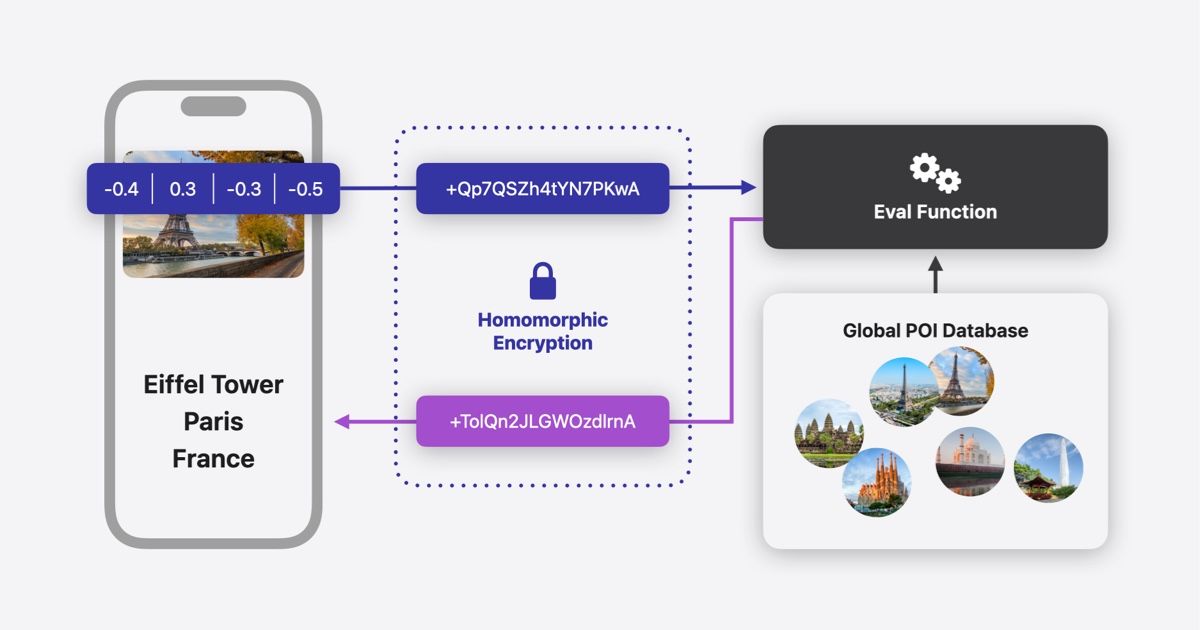
To identify where FHE belongs, map your data flows and look for the "encrypted boundary." This is the point where data must be processed in plaintext to be useful, yet remains exposed to untrusted environments. In a zero-trust model, the compute environment itself is untrusted, meaning you cannot rely on perimeter defenses to protect the data during calculation.
Scan your application logic for operations that require the data to be decrypted to function. Examples include querying encrypted databases, running machine learning inference on private datasets, or performing financial calculations on sensitive records. If the data must be visible to the processor to yield a result, it is a candidate for FHE.
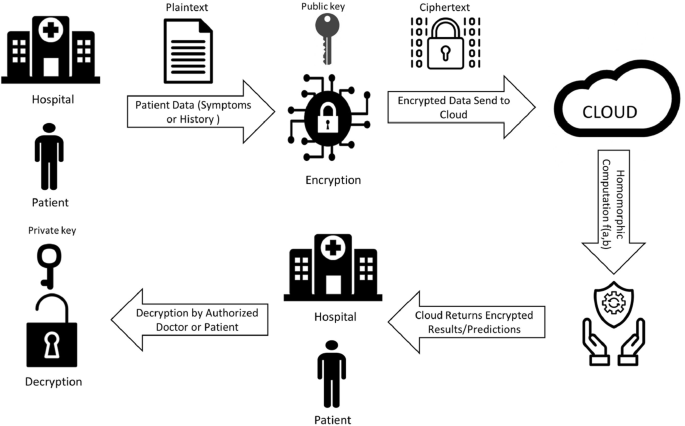
Determine who controls the hardware and software executing these operations. If the compute node is managed by a third-party cloud provider, a public blockchain validator, or any entity that should not see the raw data, traditional encryption at rest or in transit is insufficient. You need FHE to keep the data confidential during the actual computation.
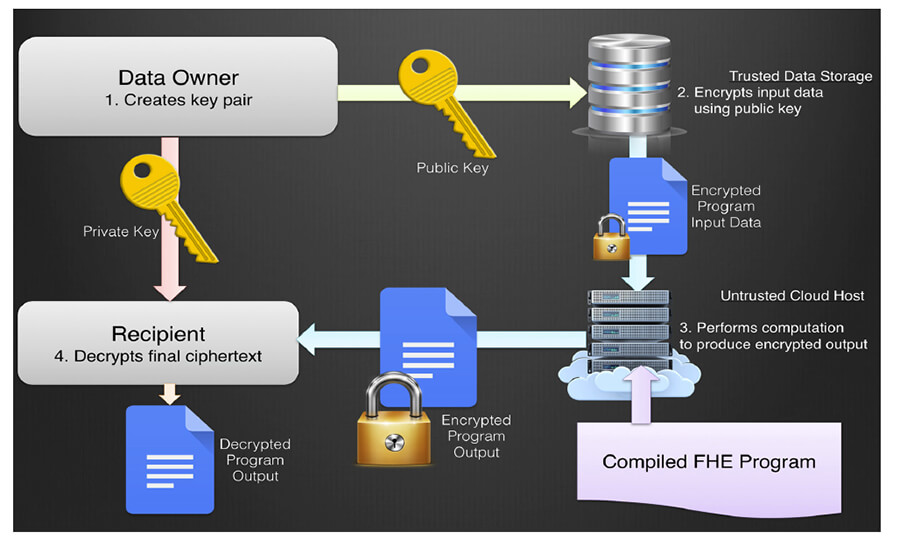
FHE is significantly slower than plaintext processing. For high-frequency trading or real-time video analysis, the latency may be prohibitive. Reserve FHE for batch processing, complex analytics, or scenarios where the sensitivity of the data outweighs the performance penalty. For less critical data, use standard TLS or database-level encryption.

Draw a clear line in your architecture. Data should be encrypted before it enters the untrusted zone and decrypted only after it leaves. Any processing that happens inside the untrusted zone must use FHE. This ensures that the "encrypted boundary" is maintained throughout the data lifecycle, even when the data is actively being used.

Once the computation is complete in the encrypted domain, the result should be decrypted only for the authorized recipient. This prevents the intermediate results or the final output from being exposed to the untrusted compute environment. The zero-trust model holds: the processor never sees the plaintext, only the ciphertext and the final, authorized result.
By mapping these boundaries, you ensure that FHE is applied where it adds genuine value. It transforms the compute environment from a liability into a trusted partner without exposing your sensitive data.
Implement the compute layer
Private onchain compute requires integrating fully homomorphic encryption into your application stack before any data touches the blockchain. This section covers the core technical steps for integrating the chosen toolkit into your architecture, focusing on API usage, key management, and handling ciphertext size overhead.
Start by initializing the encryption context. This step sets up the cryptographic parameters, such as the polynomial modulus degree and noise budget, which determine the computational capacity of your circuit. Most modern FHE libraries require you to select a specific parameter set that balances performance with the complexity of the logic you intend to run on-chain. Ensure this context is generated securely and shared only with authorized nodes.
Next, encrypt your raw data using the public key associated with the initialized context. Unlike traditional encryption, FHE allows computations on ciphertexts without decryption. However, this also means your input data grows significantly in size. A single 32-byte integer might become a several-kilobyte ciphertext. Plan your storage and transmission layers to handle this expansion, as it directly impacts gas costs and network latency.
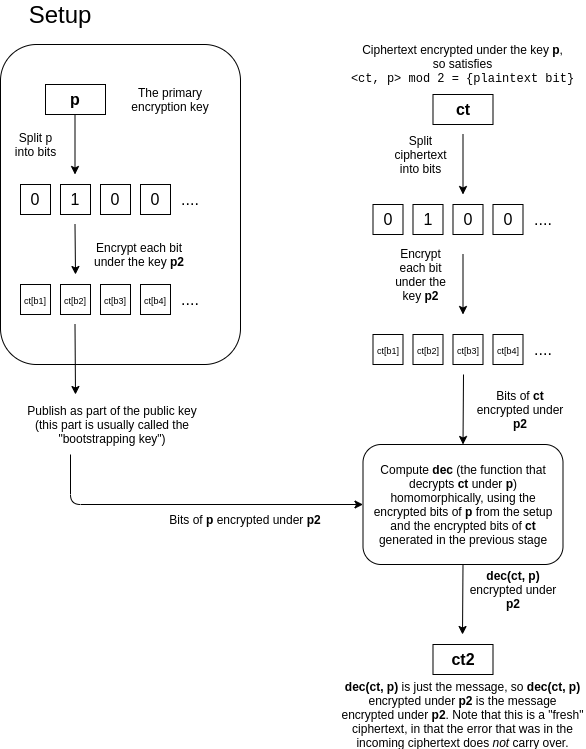
With encrypted inputs ready, execute your desired logic. FHE supports addition and multiplication on ciphertexts, allowing you to build complex functions like secure auctions or private voting. Each operation consumes part of the noise budget. If the budget runs out, the ciphertext becomes unusable (bootstrapping is required to refresh it, but this is computationally expensive). Keep your on-chain logic minimal to avoid exhausting the noise budget before the final result is reached.

Finally, decrypt the result using the secret key held by the authorized party. The output should be identical to what you would get if you had computed the function on the plaintext data. Verify the integrity of the result using zero-knowledge proofs generated during the computation phase to ensure the on-chain contract accepted the correct ciphertext transformation. This final step confirms that the private compute layer delivered accurate results without exposing the underlying data.
When integrating these steps, prioritize key management. The secret key is the single point of failure; if compromised, all encrypted data is exposed. Consider using threshold decryption schemes where multiple parties must collaborate to decrypt, aligning with zero-trust principles. Additionally, monitor ciphertext size overhead closely, as it can easily multiply by 100x or more compared to plaintext data, affecting both storage costs and transaction throughput.
Optimize for performance overhead
Fully homomorphic encryption (FHE) is powerful, but it comes with a steep performance tax. Operations on encrypted data can be 1,000 times slower than plaintext calculations. This latency gap is the primary barrier to adoption in 2026. You cannot simply swap plaintext logic for FHE without redesigning the architecture.
The most effective mitigation strategy is hardware acceleration. General-purpose CPUs are inefficient for the heavy linear algebra FHE requires. Moving computation to FPGAs or GPUs can reduce latency by an order of magnitude. Research into in-storage processing, such as IBM’s FHEIns, demonstrates that moving compute closer to the data minimizes transfer bottlenecks and leverages specialized silicon for ciphertext manipulation.
Algorithmic optimization is equally critical. Bootstrapping—a process that refreshes ciphertext noise—is often the most expensive operation. Reduce bootstrapping frequency by batching operations or using hybrid schemes where FHE handles only the sensitive subset of data. If 90% of your logic is public, keep it public. Reserve FHE for the encrypted core, then decrypt only the final result for downstream use.
Finally, profile your specific workload. FHE performance varies wildly depending on the ring dimension and number-theoretic transform (NTT) size. Test your exact use case against hardware benchmarks before committing to a full encryption pipeline. Small adjustments in polynomial degree can yield significant speed gains without compromising security.
Verify security and correctness
Before deploying any private onchain compute, you must prove that the encrypted result matches what a plaintext execution would yield. This validation ensures that the zero-trust architecture hasn’t introduced calculation drift or data corruption during the homomorphic operations.
1. Validate Ciphertext Integrity
Start by verifying that the ciphertext structure remains intact throughout the computation pipeline. Check that the noise budget hasn’t been exhausted prematurely and that the output ciphertext decrypts to the expected format. If the decryption fails or produces garbage, the underlying keys or the homomorphic scheme may be misconfigured.
2. Benchmark Latency and Accuracy
Run a parallel test with plaintext data to establish a baseline. Compare the output of the encrypted computation against the plaintext result to confirm mathematical equivalence. Simultaneously, measure the latency overhead. If the encrypted version is orders of magnitude slower than the plaintext baseline, you may need to optimize the circuit or adjust the parameter set.
3. Audit Key Management
Ensure that key management adheres to zero-trust principles. Verify that secret keys are never exposed in memory logs or client-side code. Implement regular key rotation schedules and audit access logs to detect any unauthorized key usage. This step is critical for maintaining the security guarantees of the homomorphic encryption standard.
4. Test Key Rotation
Simulate a key rotation event to ensure that the system can seamlessly transition to new keys without disrupting ongoing computations. This test validates the robustness of the key management protocol and ensures that old keys are securely retired.
Common fhe implementation: what to check next
Fully Homomorphic Encryption (FHE) is becoming a core privacy technology in 2026, enabling secure data processing across AI, blockchain, and financial sectors. However, integrating it into existing zero-trust architectures requires navigating specific technical hurdles. Below are answers to the most frequent questions regarding performance, standards, and operational scope.
The primary constraint remains performance overhead. While encryption and decryption are fast, homomorphic operations multiply computational cost. Developers must optimize circuits to minimize the number of multiplicative levels required. This is why batch processing is the current sweet spot for FHE deployment.
No comments yet. Be the first to share your thoughts!