
What zero-knowledge proofs mean for property
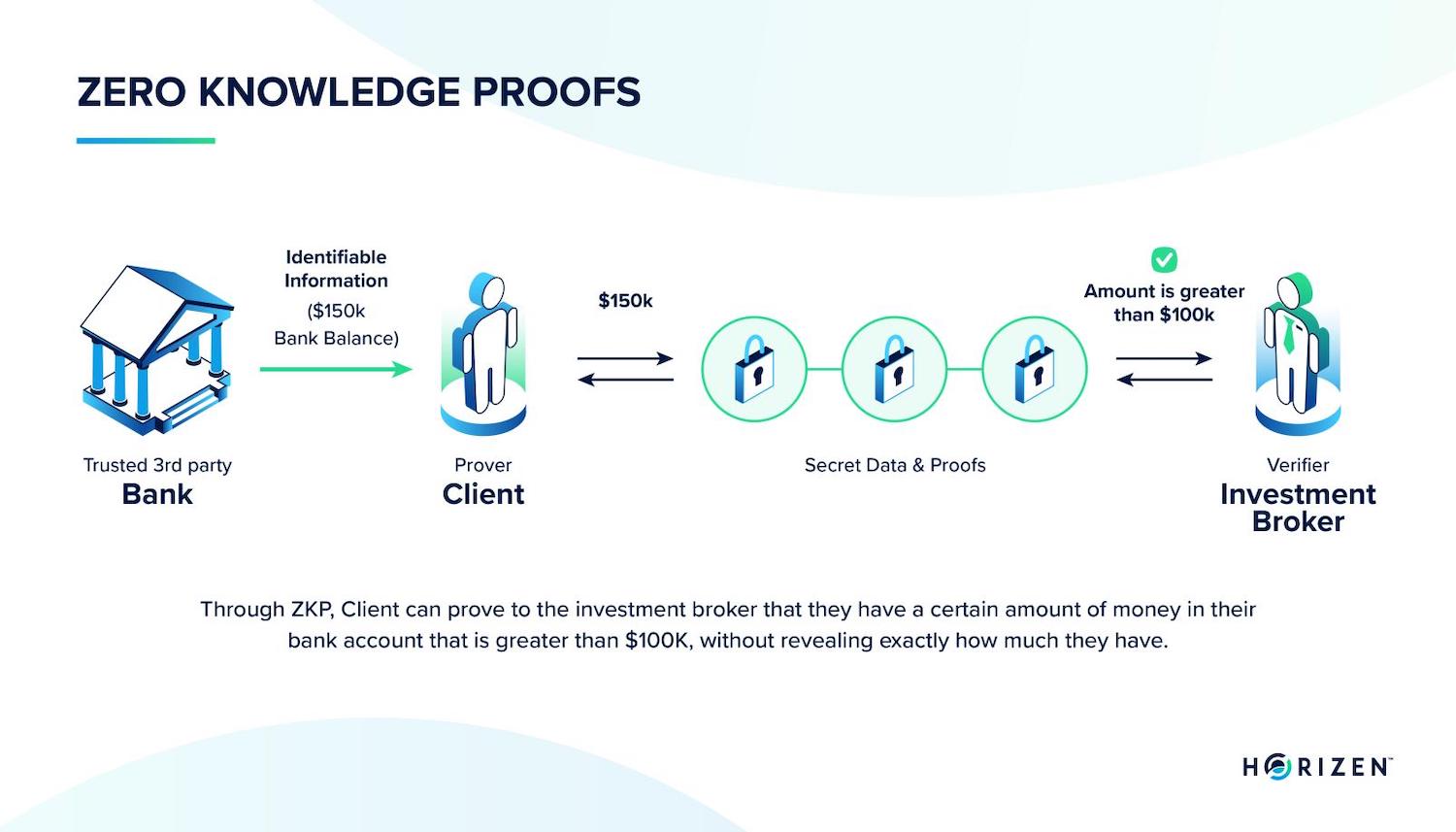
Zero-knowledge proofs (ZKPs) are a cryptographic protocol enabling one party to prove a statement is true without revealing the underlying data. In real estate compliance, this allows a "prover" to demonstrate to a "verifier" that specific regulatory conditions are met while keeping sensitive details private. This capability directly addresses the tension between regulatory transparency and data privacy.
Consider a standard identity verification scenario. You can prove you are over 18 to access a service without disclosing your exact date of birth, name, or country of origin. This is achieved by verifying a digital signature from a trusted authority, such as a government passport key, confirming only the age threshold is met. The verifier learns nothing beyond the fact that the condition is satisfied.
Applied to property transactions, ZKPs allow parties to confirm compliance with laws—such as anti-money laundering (AML) checks or title ownership—without exposing full financial histories or personal identifiers to every intermediary. This minimizes the attack surface for data breaches and reduces liability for all actors involved.
By separating the proof of compliance from the exposure of personal information, ZKPs offer a structural solution to the privacy paradox in real estate. Regulators receive the necessary assurance of legality, while property owners retain control over their sensitive information.
Comparing zero-knowledge proofs with traditional data sharing
Real estate transactions currently rely on a centralized, manual data-sharing model that exposes sensitive information to unnecessary risk. Under the traditional framework, verifying a buyer’s financial standing, a seller’s title history, or a tenant’s background requires handing over raw documents—bank statements, tax returns, and personal identifiers—to multiple intermediaries. This approach creates a fragmented chain of custody where data is copied, stored, and transmitted across numerous platforms, increasing the attack surface for breaches and compliance violations.
ZKPs offer a fundamentally different architecture. As defined by the National Institute of Standards and Technology (NIST), ZKPs are a core tool of Privacy-Enhancing Cryptography (PEC) that enable proving the truthfulness of a mathematical statement without revealing the underlying data itself [src-serp-5]. In practice, this means a party can cryptographically prove they meet specific compliance criteria—such as having sufficient funds or a clean credit history—without disclosing the actual account numbers or personal details. The verifier receives only a proof of validity, not the raw data.
The shift from raw data transmission to cryptographic verification significantly reduces liability and operational friction. Traditional methods require extensive manual review to detect fraud or ensure data integrity, a process prone to human error and delay. ZKP-based systems automate this verification, ensuring that data remains encrypted and private while still satisfying regulatory requirements. This distinction is critical for high-stakes transactions where privacy is not merely a preference but a legal obligation.
The following comparison outlines the operational and security differences between these two models across key dimensions relevant to real estate compliance.
Using FHE toolkits for onchain property records
Fully Homomorphic Encryption (FHE) allows computations to be performed directly on encrypted data, producing an encrypted result that decrypts to the same value as if the operations had been run on the plaintext. This capability represents a significant evolution from standard ZKPs, which typically verify a statement without revealing the underlying data. While ZKPs are excellent for proving compliance—such as confirming a buyer meets anti-money laundering (AML) thresholds—FHE enables the actual processing of sensitive property records without ever exposing them.
For real estate, this means a smart contract can calculate property tax liabilities, verify chain-of-title integrity, or enforce escrow conditions using encrypted inputs. The computation occurs in the ciphertext domain, ensuring that neither the blockchain nodes nor the executing contract can access the raw financial or personal data. This architecture is particularly valuable for high-stakes transactions where privacy is paramount but regulatory verification is mandatory.

The property owner or their legal representative encrypts the deed or financial data using a public FHE key. The encrypted blob is stored on-chain or in a decentralized storage layer, remaining unreadable to all parties except the holder of the private key.
A smart contract applies predefined compliance rules—such as verifying that the property value exceeds a certain threshold or that the seller holds valid title—directly against the encrypted data. The contract processes the ciphertext without decrypting it.
The contract outputs an encrypted proof of compliance. The relevant authority (e.g., a regulator or escrow agent) uses a decryption key to reveal only the necessary confirmation, such as "Approved" or "Rejected," without seeing the underlying property details.
This approach shifts the paradigm from "proving you have the data" to "processing the data without seeing it." It allows for complex, multi-party transactions to proceed with a high degree of legal certainty and data confidentiality. As FHE toolkits mature, they will likely become the standard for handling sensitive real estate data on public blockchains, balancing transparency with the strict privacy requirements of modern property law.
Navigating regulatory requirements in 2026
Real estate transactions involve sensitive personal data that falls under strict regulatory frameworks. In 2026, compliance is not merely a legal obligation but a structural requirement for market participation. ZKPs provide a cryptographic mechanism to satisfy these mandates without exposing the underlying data. This approach aligns with the principle of data minimization, ensuring that only the information strictly necessary for verification is shared.
Meeting GDPR and AML Standards
The General Data Protection Regulation (GDPR) requires that personal data processing be limited to what is necessary. Traditional verification methods often involve transferring entire documents, such as passports or bank statements, to third parties. ZKPs allow a prover to demonstrate compliance with specific criteria—such as being over 18 or residing in a permitted jurisdiction—without revealing the actual identity details. This capability directly supports GDPR's data minimization requirements by limiting exposure to only the verified claim.
Similarly, Anti-Money Laundering (AML) regulations demand rigorous Know Your Customer (KYC) checks. ZKPs enable financial institutions and real estate platforms to verify that a counterparty is not on a sanctions list or meets age requirements, while keeping the individual's identity private from other parties in the transaction. This reduces the attack surface for data breaches and limits liability for data handlers.
The Cryptographic Mechanism
A zero-knowledge proof allows one party to prove to another that a statement is true, without revealing any information beyond the validity of the statement itself. For example, a user can prove they possess a valid government-issued ID that confirms their age is above 18, without disclosing their name, address, or ID number. This distinction is critical for real estate compliance, where the validity of the participant is essential, but the granular details of their identity may not be relevant to every party in the deal.
By leveraging ZKPs, real estate entities can maintain a robust audit trail for regulatory bodies while protecting the privacy of their clients. This balance between transparency for regulators and privacy for users is the core value proposition of privacy-enhancing cryptography in this sector.
Real-world examples of private property transactions
ZKPs shift the burden of proof from data disclosure to cryptographic verification. In real estate, this allows parties to validate compliance requirements without exposing sensitive personal or financial records. The prover demonstrates that specific conditions are met, while the verifier confirms the validity without accessing the underlying data.
Mortgage income verification
Lenders traditionally require full bank statements to verify income eligibility for a mortgage. Using ZKPs, a borrower can generate a cryptographic proof that their income exceeds a specific threshold without revealing transaction history, account balances, or employer details. This preserves financial privacy while satisfying regulatory underwriting standards.
Property ownership and title history
Proving ownership of a property often involves exposing a complete title history, which may include past liens, transfers, or disputes. A ZKP system can verify that a seller holds clear title and has the legal authority to transfer assets. The verifier receives a binary confirmation of ownership status rather than the entire chain of title records.
Tenant screening and background checks
Landlords and property managers must verify that tenants meet specific criteria, such as credit scores or criminal background checks. ZKPs enable the generation of proofs that a tenant meets the minimum requirements without disclosing the actual credit report or criminal history. This limits the data exposure and reduces liability for both parties.
Compliance with anti-money laundering (AML) regulations
Real estate transactions are subject to strict AML regulations. ZKPs allow participants to prove that funds originate from legitimate sources without revealing the full source of funds or the identities of all intermediaries. This facilitates compliance with financial intelligence units while maintaining the confidentiality of the transaction participants.
No comments yet. Be the first to share your thoughts!