
Fully homomorphic encryption 2026: Limits to account for
The 2026 landscape for fully homomorphic encryption (FHE) is defined by a shift from theoretical possibility to pragmatic deployment. While the mathematical guarantees remain unchanged, the operational constraints have hardened. Systems that once promised "privacy-first AI" now face real-world bottlenecks in latency and memory overhead, particularly when handling large healthcare datasets or high-frequency financial transactions.
Current benchmarks suggest that FHE is viable for specific, high-value queries rather than bulk processing. For instance, recent research on privacy-preserving analytics highlights efficiency gains, but these often require specialized hardware acceleration or reduced model complexity. The tradeoff is clear: you gain data confidentiality at the cost of significant computational expense. This is not a plug-and-play solution for every privacy concern.
The upcoming FHE.org conference in Taipei (March 8, 2026) will likely serve as a key checkpoint for these practical adjustments. Industry leaders are expected to present updated benchmarks that reflect these constraints, moving away from abstract promises to concrete performance metrics. For now, organizations should treat FHE as a targeted tool for sensitive data silos, not a universal privacy shield.
Fully homomorphic encryption 2026: Choices that change the plan
By early 2026, fully homomorphic encryption (FHE) has moved from theoretical promise to practical deployment, but the technology still demands careful evaluation. The core value proposition remains unchanged: you can process data without decrypting it, ensuring that even the infrastructure provider cannot see the raw information. This is particularly critical in healthcare and finance, where regulatory compliance and patient confidentiality are non-negotiable.
However, this guarantee comes with significant operational costs. The primary tradeoff is performance. FHE operations are computationally expensive, often running 1,000 to 10,000 times slower than plaintext processing. For real-time applications, this latency can be prohibitive. Organizations must decide whether the privacy benefit justifies the increased compute time and infrastructure cost. In many cases, FHE is best reserved for high-value, low-frequency transactions rather than high-throughput data streams.
Another critical factor is data type support. Not all algorithms can be encrypted efficiently. Linear operations and simple comparisons are well-supported, but complex machine learning models or non-linear functions require significant optimization. If your use case involves deep learning inference, you may need to use specialized libraries that approximate these functions, which can introduce minor accuracy tradeoffs. Always verify that your specific workload is supported by the FHE scheme you choose.
The ecosystem is also evolving rapidly. New libraries and hardware accelerators are emerging to mitigate performance issues. Some providers now offer cloud-based FHE services that abstract away the complexity, allowing developers to integrate privacy-preserving features without managing the underlying cryptography. However, this introduces a dependency on third-party providers, which may not be suitable for all organizations.
| Factor | Performance | Complexity | Cost | Best Use Case |
|---|---|---|---|---|
| Latency | High (1000x-10000x slower) | Moderate | High | High-value, low-frequency transactions |
| Data Types | Limited (linear/non-linear approximations) | High | Moderate | Targeted analytics, not full ML pipelines |
| Infrastructure | Standard cloud compatibility | Low to Moderate | Variable | Organizations with existing cloud infrastructure |
| Compliance | High (GDPR, HIPAA friendly) | Low | Low | Regulated industries requiring strict data protection |
When evaluating FHE for your organization, start by identifying the specific data points that require protection. If you can achieve compliance with less expensive methods like tokenization or differential privacy, those may be more appropriate. FHE should be reserved for scenarios where the data itself must remain encrypted during processing, such as cross-institutional research or sensitive financial auditing.
Choose the next step
Turning the 2026 FHE blueprint into a working system requires matching your data sensitivity to the right encryption strategy. Fully homomorphic encryption (FHE) allows computation on encrypted data, but the performance tradeoffs differ significantly between healthcare records and financial transactions. Use this framework to decide where to deploy FHE first.
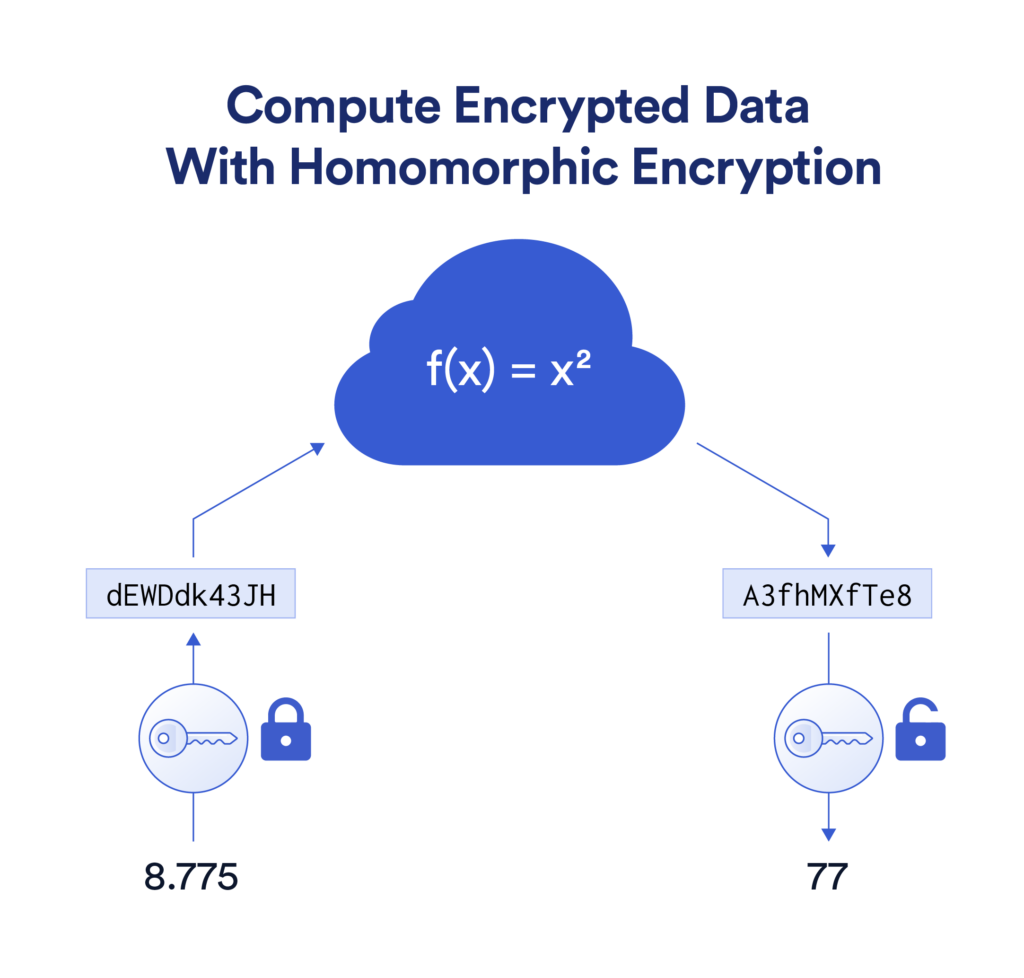
Identify which datasets contain protected health information (PHI) or sensitive financial identifiers. FHE is most valuable for data that must remain encrypted during processing, such as cross-institutional research or real-time fraud detection. Map these against your retention policy to determine if the computational cost of encryption is justified by regulatory requirements.

FHE introduces latency that makes it unsuitable for high-frequency trading or millisecond-level medical alerts. For batch analytics, such as quarterly risk modeling or population health studies, the overhead is manageable. Choose FHE for workloads where privacy outweighs speed, and reserve traditional encryption for real-time user-facing applications.
Ensure your infrastructure supports the specific FHE scheme required by your use case, such as BFV or CKKS. Recent advances in efficient privacy-preserving analytics show that hardware acceleration is often necessary for practical throughput. Verify that your cloud provider or on-premise servers support the instruction sets needed for homomorphic operations.

Deploy FHE in a controlled environment using a dataset that is sensitive but not mission-critical. This allows you to measure actual performance degradation and validate security guarantees without risking patient or financial data. Use findings to refine key management and error handling before scaling to core systems.
KeyTakeaways items=["FHE is best for batch analytics where privacy outweighs speed", "Audit data classification to identify high-value encryption targets", "Pilot with non-critical datasets to measure real-world performance"]
Spotting Weak Options in the FHE Market
The promise of fully homomorphic encryption is powerful, but the current implementation landscape is riddled with misleading claims. Many vendors advertise "privacy-preserving" capabilities that are actually just standard encryption at rest, leaving data vulnerable during computation. This distinction matters critically in healthcare and finance, where regulatory compliance depends on actual data protection, not marketing language.
A common mistake is assuming that all FHE solutions offer equal performance. Theoretical guarantees do not always translate to practical speed. For instance, recent papers like the one on efficient privacy-preserving analytics published in January 2026 highlight significant computational overheads that many commercial products fail to disclose. Buyers must demand specific latency metrics for their intended workloads rather than accepting generic benchmarks.
Another weak option is the lack of clear upgrade paths. FHE is a rapidly evolving field; solutions that lack modular architectures risk becoming obsolete quickly. Before committing to a vendor, verify if their platform supports seamless integration with emerging FHE libraries. This ensures your infrastructure remains viable as the standard matures, protecting your investment from premature technical debt.
No comments yet. Be the first to share your thoughts!