
Start with the right toolkit
Choosing the right fully homomorphic encryption library depends on whether your workload is latency-sensitive or throughput-heavy. Different libraries optimize for different operations, and picking the wrong one can make privacy-preserving compute unusable.
OpenFHE is a strong general-purpose choice. It supports a wide range of arithmetic and logical operations, making it suitable for complex AI inference and general compute tasks. However, its polynomial multiplication overhead means it may lag behind specialized libraries in raw speed for specific operations.
TFHE excels at low-latency operations. It is ideal for scenarios where you need to evaluate boolean circuits or perform simple logical checks quickly, such as in blockchain smart contracts or real-time data filtering. Its bootstrapping mechanism is optimized for speed, but it lacks the broad arithmetic support of OpenFHE.
HElib is designed for high-throughput linear algebra. If your primary use case involves heavy matrix multiplications, such as in large-scale machine learning training or data analytics, HElib’s optimized NTT (Number Theoretic Transform) routines can handle large datasets more efficiently than general-purpose libraries.
The table below compares these three major libraries across key performance metrics. Use this to narrow your selection before diving into implementation.
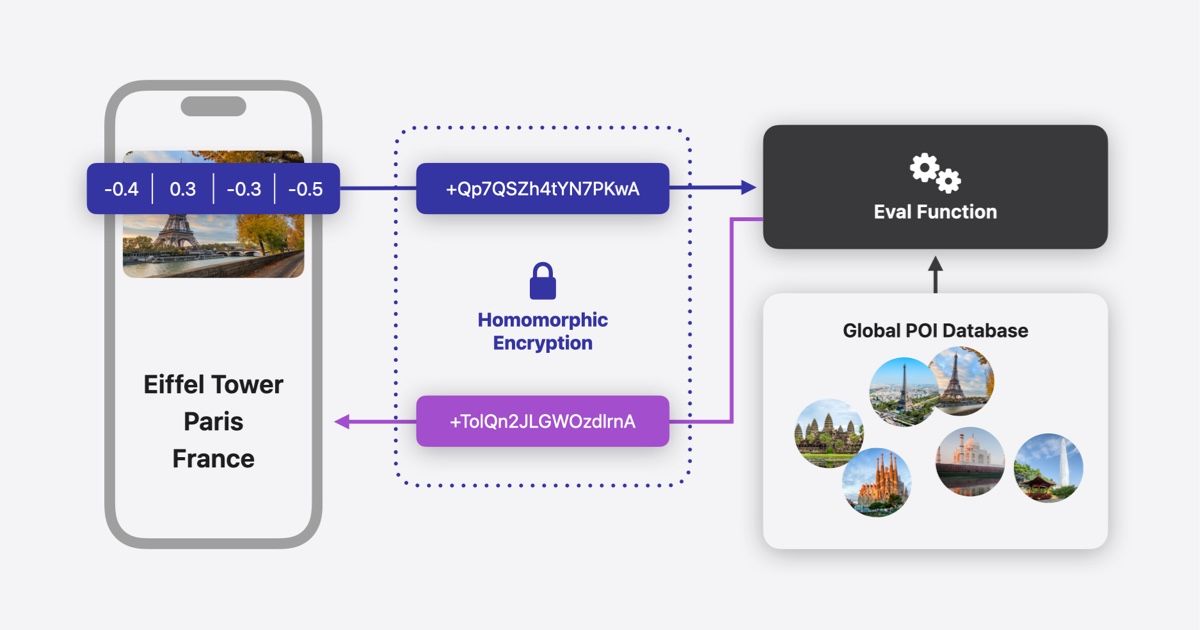
| Library | Latency | Throughput | Best For |
|---|---|---|---|
| OpenFHE | Medium | Medium | General compute, AI inference |
| TFHE | Low | Low | Boolean circuits, blockchain |
| HElib | High | High | Linear algebra, ML training |
Map your data flow carefully
Fully homomorphic encryption shifts the security boundary from the storage location to the computation itself. To implement this without exposing plaintext, you must define exactly where encryption occurs and how data moves through the pipeline. The architecture generally falls into two camps: client-side encryption, where the user’s device encrypts data before it ever leaves their control, and server-side encryption, where the service provider handles the heavy lifting.
Choosing the right flow depends on your threat model. If you are building a private search engine, the client encrypts the query, the server processes the ciphertext, and returns encrypted results. If you are processing sensitive medical records in a cloud environment, the data might be encrypted at rest and decrypted only in memory for brief processing windows. Every hop in this chain must be accounted for to prevent accidental plaintext exposure.
Start by identifying who holds the keys. In a client-side model, the user retains the secret key, meaning the server can never see the raw data. In a server-side model, the infrastructure provider manages the keys, which simplifies the user experience but requires strict access controls and audit logs to ensure internal staff cannot access the plaintext.
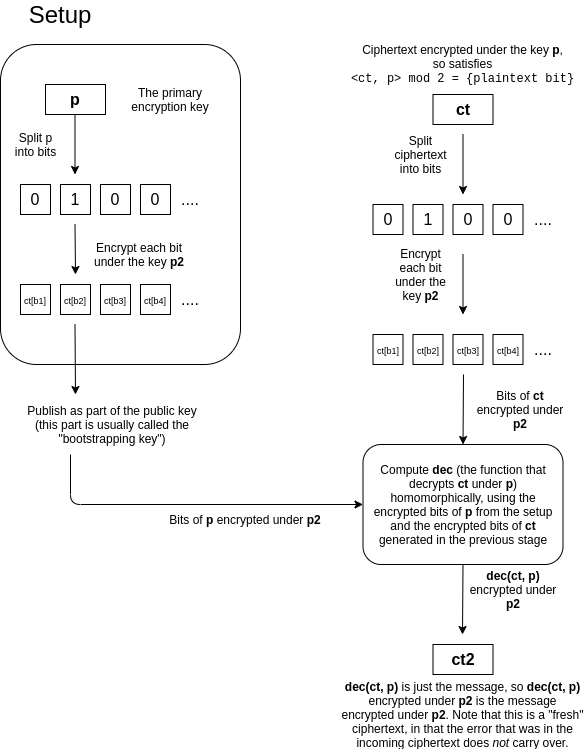
Pinpoint exactly when data enters the encrypted state. Data should be encrypted at the point of entry—whether that is a mobile app, a web form, or an API endpoint. Once encrypted, the data remains ciphertext as it travels through your database, processing queues, and analytics engines. This ensures that even if your storage layer is compromised, the attacker only sees garbled data.
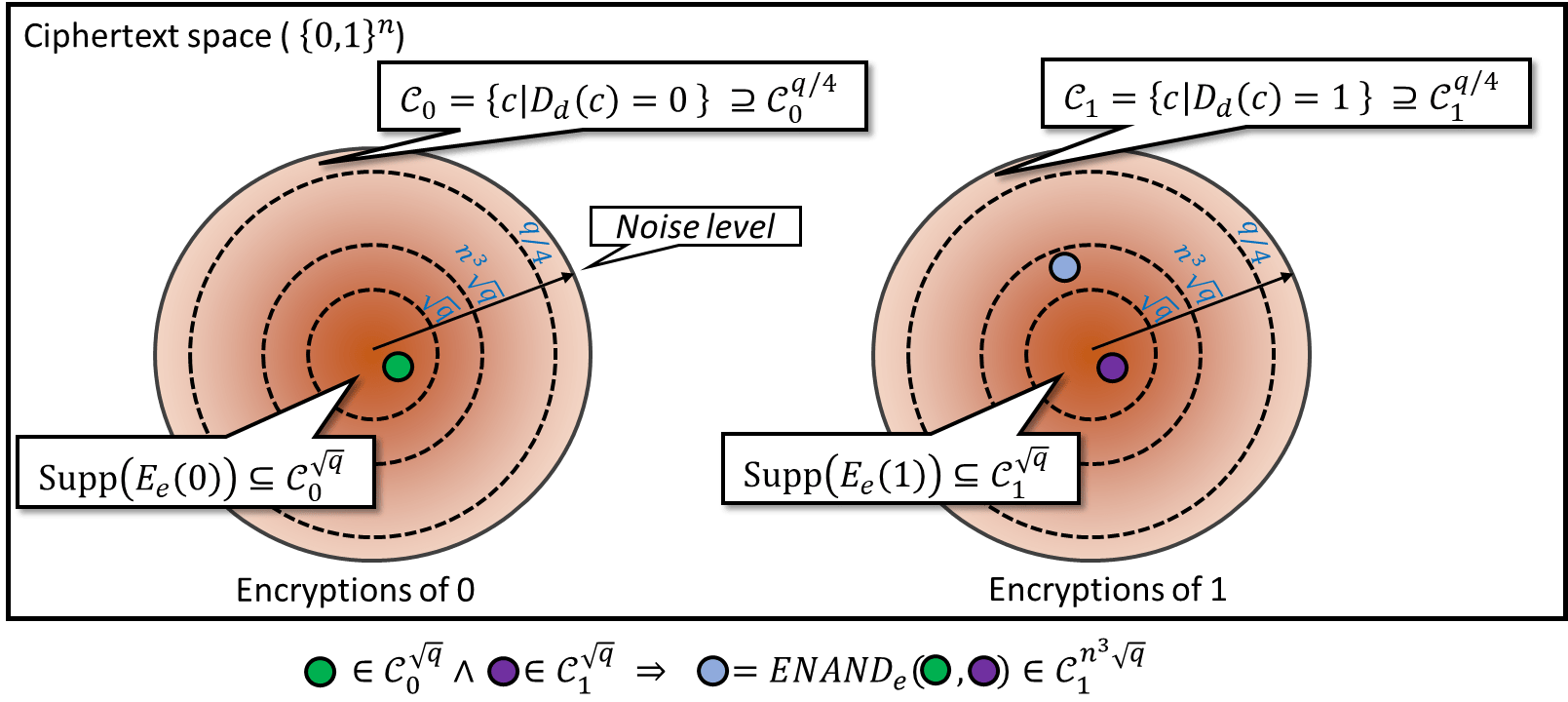
Determine where the plaintext is reconstructed. In fully homomorphic encryption, computations happen on ciphertext, but the final result must eventually be decrypted for the user to read. Ensure that decryption happens only on trusted endpoints, such as the client’s browser or a secure server instance. Avoid caching decrypted results in temporary files or logs, which can become accidental plaintext leaks.
By strictly enforcing this flow, you ensure that fully homomorphic encryption delivers on its promise: data remains protected not just at rest, but while it is being actively used. This approach minimizes the attack surface and aligns with modern privacy regulations that require data minimization and strict access controls.
Optimize for computational cost
Fully homomorphic encryption protects data privacy at the cost of significantly higher computational demands. Without optimization, even simple operations can take seconds or minutes. The goal is to reduce this overhead to seconds or milliseconds using three practical techniques: bootstrapping optimization, parallelization, and hybrid approaches.
Optimize bootstrapping
Bootstrapping refreshes ciphertext to allow deeper computations, but it is the most expensive operation in fully homomorphic encryption. To mitigate this, use optimized bootstrapping techniques that reduce the number of required refreshes. This involves batching operations and minimizing the depth of the circuit. Recent research, such as CROPHE, focuses on cross-operator dataflow optimization to reduce the computational load of bootstrapping. By optimizing the dataflow, you can significantly reduce the time required for each bootstrapping step.
Parallelize operations
Fully homomorphic encryption operations are inherently parallelizable. Use multi-threading and GPU acceleration to distribute the computational load. This is particularly effective for large-scale data processing tasks. By parallelizing operations, you can reduce the overall computation time by a significant margin. This approach is especially useful when dealing with large datasets or complex algorithms.
Use hybrid approaches
Combine fully homomorphic encryption with zero-knowledge proofs (ZKPs) or other cryptographic techniques to reduce the computational burden. For example, use ZKPs to verify the correctness of computations without revealing the underlying data. This hybrid approach can significantly reduce the amount of data that needs to be processed using fully homomorphic encryption, thereby reducing the overall computational cost. This is particularly useful in scenarios where data privacy is critical but computational resources are limited.
Test with real-world datasets
Benchmarks tell you how fast your code runs in isolation. Real-world data tells you if it actually works when the noise gets messy. To validate your fully homomorphic encryption implementation, you need to move beyond synthetic tensors and run your logic against datasets that mimic actual production traffic.
Start by selecting a standard benchmark suite. The Microsoft SEAL library provides reference implementations for common operations like matrix multiplication and polynomial evaluation. Run these against your compiled code to establish a performance baseline. If your implementation is slower than the reference by more than 10-20%, check your parameter selection. Tighter parameters improve security but drastically increase computation time.
Next, introduce data distribution variance. Most tutorials use uniform random data. Real applications rarely behave this way. Load a subset of the MNIST dataset for image processing or the UCI Adult dataset for classification tasks. Observe how ciphertext expansion affects memory usage when the data contains outliers or sparse values. Fully homomorphic encryption schemes are sensitive to noise growth; unusual data patterns can cause decryption failures if your error budget isn't accounted for.
Finally, stress test under load. Run multiple concurrent queries against your encrypted database or computation engine. Monitor latency spikes and resource exhaustion. A robust fully homomorphic encryption system must handle the queuing overhead of homomorphic operations without dropping requests. If your implementation crashes or times out under moderate load, you likely need to optimize your bootstrapping frequency or switch to a more efficient scheme like BFV or CKKS depending on your precision needs.
Fully homomorphic encryption deployment checklist
Before routing live data through your fully homomorphic encryption pipeline, verify these core areas. This checklist ensures your implementation is secure, performant, and compliant.
Security and Key Management
Confirm that your key generation follows standard fully homomorphic encryption security models. Verify that secret keys are stored in hardware security modules (HSMs) or trusted execution environments (TEEs). Ensure rotation policies are defined and tested.
Performance and Scaling
Fully homomorphic encryption computations are heavy. Benchmark your specific workload against your target latency requirements. Check if your chosen library (e.g., TFHE, CKKS) matches your data type needs. Plan for scaling by testing with larger batch sizes to identify bottlenecks early.
Compliance and Auditing
Document your encryption parameters and security assumptions. Ensure your implementation aligns with relevant data protection regulations like GDPR or HIPAA, depending on your jurisdiction. Prepare for third-party security audits by keeping clear logs of key usage and computation traces.
Common fully homomorphic encryption implementation: what to check next
Implementing fully homomorphic encryption requires balancing security with performance. Below are answers to the most frequent technical questions regarding deployment, costs, and integration challenges.
These challenges are active areas of research. As hardware accelerators improve, the performance gap between fully homomorphic encryption and plaintext processing is expected to narrow, making it more viable for broader commercial use cases.
No comments yet. Be the first to share your thoughts!