
The shift to encrypted computation
Fully homomorphic encryption (FHE) is moving from theoretical research to practical enterprise infrastructure in 2026. The technology enables secure data processing across AI, blockchain, and cloud environments without ever decrypting the underlying information. This capability addresses the core tension between privacy and performance, allowing organizations to utilize sensitive data for computation while keeping it protected.
The architecture relies on processing encrypted inputs directly to produce encrypted outputs. No decryption step occurs during the computation phase, which eliminates the vulnerability window where data is exposed in plaintext. This end-to-end encryption model ensures that service providers can perform necessary operations without accessing the actual user data.
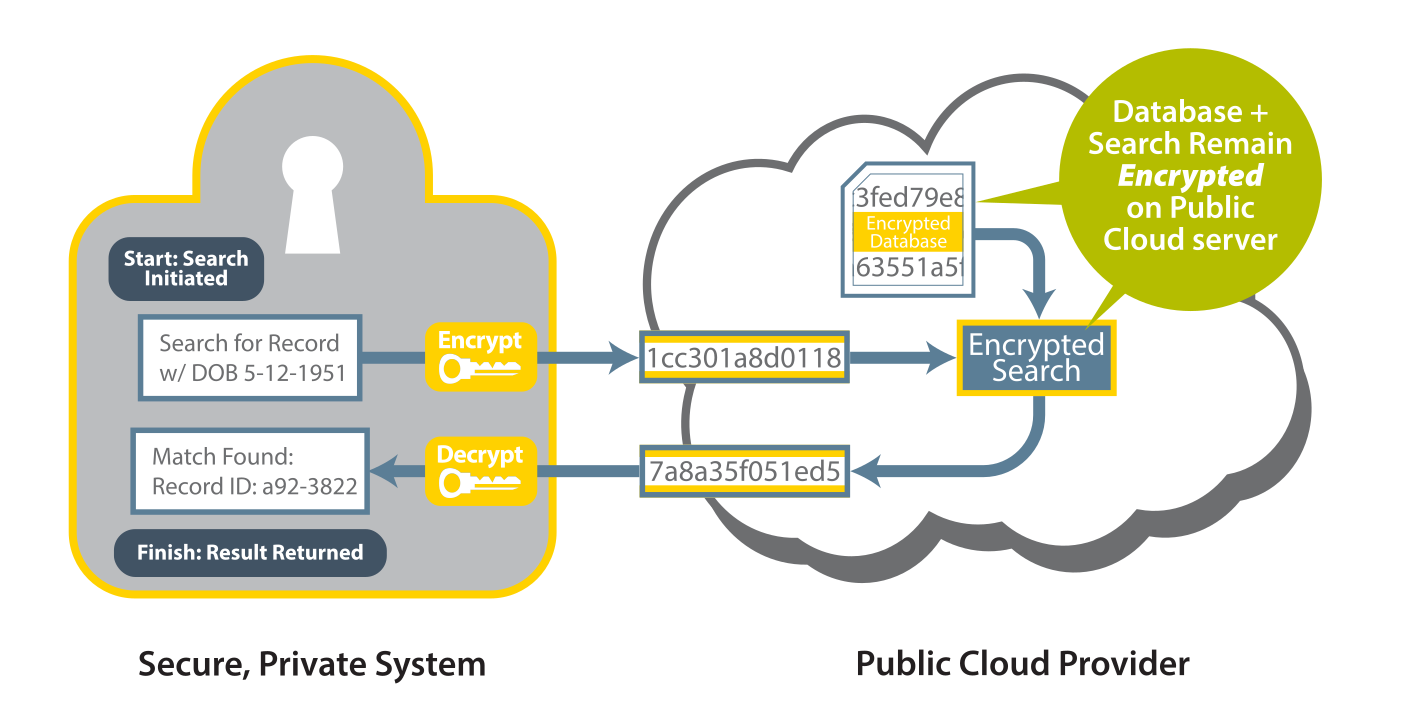
Standardization efforts are accelerating adoption. Industry groups have begun formalizing protocols to ensure interoperability between different FHE implementations. As these standards mature, enterprises can integrate FHE into their existing workflows with greater confidence, treating it as a foundational layer rather than a specialized add-on.
Private onchain compute examples
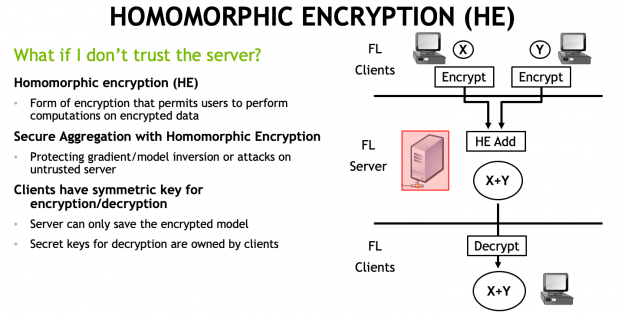
Fully homomorphic encryption is moving from theoretical cryptography to deployed enterprise infrastructure. The 2026 landscape shows distinct patterns where privacy-preserving computation solves specific blockchain bottlenecks. These examples illustrate how FHE enables onchain operations that were previously impossible without exposing raw data.
Key onchain FHE applications
-
Private smart contract execution
FHE allows smart contracts to process encrypted inputs directly. This enables blind bidding and confidential voting on public ledgers without revealing strategy or choice until the final tally. -
Encrypted data oracles
Oracles can now feed verified real-world data into blockchain programs while keeping the underlying values hidden. Enterprises use this to share supply chain metrics or credit scores without leaking proprietary business intelligence. -
Confidential DeFi lending
Lenders can verify collateral health and loan-to-value ratios without viewing the exact asset holdings. This protects user wealth data from front-running bots and public ledger scraping while maintaining protocol solvency.
The shift toward in-storage processing, such as the FHEIns architecture presented at DATE 2026, further accelerates these use cases by reducing the latency typically associated with homomorphic operations. As computational overhead decreases, these private compute patterns will become standard for any enterprise application requiring verifiable privacy.
Hardware acceleration closes the performance gap
Fully homomorphic encryption once required minutes to process simple queries, a bottleneck that kept it confined to academic research. By 2026, specialized hardware acceleration has compressed those operations into seconds, making FHE viable for enterprise workloads that demand real-time privacy.
The shift is driven by in-storage processing and optimized FPGA designs. Instead of moving encrypted data to a CPU for decryption and re-encryption, modern architectures process ciphertexts directly where the data resides. This reduces latency and bandwidth costs, turning FHE from a theoretical curiosity into a practical tool for cloud databases.
Benchmark comparison across hardware setups
The table below compares typical performance metrics for FHE operations across different hardware configurations. These figures represent average query latencies for standard encrypted search tasks on enterprise-grade datasets.
| Hardware | Avg. Latency (ms) | Ops/sec | Best For |
|---|---|---|---|
| CPU (Standard) | 1200 | 8 | Batch processing |
| GPU (CUDA) | 150 | 65 | High-throughput inference |
| FPGA (Xilinx) | 45 | 210 | Real-time query |
| In-Storage (FHEIns) | 12 | 850 | Cloud database search |
Enterprise adoption and standards
Enterprise adoption of fully homomorphic encryption is shifting from experimental pilots to structured implementation. The primary barrier has been performance, but recent hardware accelerators and compiler improvements have narrowed the gap for specific workloads like secure search and encrypted machine learning inference. Organizations are now evaluating FHE not as a general-purpose replacement for standard encryption, but as a specialized tool for high-value data assets where regulatory or contractual constraints forbid plaintext exposure.
Standardization efforts are accelerating to ensure interoperability across cloud providers and hardware vendors. The Homomorphic Encryption Standardization initiative, which held its latest working session in Seoul in March 2026, is developing formal protocols for key generation, ciphertext formatting, and noise management. These standards are critical for enterprises that need to move encrypted data between different FHE libraries or deploy across hybrid cloud environments without vendor lock-in.
Upcoming industry events signal this maturation. The FHE.org 2026 conference, scheduled for March 8 in Taipei, will feature dedicated tracks on hardware acceleration and enterprise benchmarking. Sessions include deep dives into matrix arithmetic optimizations and real-world deployment case studies from financial and healthcare sectors. This focus on practical benchmarks, rather than just theoretical bounds, indicates that FHE is entering the phase where total cost of ownership and latency are being actively managed for production use.
No comments yet. Be the first to share your thoughts!