
Get fully homomorphic encryption 2026 right
Fully homomorphic encryption (FHE) allows computations over encrypted data, but the math is heavy and the performance costs are real. Before you commit engineering resources, you need to verify that the problem actually requires this level of privacy. If simple tokenization or standard encryption at rest suffices, FHE will only slow you down.
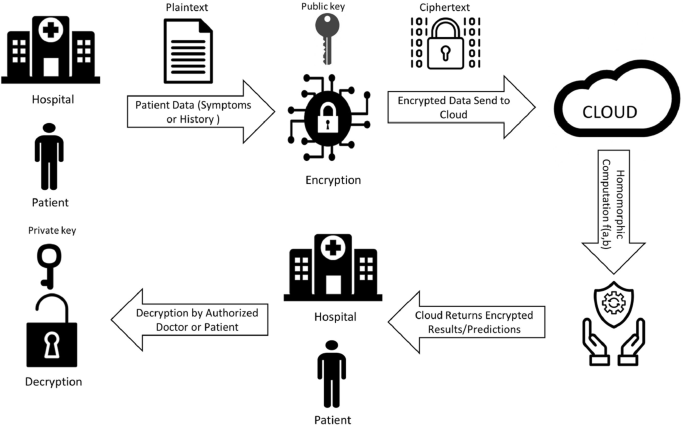
Start by auditing your data flow. Identify exactly where the computation happens and who holds the keys. If the data is already encrypted in transit and at rest, and the processor is trusted, you might not need FHE. The strongest use cases involve untrusted third-party processors, such as cloud AI inference or shared healthcare analytics, where the data owner refuses to expose plaintext.
Next, check your infrastructure. FHE is not a drop-in library replacement. It requires significant CPU cycles and memory. You need to benchmark your current models against FHE-enabled versions to understand the latency tradeoffs. If your application cannot tolerate a 10x to 100x performance hit, FHE is not yet practical for real-time workloads. Plan for batch processing or asynchronous pipelines instead.
Finally, select your toolkit based on maturity, not hype. Look for libraries with active maintenance, clear documentation, and support for the specific primitives your AI or healthcare model needs. Avoid experimental implementations unless you have a dedicated security team to audit them. The goal is practical privacy, not theoretical perfection.
How to implement FHE for AI and healthcare
Moving FHE from theoretical papers to production environments requires a disciplined engineering approach. The goal is to run computations on encrypted data without exposing the plaintext, ensuring privacy for sensitive health records or proprietary AI models. This process involves selecting the right libraries, optimizing parameters for performance, and validating security against known attacks.
1. Select a production-ready FHE library
The FHE landscape is fragmented, with libraries like OpenFHE, TFHE, and Microsoft SEAL offering different trade-offs between bootstrapping speed and arithmetic capability. For AI workloads requiring neural network inference, TFHE-based solutions often provide faster evaluation times for boolean and small integer operations. For healthcare analytics involving complex statistical models, libraries supporting large integer arithmetic may be more suitable. Evaluate libraries based on their documentation, community support, and benchmark results for your specific use case.
2. Define your security and performance parameters
FHE parameters determine the security level and computational overhead. Higher security levels require larger polynomial degrees, which significantly increase encryption time and memory usage. Start with a standard security level (e.g., 128-bit) and a noise budget sufficient for your computation depth. Use parameter generation tools provided by your chosen library to balance security with latency. Document these choices clearly, as they will impact the final performance metrics and compliance requirements.
3. Encrypt and preprocess your data
Before computation, data must be encoded into the FHE scheme. This involves mapping plaintext values to ciphertext slots while managing noise growth. For AI models, normalize input features to minimize precision loss during encryption. In healthcare, ensure that patient identifiers are hashed or removed before encryption. Use efficient encoding schemes like binary or signed binary representation to reduce the number of operations required during evaluation. Test encryption and decryption cycles locally to verify data integrity.
4. Perform computations on encrypted data
Execute your AI inference or healthcare analytics using the encrypted inputs. Be aware that FHE operations are significantly slower than plaintext operations. Use homomorphic equivalents for standard mathematical functions (e.g., approximations for sigmoid or ReLU activations in neural networks). Break down complex computations into smaller, manageable steps to monitor noise levels. If the noise budget is exhausted, the computation will fail, requiring a re-evaluation of your parameter set or algorithm design.
5. Decrypt and validate results
Once the computation is complete, decrypt the result and compare it against a plaintext baseline. Verify that the error margin is within acceptable limits for your application. In healthcare, even minor errors can have significant consequences, so rigorous validation is essential. Document the entire workflow, including parameter choices, encoding methods, and validation results, to ensure reproducibility and auditability.
6. Optimize for production deployment
Production deployment requires additional considerations such as key management, secure storage, and network security. Implement key rotation policies and use hardware security modules (HSMs) for key storage. Optimize the FHE library for your specific hardware environment, leveraging SIMD instructions or GPU acceleration if available. Monitor performance metrics and adjust parameters as needed to maintain efficiency. Regularly update your FHE libraries to benefit from security patches and performance improvements.
Common mistakes in homomorphic encryption implementation
Implementing FHE is not just a matter of swapping out standard encryption libraries. The architecture requires a fundamental shift in how data is handled, processed, and returned. When teams treat FHE like traditional symmetric encryption, they encounter severe performance bottlenecks and logical errors that break the entire privacy-preserving workflow.
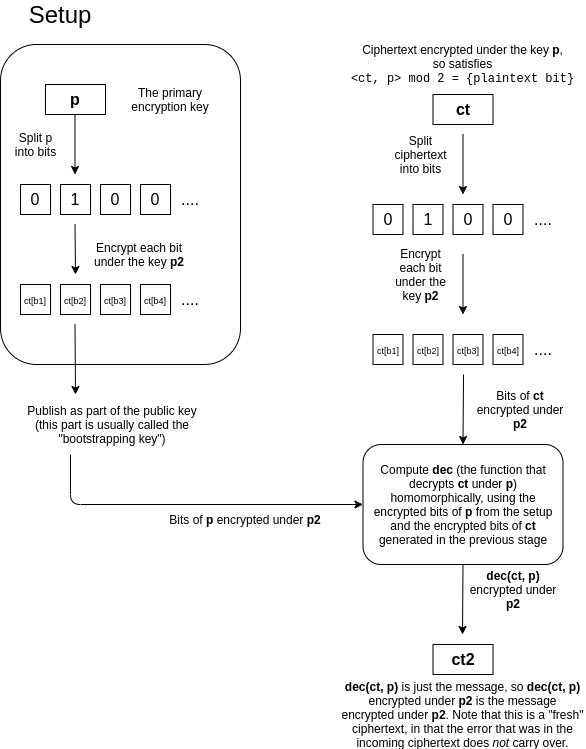
The most frequent error is ignoring the noise budget. Every operation in an FHE scheme adds noise to the ciphertext. If you chain too many operations without careful planning, the noise exceeds the threshold, and the decryption fails entirely. This is not a bug; it is a mathematical limit. You must map your entire computation path before writing code, ensuring that the depth of your circuit fits within the scheme’s capacity.
Another critical mistake is treating encrypted data as if it were plaintext. You cannot perform standard branching logic or dynamic memory allocation on ciphertexts in the same way. Control flow must be flattened into arithmetic circuits. If your application relies heavily on conditional statements, you will find that the overhead becomes prohibitive, often slowing down execution by several orders of magnitude.
Finally, many developers overlook the complexity of key management. FHE involves multiple keys: public keys for encryption, secret keys for decryption, and often evaluation keys for homomorphic operations. Mismanaging these keys or failing to rotate them appropriately can expose the system to side-channel attacks or simple key leakage. Ensure your infrastructure handles these keys with the same rigor as traditional private keys, but with the added complexity of their functional roles.
FHE 2026: What to check next
FHE has moved from theoretical research into practical deployment for AI and healthcare in 2026. The following answers address the most common technical and operational objections teams face when adopting this privacy technology.
Put the FHE Playbook into practice
No comments yet. Be the first to share your thoughts!