
Get fully homomorphic encryption 2026 right
Before writing your first line of code, you need to map the terrain. Fully homomorphic encryption (FHE) is not a drop-in replacement for standard SQL queries or simple API calls. It is a specialized cryptographic layer that allows computation over ciphertexts, but it comes with significant overhead. Treating it like a standard database driver will lead to performance bottlenecks and security gaps.
Start by defining your threat model. FHE protects data at rest and in use, but it does not protect the logic itself. If your algorithm is flawed, encryption won't save you. Identify exactly which data fields require encryption and which computations must happen in the clear. This distinction determines your architecture and your library choice.
Check your hardware requirements. FHE operations are computationally expensive. A simple addition on encrypted data can take milliseconds or seconds, depending on the scheme. Ensure your infrastructure can handle this latency. If you are deploying to the cloud, verify that your instances support the necessary instruction sets for acceleration. Without this foundation, your privacy guarantees will come at an unacceptably high cost.
Implementing fully homomorphic encryption in production
Deploying FHE requires moving beyond theoretical models to address the significant performance overhead and memory constraints inherent in the technology. The 2026 roadmap emphasizes practical implementation strategies that prioritize security without sacrificing the utility of encrypted data. This section outlines the sequential steps required to integrate FHE into a secure data pipeline, focusing on concrete actions and tradeoffs.
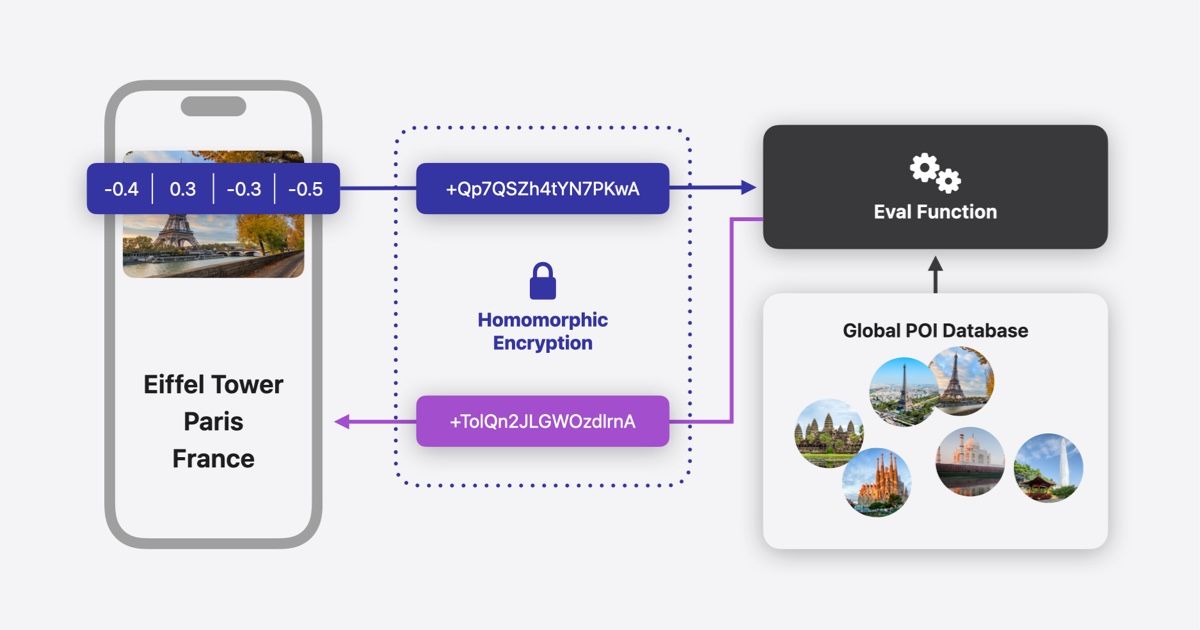
Begin by choosing an FHE library that aligns with your programming language and performance requirements. Popular options include Microsoft SEAL, OpenFHE, and TFHE. Evaluate these libraries based on their support for specific operations like addition, multiplication, and bootstrapping. Ensure the library is actively maintained and has a clear path to 2026 compliance with emerging privacy standards.
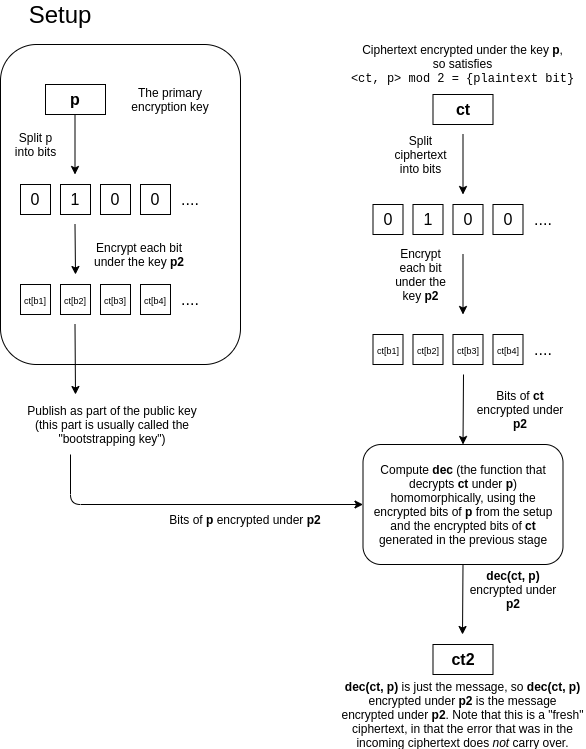
Map out the exact computations that will run on encrypted data. FHE is not equally efficient for all operations; multiplicative depth is a critical constraint. Identify which parts of your workflow benefit most from encryption and which can remain plaintext. This scoping phase prevents unnecessary overhead and ensures that the encryption scheme chosen in the previous step can handle the required circuit depth.
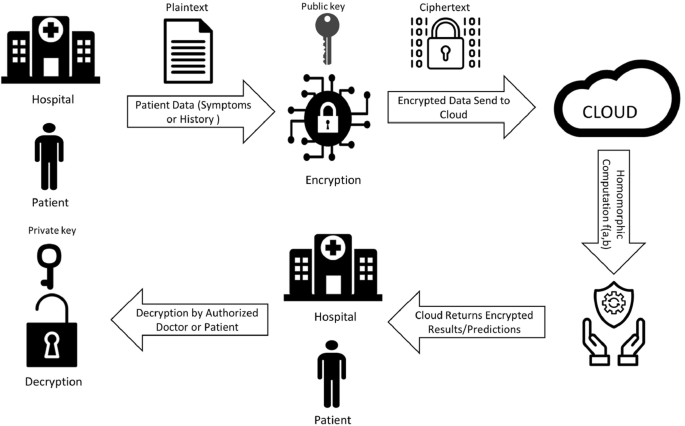
Generate public and secret keys using your selected library. Carefully select parameters such as polynomial modulus degree and noise budget. These parameters directly impact security levels and computational speed. Start with conservative security settings (e.g., 128-bit) and adjust based on performance benchmarks. Document all parameter choices for auditability and future migration.
Run your predefined computations on the encrypted data. Monitor memory usage and execution time, as FHE operations are significantly slower than plaintext equivalents. Implement bootstrapping if the noise budget is depleted during deep computations. This step validates whether your chosen parameters and library configuration can handle the workload within acceptable timeframes for your application.
Decrypt the final output using the secret key and verify the results against known plaintext computations. This validation step is crucial for ensuring correctness. Implement automated testing to catch any discrepancies between encrypted and plaintext results. Only after successful validation should you integrate the FHE pipeline into your production environment.


As an Amazon Associate, we may earn from qualifying purchases.
The implementation of fully homomorphic encryption is a multi-stage process that requires careful planning and execution. By following these steps, you can ensure a secure and efficient deployment of FHE in your data privacy strategy. The 2026 roadmap highlights the importance of practical implementation, and this guide provides a clear path forward.
Common Mistakes That Derail FHE Implementation
Deploying fully homomorphic encryption requires more than just selecting a library; it demands precise architectural choices. Most projects fail not because the math is wrong, but because engineers ignore the operational realities of encrypted computation. Below are the most frequent errors that lead to poor performance, security gaps, or unmanageable costs.
Ignoring Circuit Depth Limits
FHE schemes have a finite "depth"—the number of sequential operations they can perform before data becomes unreadable. Treating FHE like standard encryption, where you simply encrypt and store, is a critical error. You must design your algorithms as fixed circuits with known depth. If your logic exceeds the scheme's capacity, you must use "bootstrapping" to refresh the data, which is computationally expensive. Failing to profile circuit depth early results in applications that work in theory but time out in production.
Overlooking Noise Management
Every homomorphic operation adds "noise" to the ciphertext. If noise grows too large, decryption fails. A common mistake is assuming that all libraries handle noise automatically. In reality, you must actively manage noise budgets. This means choosing parameters that balance security levels with computational overhead. Ignoring noise accumulation leads to silent data corruption, where your application returns incorrect results without throwing an error. Always test with realistic data volumes to observe noise growth patterns before scaling.
Neglecting Key Management Complexity
FHE keys are significantly larger than standard RSA or ECC keys. Managing these keys across distributed systems introduces new failure points. A frequent oversight is storing FHE public keys in standard configuration files without access controls. Since FHE public keys allow computation but not decryption, they are often shared more widely, increasing the attack surface. Implement strict rotation policies and audit trails for key access. Failure to do so can expose your infrastructure to lateral movement attacks if a key is compromised.
Assuming "Set It and Forget It" Security
FHE is not a silver bullet for all privacy issues. It protects data during computation, but data must be decrypted to be useful. A major mistake is assuming that encrypting everything eliminates the need for access controls. You still need robust identity management and audit logs for who decrypts the final results. Additionally, side-channel attacks can still leak information through timing or memory usage. Treat FHE as one layer in a defense-in-depth strategy, not a replacement for foundational security practices.
Fully homomorphic encryption 2026: what to check next
As the 2026 FHE roadmap moves from theoretical research to practical deployment, several practical questions arise for teams evaluating these tools. The following answers address the most common objections regarding performance, standardization, and real-world readiness.
No comments yet. Be the first to share your thoughts!