
Get fully homomorphic encryption 2026 right
Before running benchmarks, align your environment with production constraints. Fully homomorphic encryption (FHE) performs well in theory but demands specific hardware and library support to function in practice.
Start with your backend. FHE workloads are CPU-bound and memory-intensive. Ensure your servers have sufficient RAM to hold encrypted matrices without excessive paging. Check that your compiler supports the instruction sets (such as AVX2 or AVX-512) required by your chosen FHE library.
Next, verify library compatibility. Different FHE frameworks (e.g., OpenFHE, Microsoft SEAL, TFHE) have distinct performance profiles. Match your benchmarking tool to the library you intend to deploy. Mismatched versions or missing dependencies often cause silent failures or inaccurate latency readings.
Finally, define your workload scope. Are you testing polynomial multiplication, bootstrapping, or simple arithmetic? Each operation has different latency characteristics. Document these parameters clearly so your results are reproducible and comparable across different test runs.
Work through the steps
FHE Benchmark Report works best as a clear sequence: define the constraint, compare the realistic options, test the tradeoff, and choose the path with the fewest hidden costs. That order keeps the advice usable instead of decorative. After each step, pause long enough to check whether the recommendation still fits the reader's actual situation. If it depends on perfect timing, unusual access, or a best-case budget, include a simpler fallback.
Fix common mistakes
Production deployments of fully homomorphic encryption rarely fail because the math is wrong. They fail because engineers misjudge how ciphertexts behave under load. The following errors cause latency spikes, memory exhaustion, and silent data corruption. Addressing these issues first keeps your benchmarks accurate and your systems stable.
Ignoring noise budget exhaustion
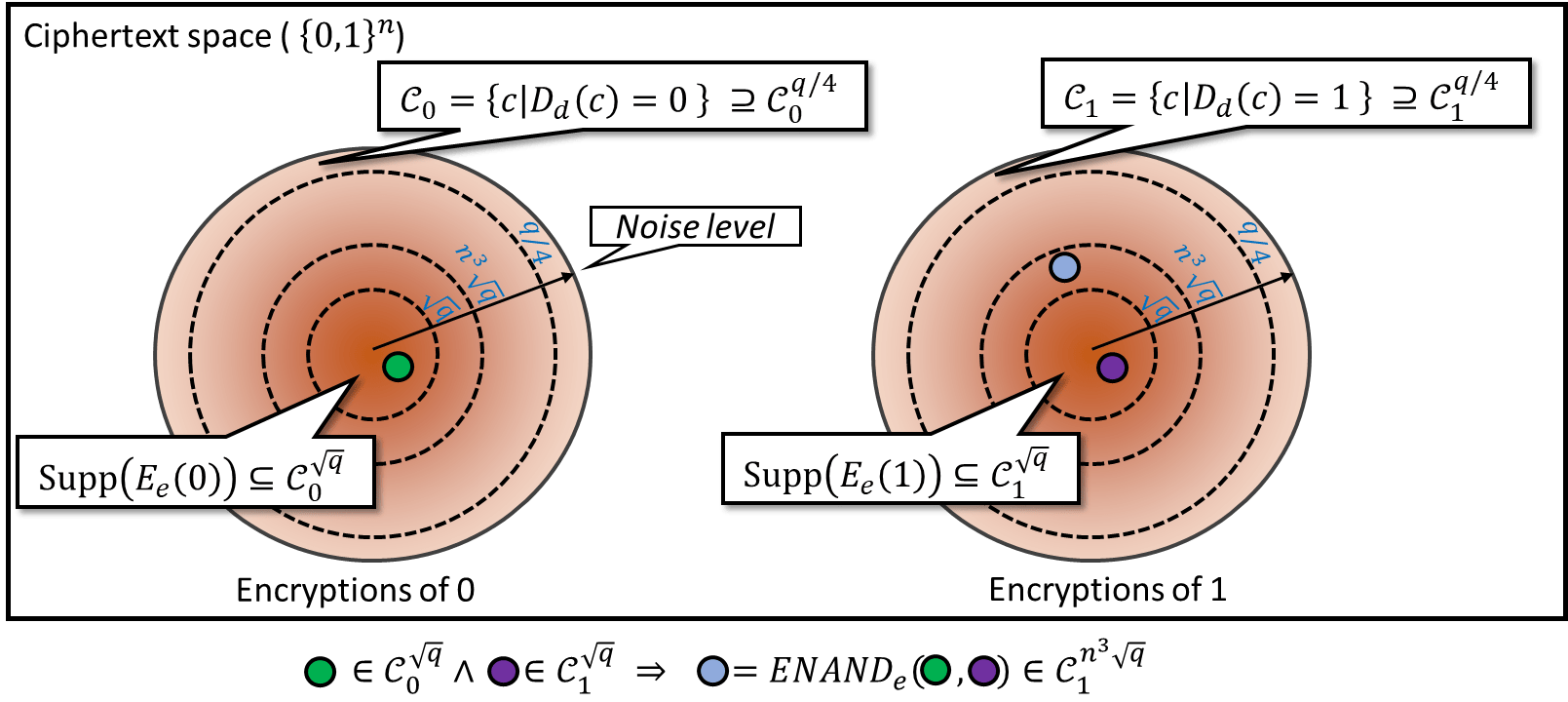
Every FHE operation adds noise to the ciphertext. If you do not track the noise budget, your computation will eventually become invalid. This is not a gradual degradation; it is a hard failure where the output becomes random garbage. Always monitor the remaining noise level relative to your scheme’s parameters. If you run out of budget mid-execution, the entire pipeline must restart or switch to a different parameter set.
Underestimating memory overhead
FHE ciphertexts are significantly larger than plaintext data. A single integer might expand from 4 bytes to several kilobytes. Engineers often provision servers based on plaintext size, leading to immediate out-of-memory errors. Calculate the expansion ratio for your specific scheme and add a 20% buffer for intermediate buffers. Use memory-mapped files or streaming processing to avoid loading entire datasets into RAM at once.
Using default parameters for benchmarking
Default library settings are optimized for ease of use, not performance. They often use smaller prime moduli or fewer ciphertext slots, which forces more complex bootstrapping operations. For accurate production benchmarks, tune the polynomial modulus degree and coefficient modulus to match your data size and precision needs. Slower initial setup times are acceptable if they result in faster per-operation latency during the critical path.
Neglecting disk I/O bottlenecks
FHE workloads are I/O intensive due to large ciphertext sizes. Reading and writing encrypted data to disk can dominate execution time. Ensure your storage subsystem supports high sequential throughput. Use binary formats instead of JSON or CSV for intermediate storage. Compressing ciphertexts before disk write can help, but decompression adds CPU overhead, so profile this tradeoff carefully.
Skipping end-to-end validation
Unit tests on small datasets do not catch production-scale issues. Always run end-to-end validation with data volumes that match your production targets. Check for timing side-channels that could leak information about data patterns. Verify that error handling works correctly when noise budgets are exhausted or when invalid inputs are provided. Robust error handling prevents partial failures from corrupting downstream analytics.
Fully homomorphic encryption 2026: what to check next
Readers considering fully homomorphic encryption for 2026 deployments often face practical hurdles regarding latency, cost, and integration complexity. Below are the most common technical and operational questions raised during production benchmarking.
The choice between FHE and TEEs often comes down to your threat model. If you need to process sensitive data across untrusted cloud infrastructure, FHE is the only mathematically sound option. For internal, hardware-controlled environments, TEEs may offer the necessary performance at a lower cost.
No comments yet. Be the first to share your thoughts!