
Choose the right FHE toolkit
The easiest mistake with Implement Homomorphic Encryption for Private Compute is comparing options on the most visible detail while ignoring the day-to-day constraint. A choice can look strong on paper and still fail because it is too hard to maintain, too expensive to repeat, or awkward in the actual setting. Use the same checklist for every option: fit, cost, durability, timing, upkeep, and fallback plan. That keeps the comparison practical instead of drifting into preference alone.
| Factor | What to check | Why it matters |
|---|---|---|
| Fit | Match the option to the primary use case. | A good deal still fails if it does not fit the job. |
| Condition | Verify age, wear, and service history. | Hidden condition issues erase upfront savings. |
| Cost | Compare purchase price with likely upkeep. | The cheapest option is not always the lowest-cost option. |
Set up the development environment
Before writing your first homomorphic encryption routine, you need a compiler and libraries that support the specific FHE scheme you chose. Different toolkits require different build flags, dependency managers, and C++ standards. This section walks you through installing the core components for the most common open-source FHE libraries: TFHE (via OpenFHE or Concrete) and BFV/CKKS (via OpenFHE or SEAL).
FHE libraries rely heavily on optimized linear algebra and polynomial arithmetic. Start by installing the standard build tools and math libraries. On Ubuntu or Debian, run:
sudo apt update
sudo apt install build-essential cmake g++ libgmp-dev libmpfr-dev libmpc-dev
If you are using Concrete (Rust-based), you will also need the Rust toolchain installed via rustup. Ensure your compiler version is at least C++17 for most modern FHE implementations.
Choose your library and clone the repository. For a general-purpose C++ library, OpenFHE is a strong choice that supports multiple schemes (BFV, CKKS, TFHE). For high-performance Rust implementations, look at Concrete.
git clone https://github.com/OpenFHEorg/openfhe-development.git
cd openfhe-development
If you choose SEAL, clone the Microsoft SEAL repository instead. Keep these repositories in a dedicated workspace to avoid path conflicts later.
Homomorphic encryption is computationally expensive. You must enable compiler optimizations to make your environment viable. When running cmake, pass flags to enable AVX2 or AVX-512 instructions if your CPU supports them. This can result in significant speedups for polynomial operations.
mkdir build && cd build
cmake -DCMAKE_BUILD_TYPE=Release -DENABLE_AVX2=ON ..
Check your library’s documentation for specific flags related to your target hardware. Using Release mode instead of Debug is mandatory for any meaningful performance benchmarks.

Build the library using all available CPU cores to save time. Then, install it to your system path or note the build directory for linking.
make -j$(nproc)
sudo make install
If you are using a package manager like Conda or pip for Python bindings, follow the toolkit’s specific installation script instead of building from source.
Before diving into complex logic, run the library’s built-in test suite or a simple "Hello World" FHE example. This ensures your compiler flags and dependencies are correctly linked.
For OpenFHE, run ctest in the build directory. For Concrete, run cargo test. A successful build confirms that your environment can handle encrypted data operations. If tests fail, check your GMP or MPFR library versions, as mismatched versions are a common cause of linker errors.
Your development environment is now ready. The next step is to generate your keys and define the polynomial ring parameters that will dictate your security level and computational capacity.
Encrypt data before processing
Implement Homomorphic Encryption for Private Compute works best as a clear sequence: define the constraint, compare the realistic options, test the tradeoff, and choose the path with the fewest hidden costs. That order keeps the advice usable instead of decorative. After each step, pause long enough to check whether the recommendation still fits the reader's actual situation. If it depends on perfect timing, unusual access, or a best-case budget, include a simpler fallback.

Run computations on ciphertext
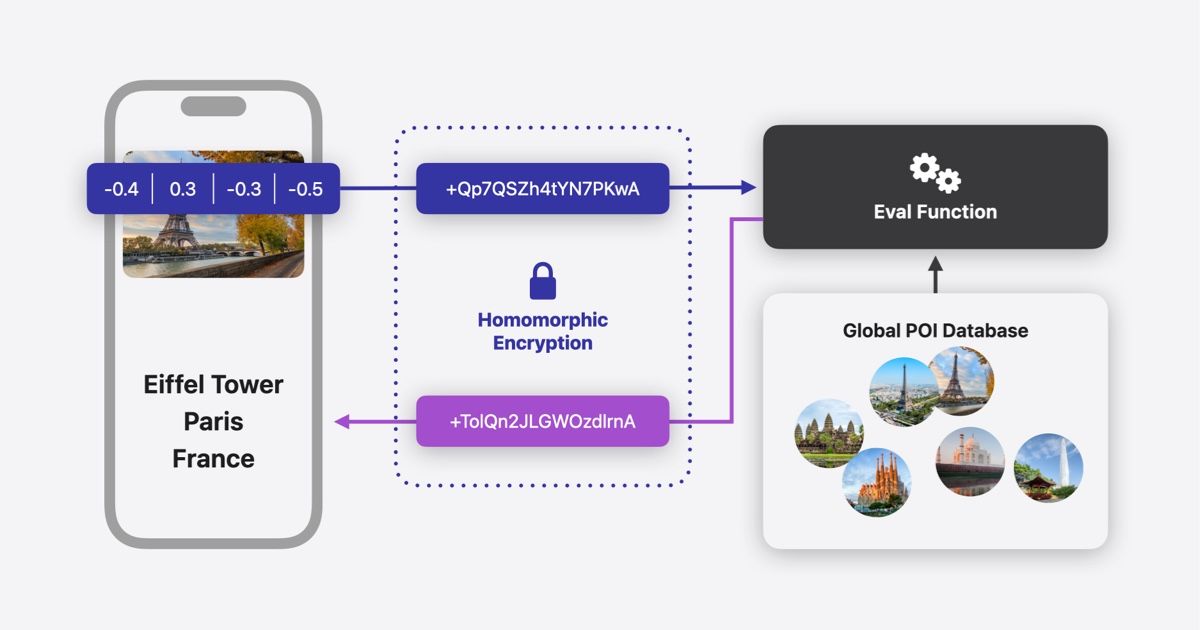
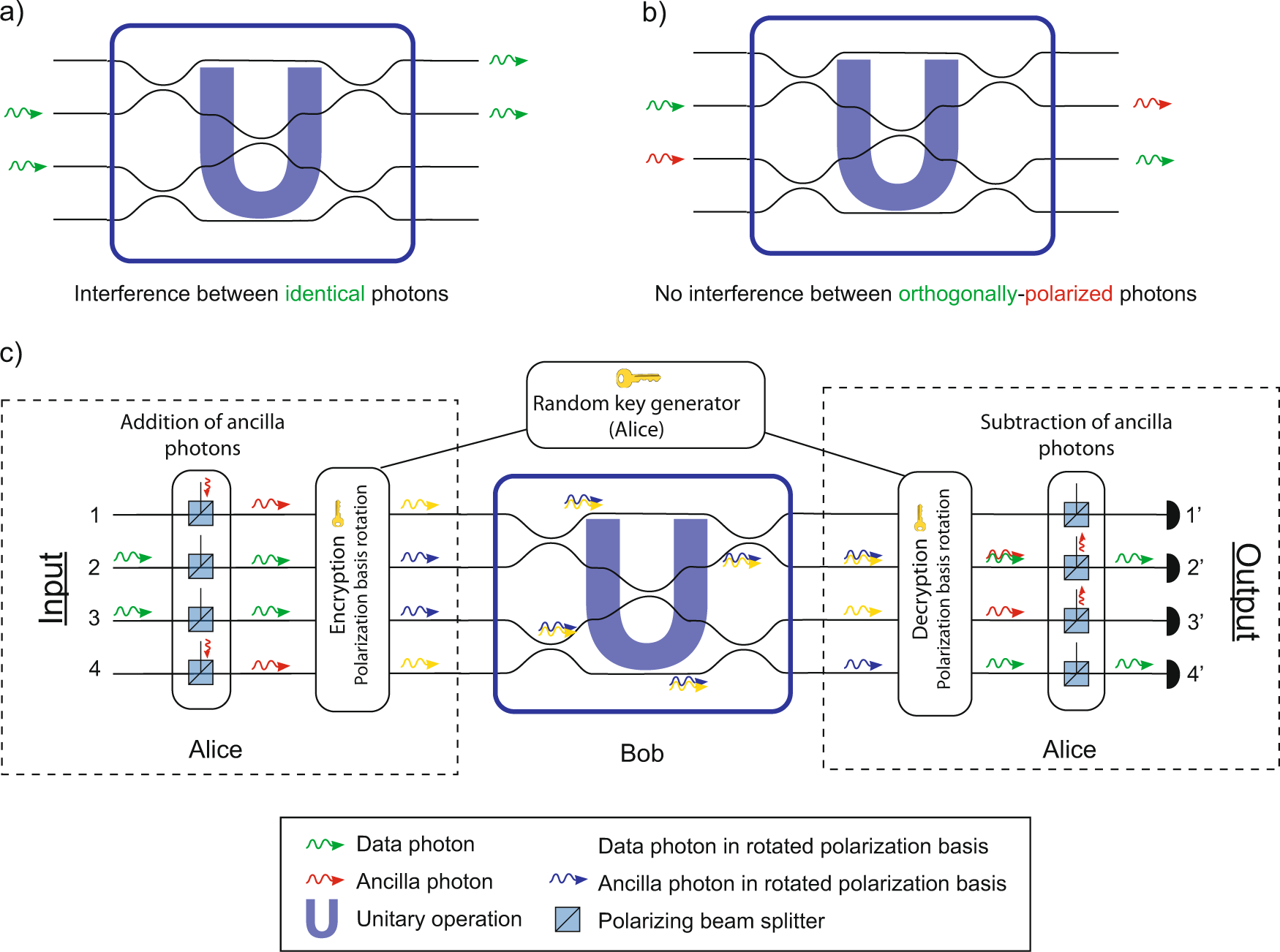
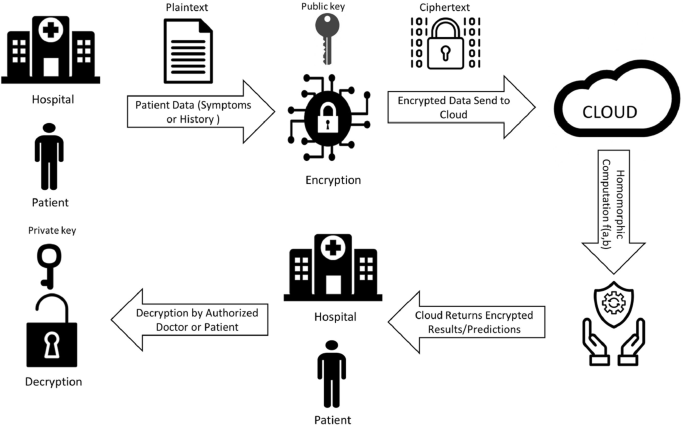
To execute business logic on encrypted data, you must translate your application’s operations into a sequence of FHE-compatible primitives. Unlike standard encryption, where data must be decrypted to be processed, homomorphic encryption allows you to perform arithmetic directly on ciphertexts. This means your AI inference models or financial calculators can run without ever exposing the underlying plaintext to the compute environment.
The core challenge is that FHE operations are not free. Every addition or multiplication adds "noise" to the ciphertext. If this noise grows too large, the data becomes unrecoverable. To manage this, you map your high-level logic to a restricted instruction set. For example, a matrix multiplication in an AI model is broken down into a series of homomorphic additions and multiplications. You must carefully plan the circuit depth to ensure the noise remains within safe bounds.
When noise approaches its limit, you must use bootstrapping to refresh the ciphertext. Bootstrapping is a specialized operation that essentially re-encrypts the data, reducing the noise back to a minimal level. While computationally expensive, it allows for arbitrarily long computations. Recent research, such as the 2026 study on efficient privacy-preserving analytics, highlights how optimizing these tensor layouts can significantly reduce the overhead of these operations.
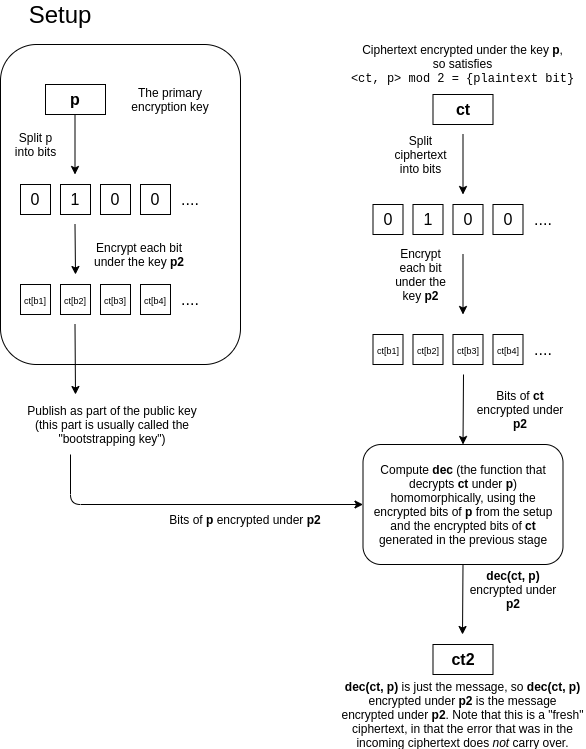
Start by identifying the critical path in your algorithm. Break it down into small, verifiable steps that correspond to FHE gates. Test each step with small datasets to monitor noise growth before scaling up. This disciplined approach ensures your private compute remains both accurate and efficient.
Decrypt results for authorized users
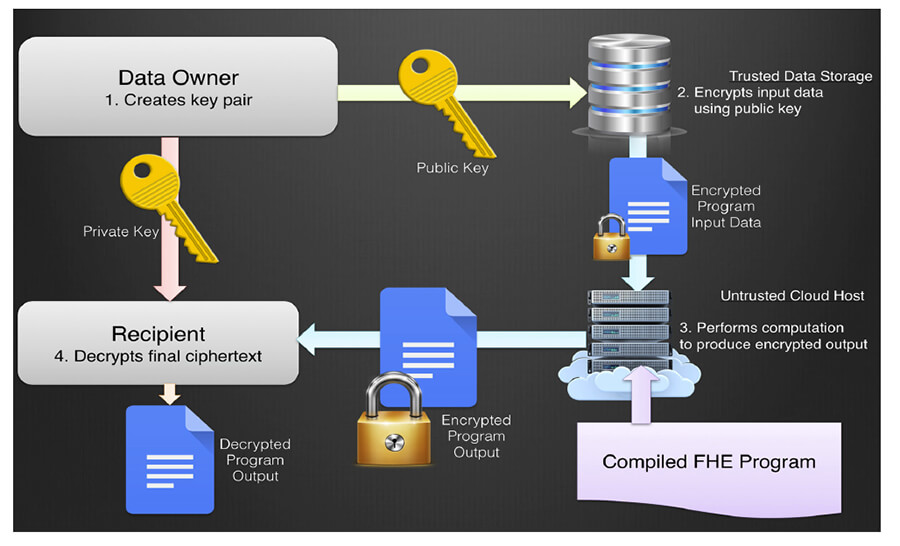
The final step in a homomorphic encryption workflow is decrypting the computed ciphertext back into plaintext. Because the data was processed while encrypted, the resulting ciphertext contains the correct output but remains unreadable without the private key. This step ensures that only entities with proper authorization can view the sensitive results.
1. Verify access permissions
Before initiating decryption, confirm that the requesting user or service has the necessary cryptographic rights. Homomorphic encryption systems often integrate with access control policies to ensure that the private key is only released to authorized principals. This prevents unauthorized entities from accessing the decrypted output, even if they intercepted the ciphertext during processing.
2. Load the private key securely
Retrieve the private decryption key from your secure key management system. The key must be loaded into a trusted execution environment or secure memory space to prevent leakage. Never store or transmit the private key in plaintext or unencrypted formats during this process.
3. Execute the decryption function
Use the homomorphic encryption library to apply the private key to the final ciphertext. The decryption algorithm reverses the encryption operations, revealing the plaintext result. Ensure the library version matches the one used for encryption to maintain compatibility and security integrity.
4. Validate the output
Check the decrypted data for integrity and noise budget exhaustion. If the noise budget was exceeded during computation, the decryption may fail or produce garbled results. Verify that the output matches expected formats and ranges before passing it to downstream applications.
Avoid Common FHE Pitfalls in 2026
Implementing Fully Homomorphic Encryption (FHE) in 2026 requires navigating three specific technical traps: performance bottlenecks, noise management errors, and key rotation failures. Ignoring these issues can stall real-time pipelines or compromise data integrity.
1. Performance Bottlenecks
FHE computations are orders of magnitude slower than plaintext operations. In 2026, the primary bottleneck is often the bootstrapping process, which refreshes ciphertext noise but is computationally expensive. Do not trigger bootstrapping for every operation. Instead, batch operations and use optimized libraries like Microsoft SEAL or OpenFHE to reduce overhead. Only use bootstrapping when the noise level approaches the threshold for decryption failure.
2. Noise Management Errors
Every homomorphic operation adds noise to the ciphertext. If noise exceeds the system's capacity, decryption fails. Developers often underestimate the noise budget required for deep circuits. Always profile the noise growth for your specific algorithm. Use parameter sets that provide a sufficient safety margin, and avoid nested loops that exponentially increase noise without proper modulus switching.
3. Key Rotation Issues
FHE keys have a finite lifetime due to noise accumulation and security parameters. In 2026, static key setups are a liability. Implement automated key rotation strategies that align with your data lifecycle. Ensure that your infrastructure can seamlessly switch between old and new keys without interrupting ongoing computations, especially in blockchain and AI contexts where continuous privacy is required.
No comments yet. Be the first to share your thoughts!