
Set up a local FHE development environment
Before evaluating Fully Homomorphic Encryption for enterprise workloads, you need to see how the primitives behave on your own hardware. Running a local environment lets you measure baseline latency, memory overhead, and API friction without the noise of cloud abstractions. This section walks you through installing a standard toolkit, generating keys, and executing a simple encrypted addition.
We will use Concrete, a Rust-based library with Python bindings, as it is one of the most accessible entry points for developers in 2026. If you prefer C++, OpenFHE is a viable alternative, but the concepts remain identical: generate keys, encrypt data, compute, and decrypt.
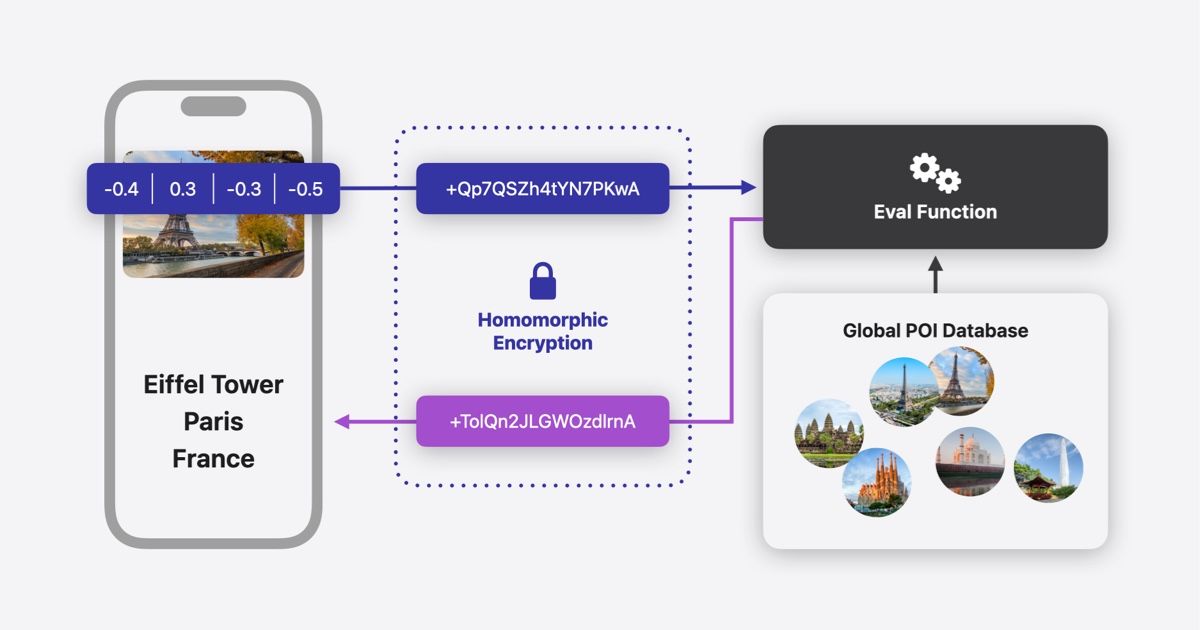
Start by installing the Concrete library. Since it is Rust-based, you will need rustc and cargo installed on your system. Use pip to install the Python bindings, which provide the most straightforward API for initial testing. Ensure your Python environment is isolated to avoid dependency conflicts with other cryptographic libraries.
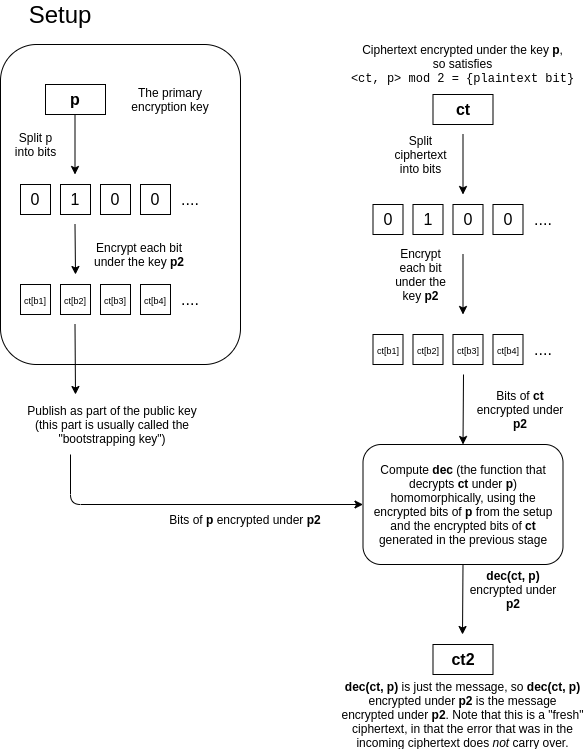
Initialize a keypair. In FHE, you need a secret key for decryption and a public key for encryption. The security level determines the size of these keys and the subsequent computation cost. For a local test, a 128-bit security parameter is sufficient, but note that enterprise deployments will likely require higher parameters, which will significantly increase latency.
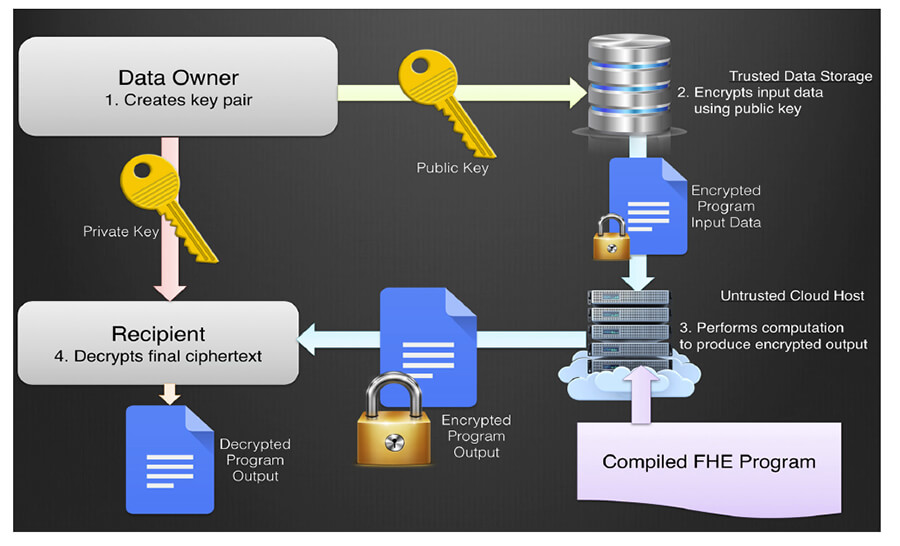
Encrypt a simple integer using the public key. This step converts your plaintext data into a ciphertext vector. The size of this vector will be much larger than the original integer—often by several orders of magnitude. This expansion is the primary cost driver in FHE and is why you must carefully select your data types and precision.

Add two ciphertexts together. Unlike traditional encryption, you do not need to decrypt the data to perform the operation. The library handles the homomorphic addition natively. Measure the time this takes. On a standard laptop CPU, this might take milliseconds, but it is orders of magnitude slower than plaintext addition.

Use the secret key to decrypt the result. Compare the decrypted output with the expected plaintext sum. If the values match, your environment is working correctly. If they do not, check your key generation and encryption parameters. This round-trip test confirms that your setup can handle the basic FHE workflow before you attempt more complex logic.
Once you have this baseline, you can begin profiling more complex operations like multiplication or logical gates. Keep in mind that multiplication is significantly more expensive than addition. Your local setup serves as the control group for all future enterprise scaling decisions.
Compare encryption libraries for performance
Choosing the right Fully Homomorphic Encryption (FHE) library depends on your specific workload. In 2026, the landscape is dominated by a few mature projects, each optimized for different aspects of matrix arithmetic and AI inference. The following comparison highlights the trade-offs between BFV and CKKS-based libraries, focusing on polynomial modulus degree, supported operations, and community maturity.
| Library | Scheme | Max Poly Mod Degree | Key Operations | Community Support |
|---|---|---|---|---|
| TFHE-rs | TFHE | N/A (Bitwise) | Boolean, Lookup Tables | Active Rust ecosystem |
| OpenFHE | BFV/CKKS | Up to 2^20 | Add, Mul, Dot Product | Large academic backing |
| PALISADE | BFV/CKKS | Up to 2^19 | Add, Mul, Rotation | NIST standardization focus |
| Microsoft SEAL | BFV/CKKS | Up to 2^18 | Add, Mul, Relinearize | Strong C++ documentation |
TFHE-rs excels in low-latency boolean operations and is ideal for simple conditional logic or lookup tables. It does not use polynomial modulus degrees in the traditional sense, making it distinct from the others.
OpenFHE and PALISADE are the go-to choices for complex AI inference tasks. They support high-degree polynomials, allowing for deeper neural network computations. OpenFHE offers a more unified API, while PALISADE is heavily tied to NIST standardization efforts.
Microsoft SEAL remains the most widely documented option for CKKS schemes, which are essential for floating-point arithmetic in machine learning. Its C++ foundation provides robust performance, though the learning curve is steeper than Rust-based alternatives.
Test privacy-preserving AI inference
Running machine learning models on encrypted data is the primary enterprise use case for fully homomorphic encryption (FHE) in 2026. This process allows organizations to deploy AI services without ever exposing the underlying sensitive data to the compute environment. The workflow follows a strict sequence: encrypt, compute, and decrypt.
Begin by encrypting the raw input data using your chosen FHE library. This step transforms plaintext vectors or images into ciphertexts that appear as random noise. Ensure the encryption parameters match the complexity of your target model to avoid precision loss during computation.
Execute the machine learning inference directly on the encrypted data. The FHE engine performs the necessary matrix multiplications and activation functions without decrypting the inputs. This is the core privacy mechanism: the compute node processes the data without ever seeing the actual values.
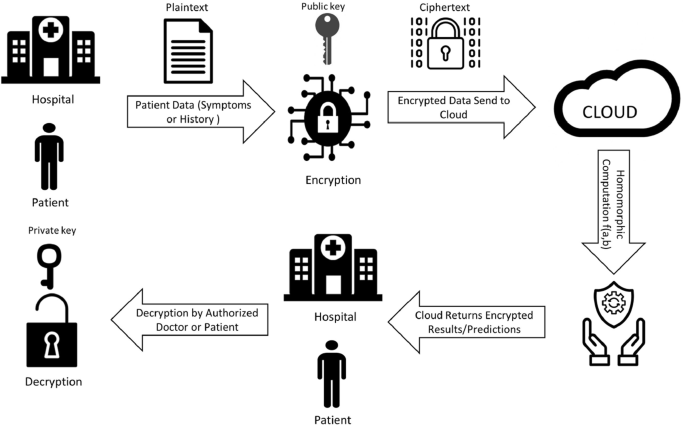
Once the inference is complete, decrypt the resulting ciphertext using the private key. The output will be the model’s prediction or classification, matching the accuracy of a plaintext inference within an acceptable margin of error defined by your noise budget.
Compare the encrypted inference results against a baseline plaintext run to verify accuracy. Simultaneously, measure the latency overhead. In 2026, optimized libraries have reduced this overhead significantly, but it remains orders of magnitude slower than standard GPU inference, requiring careful capacity planning.
This workflow ensures that sensitive data remains protected throughout the AI lifecycle. By keeping the data encrypted during the most vulnerable phase—computation—you mitigate the risk of data breaches while still leveraging powerful machine learning capabilities.
Avoid common implementation pitfalls
Fully homomorphic encryption (FHE) moves from theoretical curiosity to production reality in 2026, but the gap between a proof-of-concept and a stable enterprise service is defined by specific technical traps. Most projects fail not because the math is wrong, but because engineers underestimate the resource overhead of encrypted computation. To ensure your FHE implementation survives real-world traffic, you must address ciphertext expansion, noise management, and parameter tuning before deployment.
Manage ciphertext expansion
The most immediate shock for teams new to FHE is ciphertext expansion. An encrypted data block is often hundreds or thousands of times larger than its plaintext counterpart. If you encrypt a 1MB database row, the resulting ciphertext might consume 500MB of memory and network bandwidth. This expansion directly impacts latency and storage costs, making naive encryption strategies impossible for high-throughput applications.
To mitigate this, you must carefully select your FHE scheme and parameters. Schemes like BFV or BGV handle integer arithmetic efficiently, while CKKS is designed for approximate real-number calculations common in machine learning. Choose the scheme that aligns with your data type to minimize unnecessary overhead. Additionally, implement data compression techniques before encryption where possible, and ensure your infrastructure has sufficient memory bandwidth to handle the larger payloads without swapping.
Handle noise overflow carefully
Every homomorphic operation adds "noise" to the ciphertext. This noise is essential for security but accumulates with each computation. If the noise grows too large, it overwhelms the signal, and decryption fails entirely. This is known as noise overflow. In deep circuits—complex sequences of operations—this risk is high, and without proper management, your application will silently return garbage results.
To prevent overflow, you need to implement bootstrapping, a technique that refreshes the ciphertext by reducing noise without decrypting the data. However, bootstrapping is computationally expensive. A better approach for many enterprise use cases is to design your algorithms to minimize the number of sequential operations. Break complex tasks into parallelizable steps, or use multi-party computation hybrids to distribute the computational load, keeping the noise level manageable for each individual FHE operation.
Tune parameters for your workload
FHE parameters—such as polynomial modulus degree and coefficient modulus—dictate the security level and computational capacity. Setting these too high wastes resources; setting them too low compromises security or causes premature noise overflow. There is no one-size-fits-all configuration. You must profile your specific workload to find the sweet spot.
Start with conservative parameters that offer high security and ample noise budget, then iteratively reduce them while monitoring performance and correctness. Use benchmarking tools to measure the latency of your core operations at different parameter sets. Document the minimum parameters required for your security requirements and operational stability. This empirical approach ensures that your FHE implementation is both secure and efficient, avoiding the common pitfall of over-provisioning resources for no tangible gain.
Validate results with a security checklist
Before deploying fully homomorphic encryption (FHE) to production, you must verify that the implementation handles data correctly without leaking information. This validation phase is your final gatekeeper against silent failures or performance regressions.
Run these checks in order to ensure your setup meets enterprise security standards:
- Key generation verification: Confirm that private and public keys are generated using a cryptographically secure random number generator. Ensure key sizes match the security level specified in your threat model.
- Noise budget tracking: Monitor the noise budget during computation. If the noise exceeds the threshold before decryption, the result will be corrupted. Implement automatic circuit relinearization or bootstrapping if necessary.
- Decryption correctness: Compare the decrypted plaintext against the original input. Use a small, representative dataset to verify that the FHE scheme performs arithmetic and logic operations accurately.
Use a checklist to track these items. A missed step in validation can lead to costly rework or security vulnerabilities in production.
No comments yet. Be the first to share your thoughts!