
Set up your FHE development environment
Fully homomorphic encryption (FHE) allows computation on encrypted data without decryption, but the computational overhead is significant. Setting up a viable development environment requires selecting a mature library and configuring hardware acceleration to keep performance manageable. Without proper tooling, basic operations can take minutes instead of milliseconds.

Start with a production-ready library. OpenFHE is the most widely adopted open-source standard, supporting multiple schemes including BFV and BGV. For language-specific needs, Microsoft SEAL offers robust C++ and Python bindings, while TFHE-based libraries like FHEW or TinyFHE are better suited for boolean circuit evaluation. Avoid experimental repositories for initial development; stick to libraries with active maintenance and clear documentation.
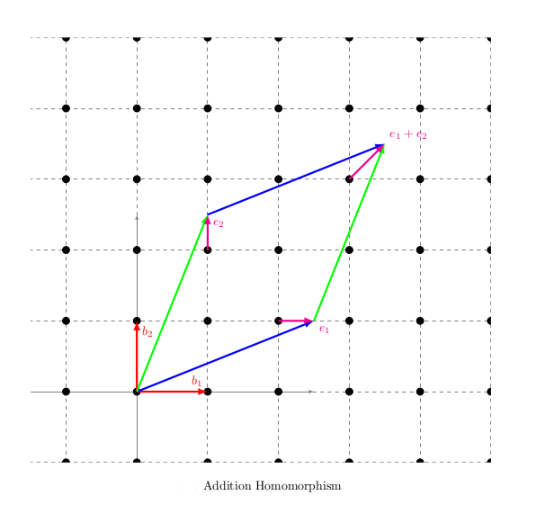
FHE is computationally intensive. Ensure your development machine supports AVX2 or AVX-512 instruction sets, which provide the baseline vectorization required for polynomial arithmetic. If you are running heavy workloads, integrate GPU acceleration using CUDA or OpenCL. Most major libraries include GPU backends that can reduce computation time by orders of magnitude compared to CPU-only execution.

Clone the selected library’s repository and install its dependencies. For OpenFHE, this typically involves CMake, a C++17 compliant compiler, and optional GMP/NTL libraries for number theory. Create a virtual environment for Python bindings if you are using SEAL or PyFHE. Verify the installation by running the provided unit tests to ensure your compiler and library versions are compatible.
Before building your application, run a standard benchmark to establish a performance baseline. Measure the time required for a single encryption, evaluation, and decryption cycle. If your results are significantly slower than the library’s documented averages, check your compiler optimization flags (e.g., -O3) and ensure hardware acceleration is correctly linked.
Once your environment is stable, you can begin writing your first encrypted computation. Start with simple arithmetic to verify that your key generation and ciphertext structures are functioning as expected.
Encrypt data before cloud transmission
Before any data leaves your environment, it must be encrypted using a fully homomorphic encryption (FHE) scheme. This ensures that the cloud provider never sees the plaintext, even temporarily during transmission or storage. Unlike traditional encryption, where data must be decrypted to be processed, FHE allows computations on ciphertexts, maintaining confidentiality throughout the entire lifecycle.
Generate and manage encryption keys
Start by generating your FHE public and secret keys. The public key is used to encrypt data, while the secret key remains with you for decryption. Store these keys securely, ideally in a hardware security module (HSM) or a dedicated key management service, to prevent unauthorized access. The security of your entire FHE workflow depends on the integrity of these keys.
Encrypt data at the source
Use an FHE-enabled client library to encrypt your data before it leaves your local environment. This step is critical because it ensures that the data remains encrypted as it travels over the network and sits in cloud storage. The cloud provider receives only ciphertext, which appears as random noise without your secret key. This approach aligns with the growing adoption of FHE as a core privacy technology for secure data processing across AI and blockchain applications in 2026 [src-serp-2].
Verify encryption integrity
Once the data is encrypted, verify that the ciphertext matches your expectations. Check that the encryption parameters, such as polynomial modulus degree and coefficient modulus, are correctly applied. This verification step ensures that the data is ready for secure cloud transmission and that no plaintext data has been accidentally exposed during the encryption process.
Run computations on encrypted datasets
With ciphertexts in storage, the next step is to perform analytics or AI inference without ever decrypting the data. This process, known as homomorphic computation, allows you to run algorithms directly on the encrypted values. The result is a new ciphertext that, when decrypted by the authorized key, reveals the correct answer.
In 2026, this workflow is no longer a theoretical exercise. Researchers at IBM have demonstrated in-storage processing for large datasets, showing that FHE can accelerate queries without moving data to the cloud for decryption [src-serp-6]. Similarly, the FHE.org 2026 conference highlighted practical applications in matrix arithmetic, proving that complex AI models can operate on encrypted inputs [src-serp-8].
To execute these computations efficiently, you must translate your logic into a circuit that the FHE scheme can evaluate. Unlike traditional code, FHE circuits must be unrolled and optimized for specific noise budgets. This means avoiding dynamic loops and unbounded recursion, which can quickly exhaust the available "noise" levels in the ciphertext.
Once the circuit is defined, you execute it on a secure enclave or dedicated accelerator. The system processes the ciphertexts, maintaining their encryption throughout the calculation. The final output is a ciphertext that only the holder of the secret key can decrypt, ensuring the raw data remained private during the entire analytical process.

Securely transmit the encrypted data blocks to your computation environment. Ensure the data is formatted according to the specific FHE scheme’s requirements, such as BFV or CKKS, before initiating the workflow.
Translate your analytics or AI model into a homomorphic circuit. This involves unrolling loops and optimizing operations to fit within the noise budget of your chosen encryption scheme.
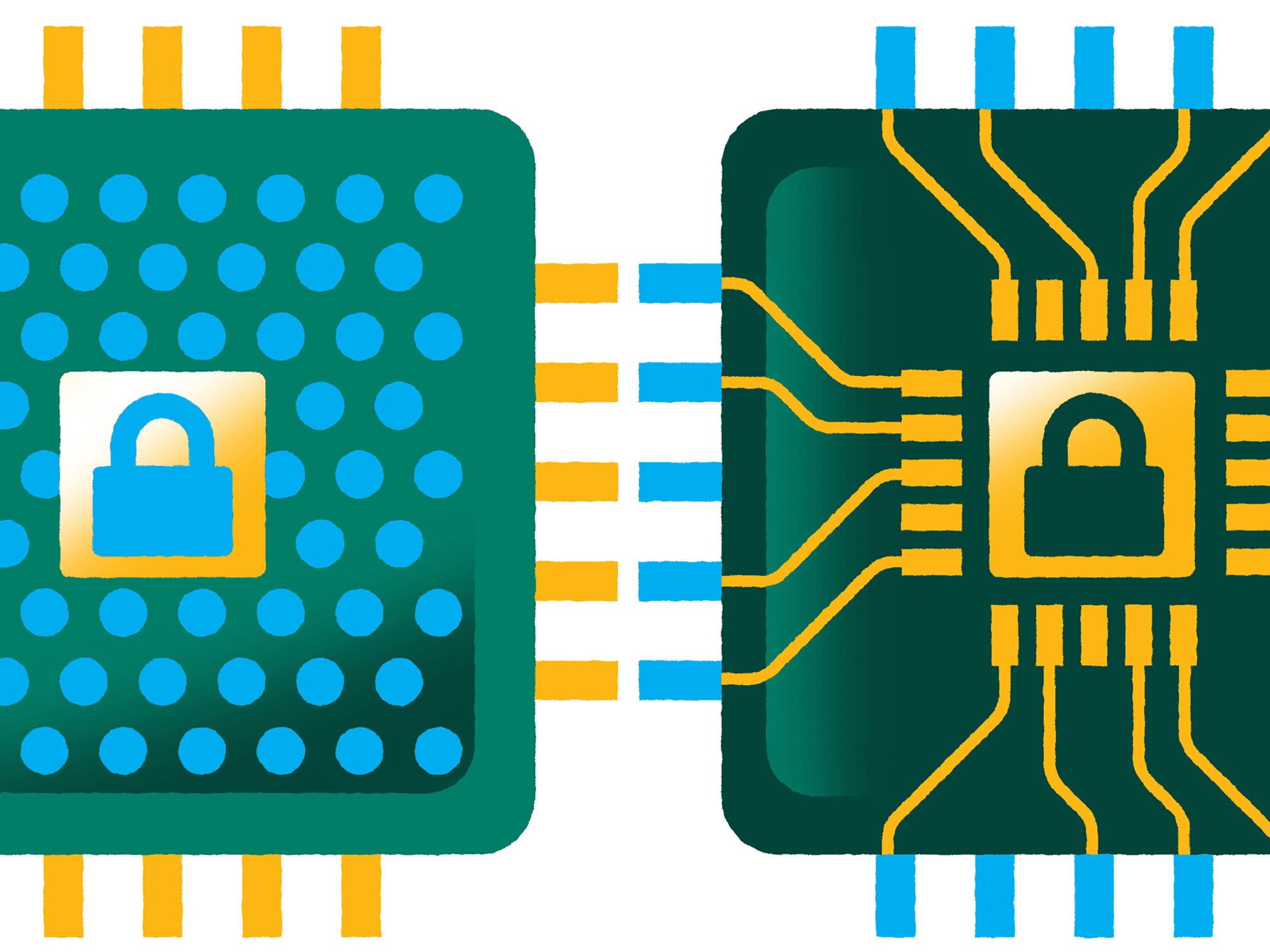
Run the circuit on a trusted execution environment or hardware accelerator. The system processes the ciphertexts directly, performing additions and multiplications without exposing the underlying plaintext values.
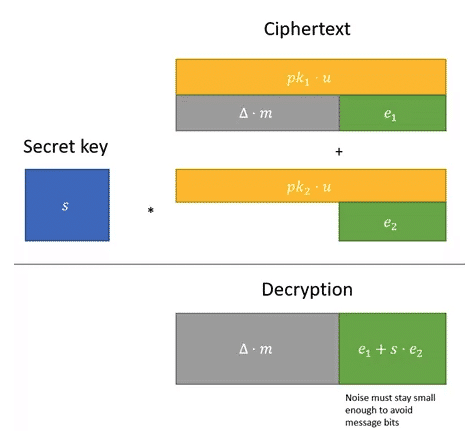
Extract the final encrypted result. Only the authorized key holder can decrypt this output to view the analytics or inference results, completing the secure computation cycle.
Decrypt results only on the client side
The final step in a secure Fully Homomorphic Encryption (FHE) workflow is ensuring that decrypted data never leaves the authorized user’s environment. After the cloud provider performs computations on the encrypted ciphertext and returns the encrypted result, the decryption key remains exclusively with the client.
This "decrypt-only-on-client" model eliminates the risk of the service provider or any intermediate node ever seeing the plaintext. It enforces a strict boundary where the cloud handles the heavy lifting of computation without gaining access to the underlying information.
To implement this, structure your application to handle the decryption locally. This typically involves the following sequence:
The client application receives the encrypted result from the remote computation. At this stage, the data remains unreadable to the server and any network interceptors.
Before decryption, verify the integrity of the ciphertext using digital signatures or checksums. This ensures the cloud provider did not tamper with the result during processing.
Use the client-side private key to decrypt the result. This operation happens entirely within the user’s trusted execution environment, such as a local device or secure enclave, ensuring the plaintext is never exposed to the network or the cloud provider.
By keeping the decryption key isolated, you maintain end-to-end privacy. The cloud provider sees only encrypted noise, while the client receives the accurate, computed answer. This separation is the core value proposition of FHE in 2026, allowing organizations to leverage external compute power without compromising sensitive data.
If you are integrating FHE into a financial or healthcare workflow, ensure your client-side decryption logic is audited for side-channel attacks. Even if the key is stored securely, timing or power analysis could potentially leak information during the local decryption process.
Avoid common fully homomorphic encryption performance pitfalls
Fully homomorphic encryption (FHE) is powerful, but it is not free. In 2026, the primary barriers to deployment remain computational slowness and ciphertext expansion. If you do not account for these factors during the design phase, your application will be unusable in production.
Understand the performance cost
FHE operations are inherently slower than plaintext computation. The encryption process adds significant overhead because every mathematical operation must be performed on encrypted data without decryption. As noted in industry analysis, FHE’s slowness is not due to a single cause but is a combination of factors inherent to how these schemes work [1].
This means that a simple addition or multiplication can take milliseconds or seconds instead of nanoseconds. You must model your expected latency carefully before committing to an FHE architecture.
Manage ciphertext expansion
The second major pitfall is ciphertext expansion. In the most efficient FHE schemes, ciphertexts can be 4–10 times larger than the original plaintexts [1]. This bloat consumes memory and bandwidth rapidly.
If you are processing large datasets, this expansion can quickly exhaust available resources. Plan for increased storage requirements and network throughput. Optimize your data structures to minimize the amount of data encrypted whenever possible.
Mitigation strategies
To deploy FHE successfully, you must adopt specific mitigation strategies:
- Use hardware acceleration: Leverage GPUs or specialized FHE accelerators to offload heavy computation. This can significantly reduce the time per operation.
- Optimize libraries: Choose well-maintained, optimized FHE libraries that support advanced techniques like bootstrapping optimization and parameter tuning.
- Minimize encrypted operations: Only encrypt data that must remain confidential. Process plaintext data whenever possible to reduce the computational load.
By addressing these pitfalls early, you can build a robust FHE system that delivers security without sacrificing performance.
Verify compliance with data privacy regulations
Fully Homomorphic Encryption (FHE) is a strong candidate for meeting strict data privacy standards like GDPR and HIPAA because it keeps data encrypted during processing. This means personal or health information remains protected even while algorithms analyze it, significantly reducing the risk of exposure during computation.
To confirm your implementation meets legal requirements, you must verify that the encryption covers data both at rest and in use. Ensure that decryption keys are held only by authorized users and that audit logs are maintained for all access. Use the following checklist to validate your compliance posture before deployment.
-
Data encrypted at rest
-
Data encrypted in use (during processing)
-
Decryption keys held only by authorized users
-
Audit logs maintained for all access
For the most current technical standards, refer to the Homomorphic Encryption Standardization group, which publishes updates on best practices and protocol compliance as the technology evolves.
No comments yet. Be the first to share your thoughts!