

In the evolving landscape of decentralized governance, private onchain voting stands as a beacon for true democratic expression on blockchain networks. By 2026, Fully Homomorphic Encryption (FHE) Rust libraries have transformed this vision into reality, enabling encrypted blockchain voting that safeguards voter anonymity while allowing verifiable tallies. Zama's ecosystem, with its battle-tested tools, empowers developers to craft homomorphic encryption dApps that process encrypted votes directly on-chain, sidestepping the transparency pitfalls of traditional blockchains. This isn't mere theory; it's the infrastructure powering scalable, trustless elections in Web3.
Zama's FHE Rust Libraries: The Backbone of Confidential Compute
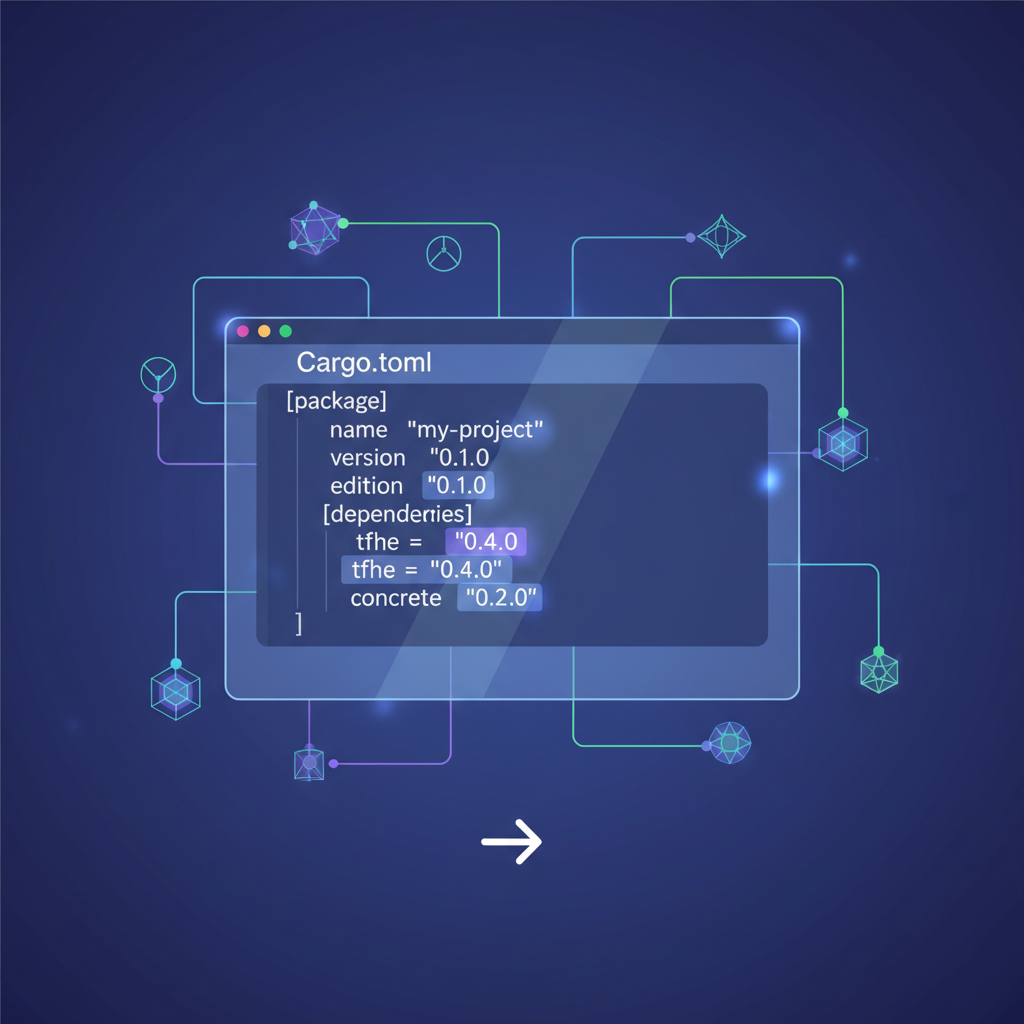
Visionaries in the blockchain space have long grappled with the privacy paradox: blockchains excel at transparency, yet demand discretion for sensitive applications like voting. Enter Zama's suite of FHE Rust libraries, meticulously engineered for high-performance homomorphic operations. These tools, including tfhe-rs, concrete, concrete-boolean, concrete-integers, and concrete-nfvc, form a cohesive stack that developers can wield to build privacy-preserving smart contracts. tfhe-rs, the flagship, delivers a Rust-native implementation of the TFHE scheme, optimized for boolean and short integer circuits with CUDA acceleration for blazing server-side execution and WebAssembly for browser compatibility.
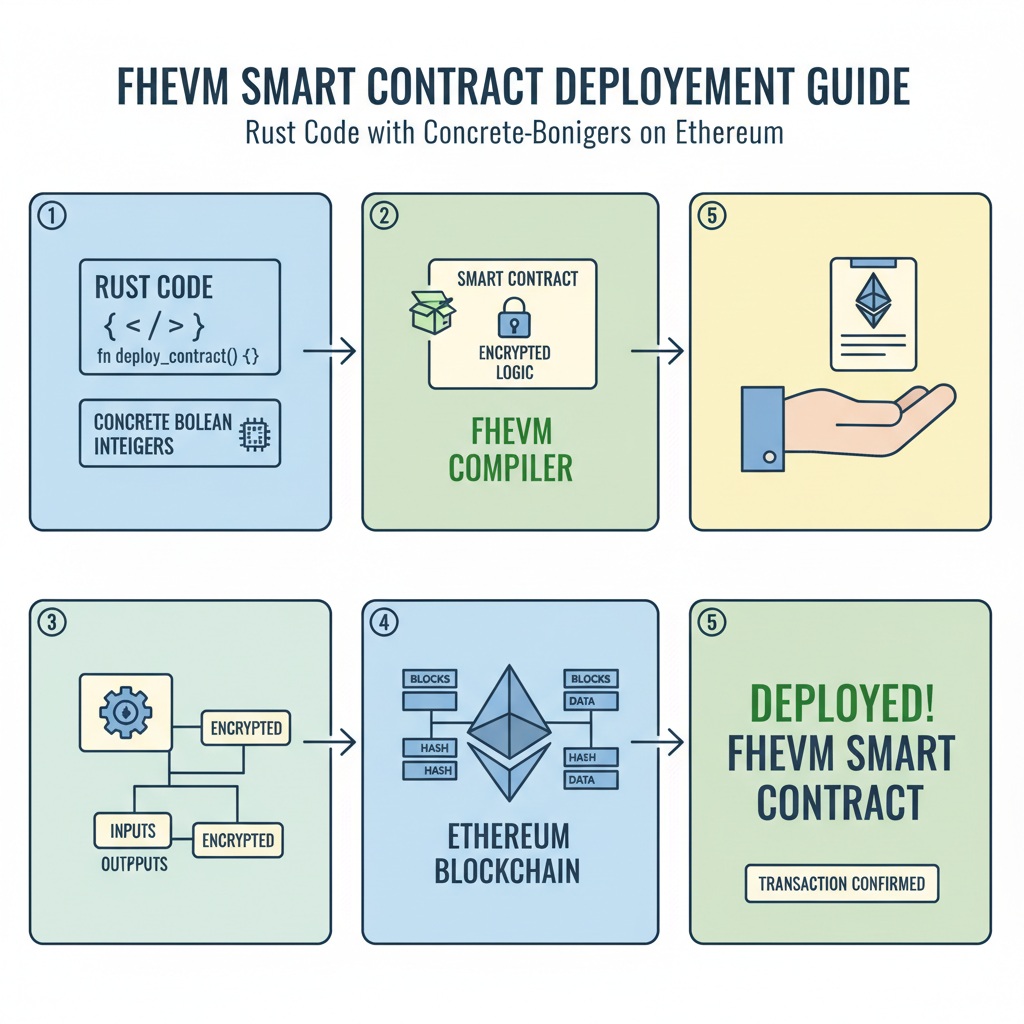
What sets this apart is its real-world readiness. Unlike nascent prototypes, these libraries handle the cryptographic heavy lifting, letting builders focus on dApp logic. Concrete acts as the umbrella framework, simplifying FHE prototyping through intuitive APIs. Its submodules dive deeper: concrete-boolean for bit-level operations ideal for vote flags, concrete-integers for tallying numeric counts without decryption, and concrete-nfvc for advanced number theoretic transforms that boost efficiency in multi-party computations. Together, they underpin FHEVM, Zama's virtual machine for confidential EVM execution, where encrypted votes flow seamlessly through smart contracts.
Zama's Top FHE Rust Libraries
- tfhe-rs: High-performance TFHE implementation in Rust, enabling encrypted computations for private onchain voting with CUDA & WebAssembly support, powering confidential smart contracts in 2026 dApps.

- concrete: Full-stack FHE framework simplifying homomorphic primitives & crypto ops, empowering developers to build privacy-preserving voting tallies without expert knowledge.

- concrete-boolean: Optimized library for boolean operations in FHE circuits, essential for secure, verifiable vote encryption and logic in onchain dApps.

- concrete-integers: Enables integer arithmetic circuits under encryption, ideal for aggregating and tallying votes privately while maintaining blockchain composability.

- concrete-nfvc: Delivers efficient number theoretic transforms, accelerating FHE performance for scalable private voting systems on EVM-compatible chains.

tfhe-rs Toolkit: Encrypting Votes Without Compromise
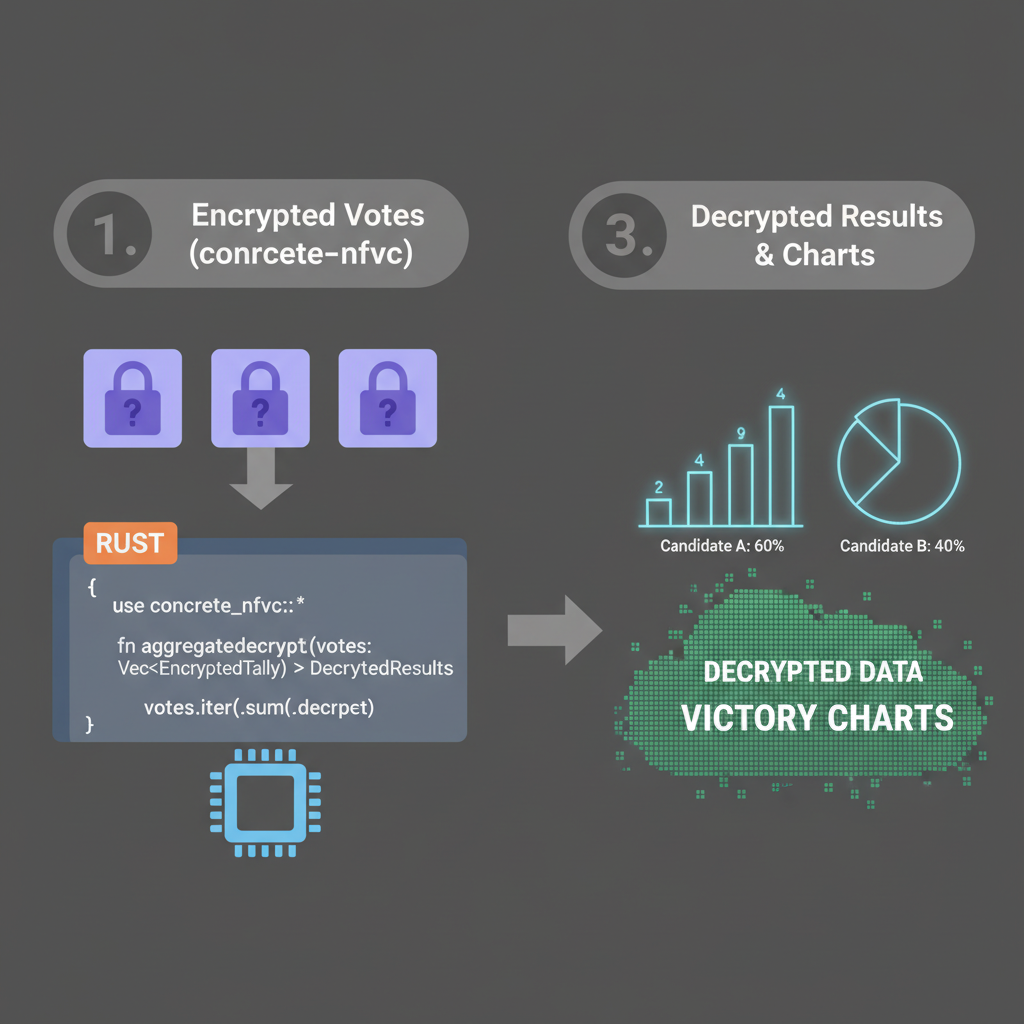
At the heart of tfhe-rs toolkit lies a commitment to performance and portability. This library supports both client-side encryption in browsers and server-side decryption, crucial for hybrid voting dApps where users submit encrypted ballots on-chain. Imagine a scenario: voters encrypt their choices using public keys, submit to a smart contract, and nodes aggregate tallies homomorphically. No single party glimpses individual votes; only the final count decrypts verifiably.
Vocdoni's DAVINCI protocol echoes this prowess, blending threshold ElGamal with ZKPs, but Zama's Rust libs elevate it to pure FHE for Ethereum ecosystems. Benchmarks show tfhe-rs handling thousands of operations per second, outpacing predecessors and rivaling ZK alternatives in latency for voting scales. Developers praise its zero-knowledge-friendly design, integrable with circuits for hybrid privacy stacks.
Diving into the concrete family reveals surgical precision for voting mechanics. concrete-boolean excels in packing multiple vote bits into single ciphertexts, enabling efficient NAND gates for arbitrary logic; think approval voting where multiple options AND/OR into outcomes. concrete-integers extends this to multi-bit integers, perfect for summing votes across districts without exposing granular data. Its shortint module supports up to 2^16 values, ample for election margins in most jurisdictions.
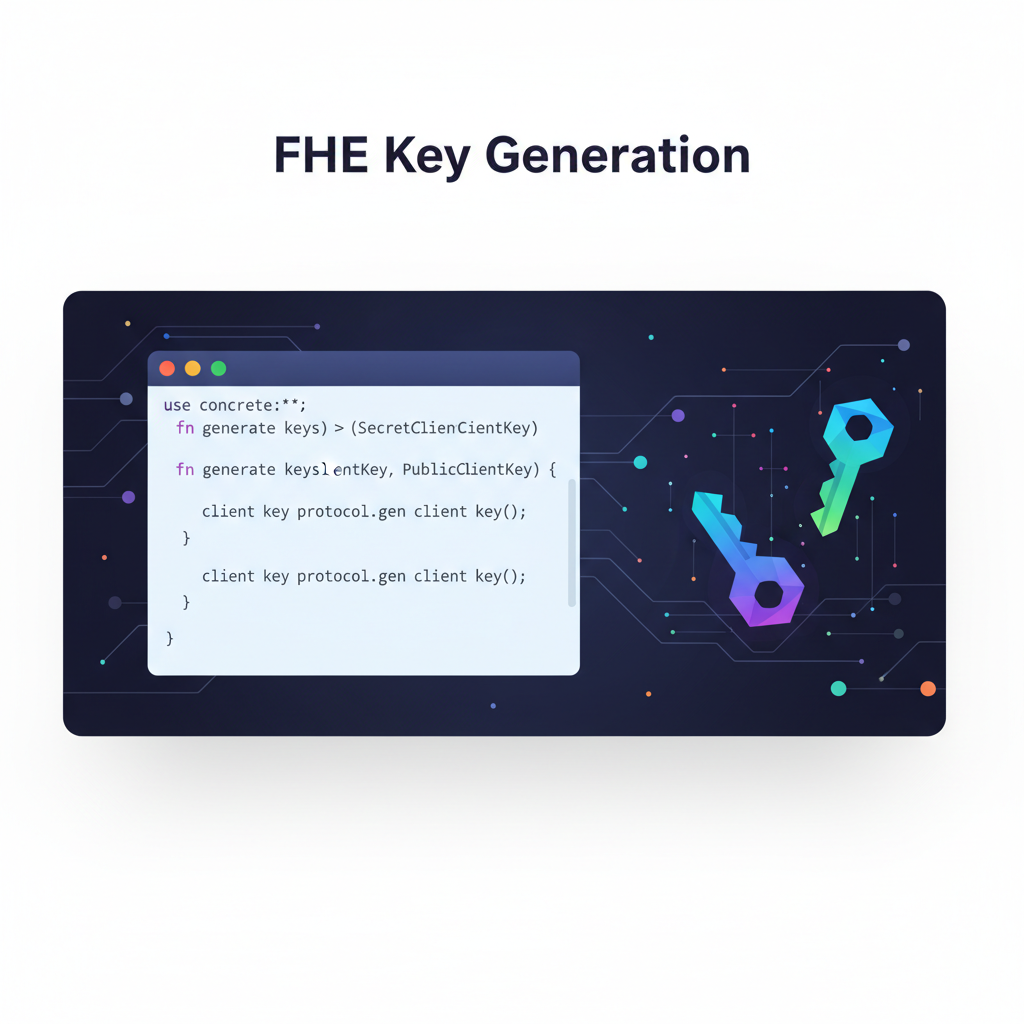
concrete-nfvc pushes boundaries with Number Theoretic Transform accelerations, slashing computation times for large-scale aggregations. In a 2026 onchain election dApp, you'd bootstrap keys via concrete, encrypt ballots client-side, and let FHEVM smart contracts rotate and sum them on-chain. This yields encrypted blockchain voting that's not just private but composable; downstream contracts query tallies without decryption gates.
Developers integrating these libraries into homomorphic encryption dApps report dramatic efficiency gains. For instance, combining tfhe-rs with concrete-boolean allows packing hundreds of yes/no votes into a single ciphertext, slashing gas costs on FHEVM-enabled chains. This modularity means you can swap concrete-integers for precise tallying in ranked-choice systems, where vote values exceed simple binaries. concrete-nfvc then optimizes the bootstrapping phase, essential for repeated homomorphic operations in live elections spanning weeks.
Orchestrating the Stack: From Ballot Encryption to Verifiable Tallies
Picture a full-stack private voting dApp: Voters use a browser-based frontend powered by tfhe-rs WebAssembly to encrypt choices under a collective public key. These ciphertexts hit an FHEVM smart contract, where concrete serves as the orchestration layer. Inside, concrete-boolean evaluates conditional logic, like eligibility checks on encrypted attributes; concrete-integers accumulates district totals; and tfhe-rs handles the core TFHE gates for additions and multiplications. concrete-nfvc accelerates the noise management, ensuring ciphertexts remain fresh across thousands of operations. At poll close, a threshold of trustees decrypts the aggregate via secure multi-party computation, yielding exact tallies posted on-chain for universal verification.
This workflow isn't hypothetical; it's battle-tested in pilots mirroring Vocdoni's DAVINCI but amplified by pure FHE. Zama's libraries outshine ZKPs here for certain scales: ZK demands circuit rewrites per logic tweak, while FHE's arithmetic universality adapts fluidly. Rust's memory safety further fortifies against side-channel leaks, a non-starter in less rigorous tongues.
Forge Private Onchain Voting dApps: Ultimate FHE Rust Libraries Guide

Beyond Elections: Scalable Privacy for Web3 Governance
While private onchain voting spotlights these tools, their reach extends to DAO proposals, quadratic funding, and prediction markets. concrete-integers shines in weighted voting, summing stakes homomorphically without revealing holdings. tfhe-rs' CUDA backend scales to enterprise DAOs processing millions of encrypted inputs nightly. Pair with concrete-boolean for access controls, enforcing rules like one-vote-per-wallet on ciphertexts alone.
Challenges persist: bootstrapping overhead demands careful parameterization, but concrete-nfvc mitigates this elegantly. Gas limits on current L1s nudge toward L2s or FHE-optimized rollups, where Zama's stack integrates natively. By mid-2026, expect mainstream adoption as chains like Fhenix mainnet mature, blending FHE with ZK for hybrid confidentiality.
Zama's Rust FHE Libraries for Private Onchain Voting dApps
| Library | Core Strength | Voting Use Case |
|---|---|---|
| tfhe-rs | TFHE Scheme | Ballot encryption/addition |
| concrete | FHE Framework | Key gen and orchestration |
| concrete-boolean | Bit ops | Approval flags |
| concrete-integers | Integer circuits | Tally summation |
| concrete-nfvc | NTT accel | Large-scale bootstrapping |
The fusion of these FHE Rust libraries heralds a privacy renaissance in blockchain. No longer must governance sacrifice secrecy for verifiability. With tfhe-rs leading the charge, bolstered by the concrete suite, builders craft dApps where votes remain shrouded yet outcomes shine transparently. This is the toolkit turning Web3's promise into unassailable reality, cycle after cycle.




No comments yet. Be the first to share your thoughts!