
Why fully homomorphic encryption matters for enterprise AI
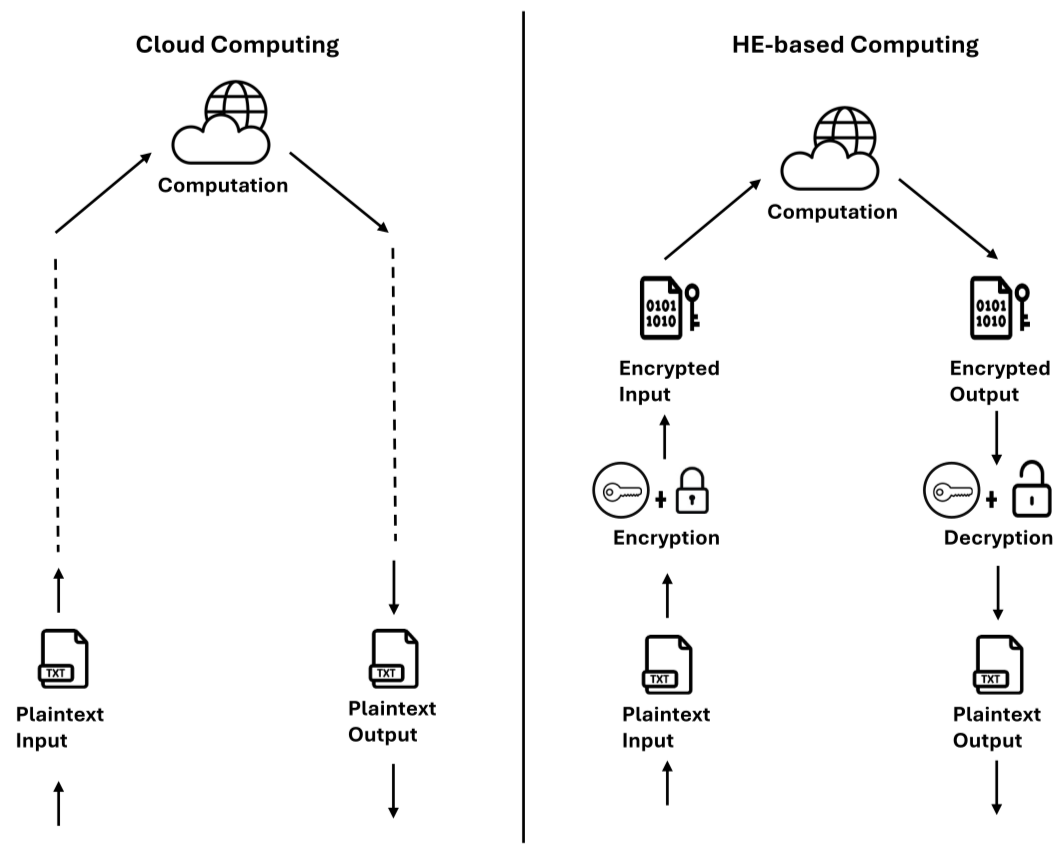
In 2026, fully homomorphic encryption (FHE) has moved from theoretical cryptography to a core infrastructure layer for enterprise AI. The technology allows organizations to process data while it remains encrypted, solving the fundamental tension between data utility and privacy. For businesses handling sensitive customer information, FHE enables secure AI inference without exposing raw data to potential breaches or unauthorized access.
The regulatory landscape has tightened significantly, with global compliance frameworks demanding stricter controls over data processing. FHE provides a technical solution that aligns with these requirements by ensuring data integrity and confidentiality throughout the entire computational lifecycle. This capability is particularly critical for healthcare, finance, and legal sectors where data exposure can result in severe penalties and loss of trust.
Industry standardization efforts are accelerating this transition. The recent HomomorphicEncryption.org Standards Meeting in Seoul highlighted the growing consensus on interoperability and performance benchmarks. As toolkits mature, enterprises can now integrate FHE into existing AI pipelines with reduced complexity, making it a viable option for large-scale deployment.
This evolution marks a pivotal moment for data security. By adopting FHE, organizations can leverage the power of AI while maintaining strict privacy controls, ensuring compliance and protecting sensitive information in an increasingly regulated digital environment.
Leading FHE toolkits for secure compute
The landscape for fully homomorphic encryption is defined by a few robust, open-source libraries that power the majority of enterprise-grade secure compute applications. While the underlying mathematics of homomorphic encryption has matured, the practical value lies in which libraries offer the best balance of performance, ease of integration, and active maintenance. For developers looking to implement privacy-preserving machine learning or secure data analytics, selecting the right toolkit is the most critical technical decision in the stack.
Microsoft SEAL
Microsoft SEAL (Simple Encrypted Arithmetic Library) remains the industry standard for research and high-performance production environments. It is a C++ library that supports both Ring-LWE and BFV encryption schemes, offering a comprehensive suite of operations for homomorphic arithmetic. SEAL is particularly favored for its rigorous security proofs and its integration with Microsoft’s broader ecosystem, including Azure Confidential Computing. Its performance is optimized for CPU-based workloads, making it the go-to choice for applications requiring heavy matrix operations or complex cryptographic primitives. However, its steep learning curve and lack of native Python bindings can slow down initial prototyping for teams not deeply familiar with C++.
OpenFHE
OpenFHE (Open Fully Homomorphic Encryption) has emerged as the most accessible and versatile toolkit for developers. Born from the merger of HElib, OpenFHE, and Microsoft SEAL, it unifies several powerful libraries into a single, cohesive API. This consolidation significantly reduces the friction of switching between different encryption schemes like CKKS, BFV, and BGV. OpenFHE is particularly strong in supporting approximate arithmetic, which is essential for machine learning inference tasks where floating-point precision is required. Its extensive documentation and Python bindings make it the preferred entry point for new teams adopting these standards, offering a smoother path from prototype to production than many legacy alternatives.
PALISADE
PALISADE is a modular toolkit designed for flexibility and extensibility, allowing developers to mix and match different encryption schemes and optimization techniques. It is widely used in academic research and specialized industrial applications where custom cryptographic parameters are necessary. PALISADE’s architecture supports a wide range of operations, including bootstrapping and key-switching, which are critical for deep circuit evaluation in privacy-preserving computations. While it offers unparalleled control over the encryption process, this flexibility comes at the cost of complexity. Teams choosing PALISADE must have a strong understanding of cryptographic theory to avoid misconfigurations that could compromise security or performance.
Comparison of Top FHE Libraries
The following table compares the key features of the leading FHE toolkits to help you choose the right fit for your infrastructure.
| Library | Primary Language | Best Use Case | Learning Curve |
|---|---|---|---|
| Microsoft SEAL | C++ | High-performance enterprise apps | Steep |
| OpenFHE | C++, Python | ML inference & prototyping | Moderate |
| PALISADE | C++ | Custom cryptographic research | High |
Choosing the Right Toolkit
The decision between these toolkits often comes down to your team’s existing expertise and your application’s specific computational needs. If your priority is raw performance and you have a strong C++ team, Microsoft SEAL is the most mature option. For teams focused on rapid development, machine learning integration, or Python-based workflows, OpenFHE provides the most balanced experience. PALISADE remains the specialist’s choice for those who need fine-grained control over cryptographic parameters. As the ecosystem continues to evolve, all three libraries are actively maintained, ensuring long-term support and security updates.



As an Amazon Associate, we may earn from qualifying purchases.
Benchmarking FHE performance in 2026
Evaluating FHE performance requires defining constraints, comparing realistic options, and testing tradeoffs before choosing a path with the fewest hidden costs. This approach keeps advice usable rather than decorative. After each step, verify whether the recommendation fits the actual situation. If a solution depends on perfect timing, unusual access, or a best-case budget, include a simpler fallback.
The simplest way to use this section is to write down the real constraint first, compare each option against it, and choose the path that still works outside ideal conditions.
Integrating FHE with onchain data privacy
The shift toward fully homomorphic encryption is driven by stricter data privacy regulations and the need for verifiable, private onchain compute. In 2026, blockchain applications can no longer rely on plaintext data or opaque zero-knowledge proofs alone when compliance requires auditability without exposure. FHE allows smart contracts to process encrypted data directly, ensuring that sensitive user information remains hidden while still producing valid, verifiable results on the public ledger.
This capability addresses a critical gap in blockchain architecture. Traditional privacy solutions often sacrifice transparency or require complex off-chain computations that break the trustless nature of the network. By integrating FHE toolkits, developers can build applications where the logic is public, but the inputs and intermediate states remain encrypted. This is particularly vital for decentralized finance (DeFi) protocols handling high-value transactions and healthcare dApps processing protected health information (PHI).
The practical implementation involves embedding FHE libraries directly into the smart contract environment. Developers use these toolkits to encrypt user inputs before they enter the blockchain, perform the necessary calculations on the ciphertext, and then decrypt only the final output if permitted by the user. This flow ensures that no party, including the node operators or validators, can access the raw data during the computation process.
As regulatory frameworks tighten in 2026, the ability to demonstrate compliance through cryptographic proof rather than data disclosure will become a competitive advantage. Projects that adopt these standards are positioning themselves to meet these evolving requirements without compromising the core benefits of decentralization.
Frequently asked questions about FHE
Fully homomorphic encryption (FHE) has moved from theoretical cryptography to practical engineering, with 2026 marking a turning point for enterprise adoption. As privacy regulations tighten and AI workloads grow, understanding the real-world constraints of FHE is essential for developers and security architects.
Is fully homomorphic encryption fast enough for production use in 2026?
Latency remains the primary hurdle for FHE. While specialized hardware accelerators and optimized libraries like Microsoft SEAL and OpenFHE have reduced computation times significantly, encrypted operations are still orders of magnitude slower than plaintext processing. For high-throughput AI inference, FHE is currently viable for specific, low-latency-sensitive tasks or batch processing, but it is not yet a drop-in replacement for unencrypted workflows in all scenarios.
Can I use FHE with existing AI models like LLMs?
Yes, but with caveats. Several toolkits now offer pre-optimized circuits for common neural network operations, allowing LLM inference on encrypted data. However, the computational overhead is substantial. Most implementations require careful model quantization and layer-by-layer optimization to make inference feasible within reasonable timeframes and memory limits.
How does FHE integrate with cloud providers?
Major cloud providers are beginning to offer FHE-as-a-Service or integrated toolkits, but true interoperability is still evolving. Developers typically deploy FHE libraries directly within their application stack or use specialized privacy-preserving computation services. Always verify that your chosen cloud environment supports the specific FHE parameters and key management schemes your toolkit requires.
What is the cost of implementing FHE?
Implementation costs vary widely depending on whether you build custom circuits or use off-the-shelf libraries. Open-source options like OpenFHE reduce software licensing fees, but the hardware costs for accelerated computation (e.g., GPUs or FPGAs) can be significant. There are no standard "per-user" prices for FHE itself; costs are driven by the computational resources required to run the encrypted workloads.
Is FHE secure against quantum computing attacks?
Yes. FHE relies on lattice-based cryptography, which is considered post-quantum secure. This makes it a future-proof choice for protecting sensitive data against both classical and quantum threats, unlike RSA or ECC-based encryption schemes.
No comments yet. Be the first to share your thoughts!