
Choose the right FHE toolkit
Selecting a Fully Homomorphic Encryption (FHE) library requires matching the toolkit’s underlying arithmetic to your specific workload. In high-stakes finance, the difference between a library optimized for integer arithmetic and one built for polynomial rings can mean the difference between a viable production system and an unmanageable latency bottleneck.
Open-source FHE libraries generally split into two camps: those built for general-purpose computation and those specialized for AI inference. Your choice should depend on whether you are running complex logical circuits or performing matrix multiplications on encrypted tensors.
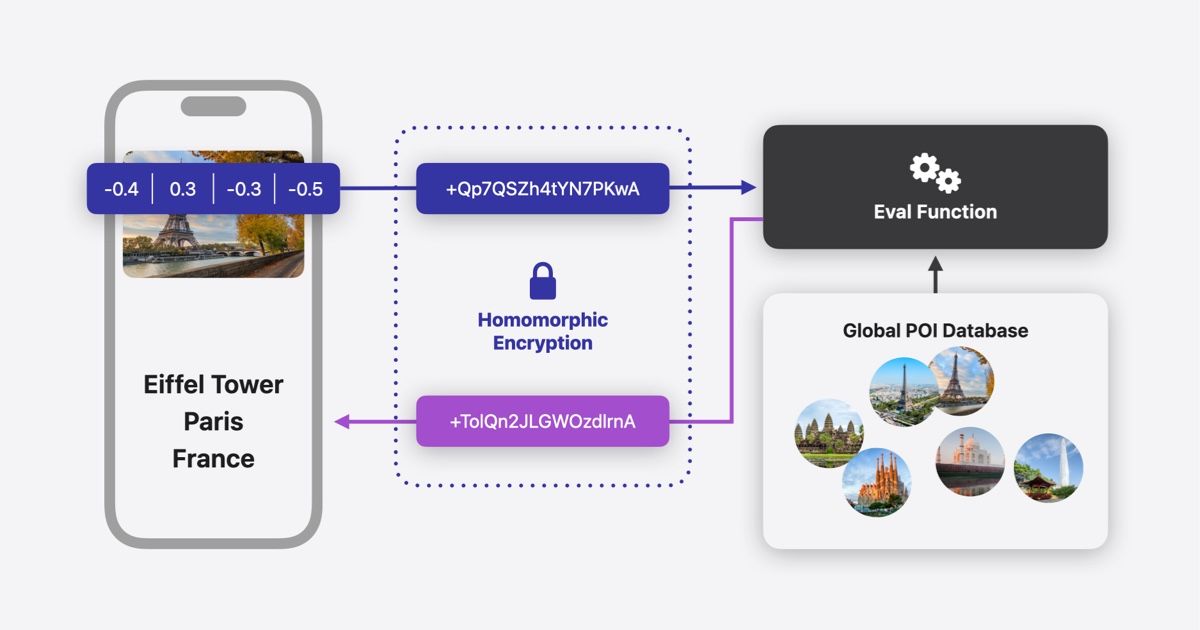
Compare FHE libraries
The table below compares the primary open-source FHE toolkits available for 2026 deployment. Use this to filter options based on language support and encryption scheme compatibility.
| Toolkit | Primary Language | Core Scheme | Best Use Case |
|---|---|---|---|
| OpenFHE | C++ | BFV, BGV, CKKS | General-purpose FHE, academic research |
| Concrete | Rust | TFHE, BS | Low-latency logic, AI inference |
| HElib | C++ | BFV, BGV | Heavy integer arithmetic, legacy systems |
| Microsoft SEAL | C++ | BFV, CKKS | Standardized FHE, enterprise integration |
Evaluate based on language and scheme
If your team is already working in Rust, Concrete is often the most efficient entry point. Its TFHE-based architecture allows for fast logical operations, which is critical when deploying encrypted AI models that rely on activation functions and comparisons.
For teams preferring C++ or requiring broader academic support, OpenFHE or Microsoft SEAL are safer defaults. OpenFHE provides a unified API that supports multiple schemes (BFV, BGV, CKKS), making it easier to prototype different cryptographic approaches without rewriting core logic. Microsoft SEAL is widely adopted in enterprise environments due to its rigorous documentation and stability.
Verify performance before committing
FHE performance is highly sensitive to parameter selection. Always benchmark your specific use case against the library’s official documentation before committing to a toolkit. Avoid generic benchmarks; instead, measure the latency of your actual encrypted operations under realistic data volumes.
Set up the development environment
Before running any FHE computations, you need a verified local environment. This section walks through installing dependencies, configuring the virtual environment, and validating the setup with a test script. Follow these steps in order to ensure compatibility with the latest FHE libraries.
Start by installing the required system-level packages. For Ubuntu/Debian systems, run:
sudo apt-get update
sudo apt-get install -y build-essential cmake git python3-dev python3-venv
On macOS, use Homebrew:
brew install cmake git python3
These tools are necessary for compiling FHE libraries from source or installing pre-built binaries. Ensure your compiler supports C++17 or later, as most modern FHE libraries require this standard.
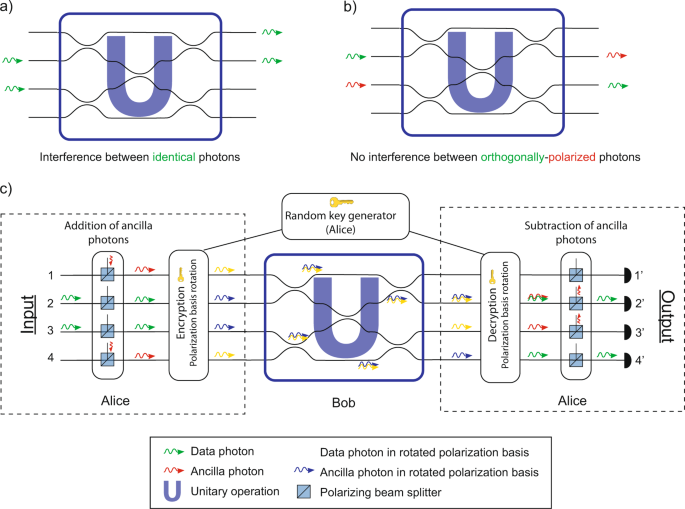
Isolate your FHE project dependencies to avoid conflicts with other Python packages. Create and activate a virtual environment:
python3 -m venv fhe-env
source fhe-env/bin/activate
This step ensures that the specific versions of libraries like PySyft, TFHE, or HElib do not interfere with your system Python or other projects. Always activate the environment before proceeding with package installations.
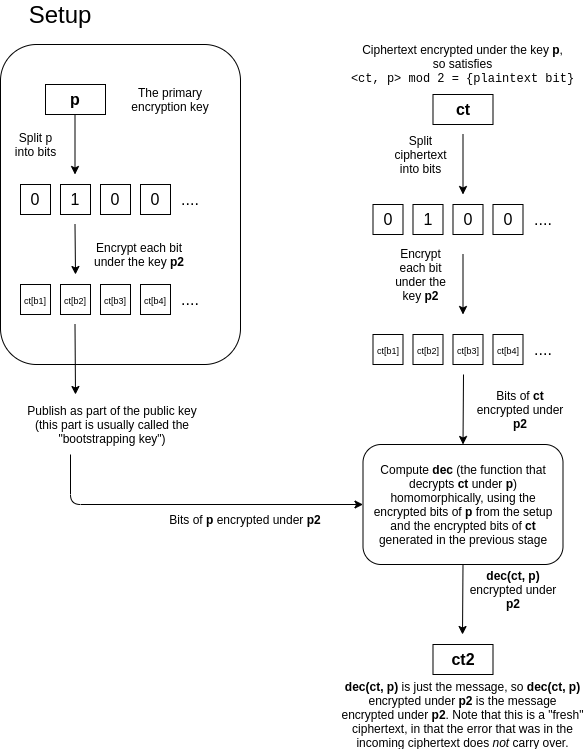
Install the core FHE library for your chosen framework. For example, to install the TFHE-rs Python bindings:
pip install tfhe-rs
Or for PySyft:
pip install syft
Refer to the official documentation for your specific library (e.g., FHE.org or IBM Z) for version compatibility. Avoid using pip install without specifying versions in production-like environments, as FHE libraries can have breaking changes between minor releases.
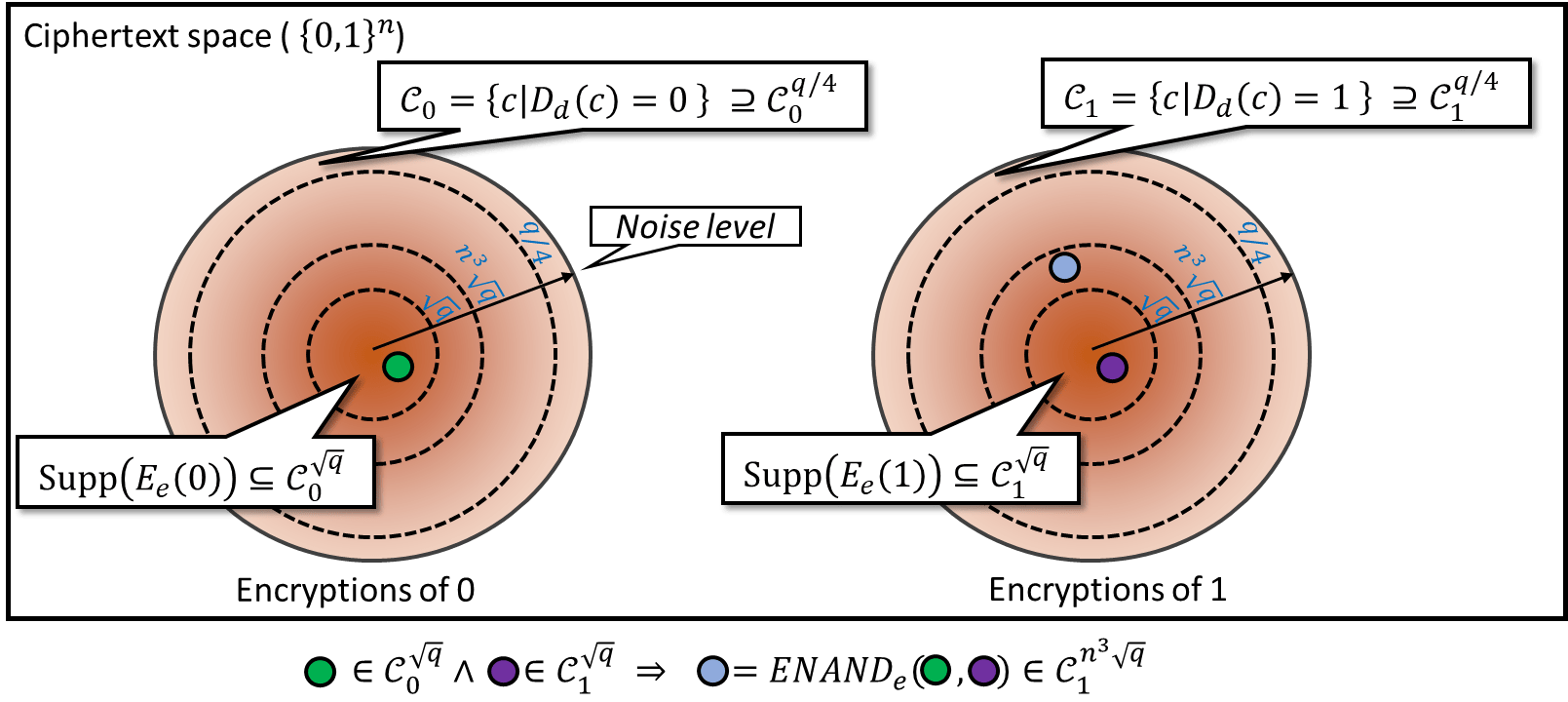
Run a simple test script to confirm that the library is installed and functional. Create a file test_fhe.py:
import tfhe_rs
print(tfhe_rs.__version__)
Execute the script with python test_fhe.py. If it prints the version number without errors, your environment is ready. This verification step is critical before attempting complex computations, as it catches missing dependencies or compilation errors early.
With the environment set up, you are ready to begin writing and executing FHE-protected analytics scripts. The next section will cover basic encryption and decryption workflows.
Encrypt data before processing
Before any computation occurs, raw data must be transformed into ciphertext. This step ensures that the analytics engine never sees the underlying values, preserving privacy even during active processing. Skipping this preparation exposes sensitive transaction data to potential leaks or unauthorized access.
The process relies on a pair of cryptographic keys: a public key for encryption and a secret key for decryption. You generate these keys first, then use the public key to wrap your data inputs. The resulting ciphertexts are what enter the computation pipeline.
Initialize your FHE toolkit to create the public and secret key pair. Use an official library like Microsoft SEAL or OpenFHE to ensure the parameters meet current security standards. Store the secret key securely; it is the only way to decrypt the final results.
Apply the public key to your raw data fields—such as account balances or transaction amounts. Each value becomes a ciphertext block. Ensure you use the same key for all inputs in a single query to maintain consistency during the homomorphic operations.
Before submitting to the analytics engine, run a quick validation check. Ensure the ciphertext dimensions match the expected ring size. Incorrect dimensions can lead to decryption failures or excessive memory usage, stalling your entire pipeline.
Once the data is encrypted, it is ready for the computation phase. The analytics engine will perform operations on these ciphertexts, producing a new ciphertext that represents the result. Only after this step is complete should you use the secret key to decrypt the final output.
Run encrypted computations
This section walks through the execution phase of fully homomorphic encryption (FHE). The goal is to perform analytics—such as aggregations or machine learning inference—directly on ciphertext. You never decrypt the data during this process. The computation happens while the data remains encrypted, ensuring that even the compute environment cannot see the underlying values.
1. Verify noise budget and parameters
Before running any computation, check your noise budget. FHE operations add noise to ciphertexts. If the noise exceeds the threshold, the decryption fails. Ensure your parameter set matches the complexity of the upcoming operations. Enable hardware acceleration if available to manage the computational load.
2. Load encrypted data
Load the encrypted dataset into your FHE-enabled environment. Data should already be encrypted by the data owner or a trusted key holder. Do not attempt to decrypt this data for inspection. Verify the integrity of the ciphertexts using the provided checksums or signatures from the source.
3. Execute aggregation operations
Run your aggregation functions (sum, average, count) on the encrypted data. FHE supports homomorphic addition and scalar multiplication. For averages, you can multiply the sum by the encrypted reciprocal of the count. This allows you to compute statistical summaries without ever exposing individual records.
4. Perform machine learning inference
For ML models, execute the inference circuit on the encrypted inputs. This typically involves encrypted matrix multiplications and activation functions. Use optimized libraries that support bootstrapping to refresh the ciphertext noise levels during complex computations. This ensures the result remains accurate after multiple operations.
5. Retrieve and decrypt results
Once the computation is complete, the result is an encrypted ciphertext. Send this ciphertext to the authorized key holder for decryption. Only the key holder can reveal the final analytical result. This maintains the privacy of the input data throughout the entire lifecycle.
Check your noise budget before starting. FHE operations add noise; if it exceeds the threshold, decryption fails. Ensure your parameter set matches the operation complexity and enable hardware acceleration to manage the load.
Load the encrypted dataset into your FHE environment. Data must remain ciphertext. Verify integrity using checksums from the source. Never decrypt for inspection during this phase.
Run aggregations like sum or average directly on ciphertexts. Use homomorphic addition and scalar multiplication. For averages, multiply the sum by the encrypted reciprocal of the count to preserve privacy.
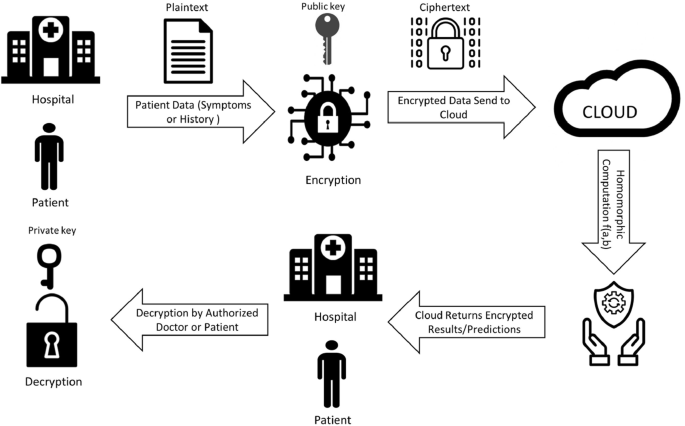
Execute ML inference circuits on encrypted inputs. This involves encrypted matrix multiplications and activation functions. Use libraries with bootstrapping to refresh noise levels during complex computations.
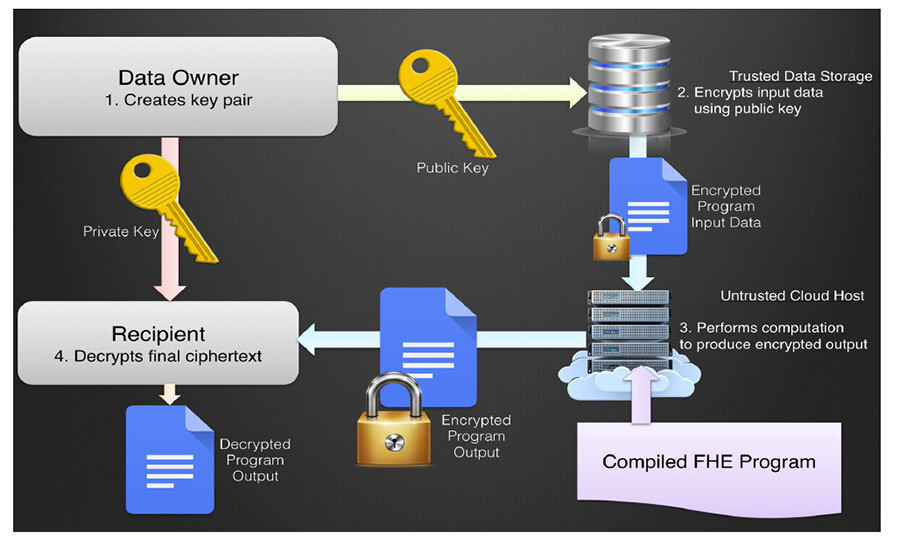
The final result is an encrypted ciphertext. Send it to the authorized key holder for decryption. Only they can reveal the analytical outcome, ensuring input data privacy is maintained.
Decrypt results securely
Once the computation finishes, the encrypted output remains inaccessible to anyone without the secret key. This final step ensures that intermediate data stays private throughout the entire pipeline, while only the authorized analyst receives the clear-text answer.
This separation is non-negotiable. The computation engine never sees the raw data, and the decryption key never leaves the secure enclave of the data owner. This architecture prevents even the service provider from peeking at sensitive transaction details or portfolio compositions.
The decryption workflow
- Retrieve the ciphertext: Fetch the encrypted result from the computation storage. This data looks like random noise to anyone without the key.
- Apply the secret key: Use your local FHE toolkit (e.g., Microsoft SEAL or OpenFHE) to run the decryption algorithm.
- Validate the output: Check the result for integrity. Ensure the decrypted value matches expected formats (e.g., decimal precision for financial metrics).
- Securely discard ciphertext: Once verified, securely erase the encrypted blob from memory and storage to minimize the attack surface.
Best practices for key management
Keep the secret key in a Hardware Security Module (HSM) or a trusted execution environment. Never store the key in plain text files or version-controlled repositories. Rotate keys periodically, especially after large-scale computations involving multiple datasets.
For most 2026 implementations, using established libraries like OpenFHE or Microsoft SEAL is recommended. These tools provide battle-tested decryption routines that handle noise management and parameter selection automatically, reducing the risk of implementation errors.
Avoid common fully homomorphic encryption mistakes
Implementing FHE in production environments requires strict adherence to parameter constraints. Unlike traditional encryption, FHE operations generate noise with every computation. If this noise exceeds a threshold, decryption fails entirely, corrupting sensitive financial data. The following pitfalls are the most frequent causes of deployment failure.
Ignoring noise growth during complex circuits
Every arithmetic operation in an FHE scheme adds a small amount of noise to the ciphertext. In high-stakes finance, where algorithms may involve thousands of multiplications, this noise accumulates rapidly. Developers often underestimate the noise budget required for deep circuits, leading to decryption errors that are difficult to debug.
Selecting parameters without benchmarking
Choosing FHE parameters (polynomial modulus degree, coefficient modulus) is not a theoretical exercise; it is a performance trade-off. Larger parameters increase security and noise capacity but drastically slow down computation. Many teams select default parameters from academic papers without testing them against their specific data volumes, resulting in unacceptably high latency for real-time analytics.
Overlooking key management complexity
FHE requires managing multiple keys: public keys for encryption, evaluation keys for homomorphic operations, and secret keys for decryption. Mismanagement of evaluation keys can expose the system to side-channel attacks or simply break functionality if keys are rotated incorrectly. Ensure your key lifecycle follows the specifications provided by official toolkits like Microsoft SEAL or OpenFHE, rather than implementing custom key rotation logic.
No comments yet. Be the first to share your thoughts!