

Why FHE matters for 2026
Fully homomorphic encryption (FHE) has moved from academic theory to a practical layer for modern software. In 2026, the focus has shifted from proving that encryption on ciphertext is possible to building toolkits that make it fast enough for production workloads. This shift is critical for developers building privacy-preserving AI models and secure cloud data pipelines.
The primary driver for this change is the demand for data sovereignty. Organizations can now run inference on encrypted user data or process sensitive records in the cloud without ever exposing the plaintext. This capability addresses the growing regulatory and ethical concerns around data privacy, particularly in healthcare and finance.
However, the performance overhead of FHE remains significant. As noted in recent research on cross-operator dataflow optimization, protecting data privacy comes at the cost of higher computational demands [src-8]. Developers must choose toolkits that balance security with latency, ensuring that the encryption layer does not render the application unusable.
The 2026 landscape is defined by specialized libraries that abstract away the complexity of lattice-based cryptography. These toolkits provide high-level APIs for common operations, allowing developers to integrate privacy features without becoming experts in number theory. This accessibility is what makes FHE viable for mainstream adoption this year.
Top FHE libraries for production
The gap between theoretical encryption and production-ready code is bridged by specific libraries designed for developer experience and raw performance. While academic papers explore new mathematical primitives, these toolkits provide the stable APIs, documentation, and hardware acceleration needed to ship secure applications. The following libraries represent the current standard for developers building with encrypted data.
Microsoft SEAL
Microsoft SEAL (Simple Encrypted Arithmetic Library) remains the most widely adopted open-source library for FHE. Built on the BFV and CKKS schemes, it offers a robust C++ API that abstracts the complexity of polynomial arithmetic and bootstrapping. Its strength lies in its maturity and extensive community support, making it the default choice for many enterprise security teams.
SEAL supports both integer and approximate arithmetic, allowing developers to choose between exact computation on encrypted integers or high-performance approximate math on encrypted floats. The library includes built-in optimizations for parallel processing and integrates well with standard C++ build systems. For teams prioritizing stability and broad compatibility, SEAL provides a reliable foundation.
OpenFHE
OpenFHE, formerly known as HElib, represents the evolution of the original HElib library with a more modern architecture and broader scheme support. It is designed for high-performance research and production environments, offering support for BFV, BGV, CKKS, and TFHE schemes. This versatility allows developers to select the most efficient scheme for their specific workload, whether it involves heavy matrix operations or simple boolean logic.
The library features a flexible backend that can leverage different optimization strategies, including the new bootstrapping techniques that significantly reduce latency for complex circuits. OpenFHE is particularly strong in scenarios requiring mixed-precision arithmetic or when integrating encryption into existing cryptographic pipelines. Its active development cycle ensures that recent academic advancements are quickly translated into usable code.
TFHE-tfhe-rs
For applications requiring extremely low-latency evaluation of complex boolean circuits, the TFHE (Torus Fully Homomorphic Encryption) approach offers a distinct advantage. The tfhe-rs library brings this scheme to the Rust ecosystem, providing memory safety and concurrency benefits that appeal to systems programmers. Unlike CKKS-based libraries that excel at numerical computation, TFHE is optimized for logic gates and conditional operations.
This library is ideal for use cases such as private information retrieval, encrypted database queries, and secure multi-party computation where decision trees and comparisons dominate the workload. The Rust implementation ensures that developers can integrate encryption capabilities into high-performance, concurrent services without the memory management overhead often associated with C++ libraries.
Learning Resources and Implementation Guides
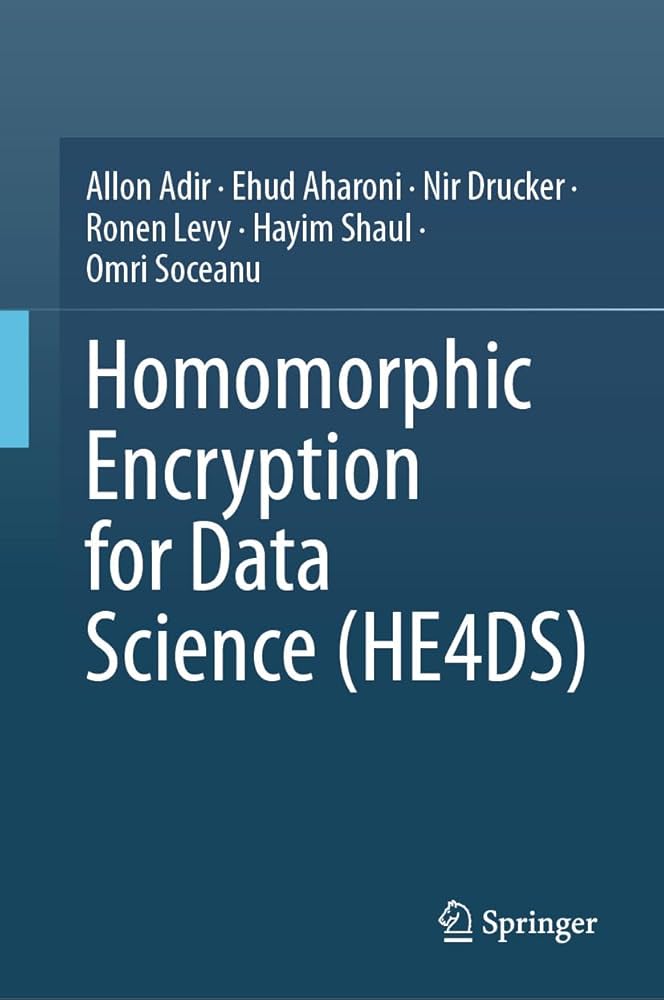
Mastering FHE requires understanding not just the API, but the underlying mathematical constraints and performance trade-offs. The following resources provide concrete examples and implementation patterns for developers looking to integrate these libraries into their projects.


As an Amazon Associate, we may earn from qualifying purchases.
Compare FHE Toolkits: Performance and Ease of Use
Choosing an FHE toolkit requires balancing raw computational power against developer productivity. While theoretical benchmarks matter, the real-world difference often lies in how quickly a developer can prototype and how much latency the final application can tolerate.
The following comparison highlights four leading FHE libraries. These tools range from high-level abstractions ideal for rapid prototyping to low-level engines built for maximum throughput in production environments.
| Toolkit | Primary Language | Performance Focus | Ease of Use | Best Use Case |
|---|---|---|---|---|
| TFHE-rs | Rust | Low Latency | Moderate | Real-time decisioning |
| OpenFHE | C++ | High Throughput | Hard | Complex cryptographic research |
| Microsoft SEAL | C++ | Balanced | Moderate | General-purpose encryption |
| Concrete | Rust | High Throughput | Easy | High-level application dev |
TFHE-rs prioritizes low-latency operations, making it the go-to choice for applications that need to evaluate boolean circuits quickly, such as privacy-preserving machine learning inference. Its Rust foundation ensures memory safety without sacrificing speed, though the learning curve is steeper than higher-level alternatives.
OpenFHE offers a comprehensive suite for researchers needing to test new cryptographic schemes. It is powerful but requires significant expertise to optimize, often resulting in higher latency for simple tasks. It is best suited for academic projects or specialized security audits where flexibility outweighs speed.
Microsoft SEAL remains a standard for general-purpose FHE. Its C++ core is robust and well-documented, offering a balanced approach to both encryption and decryption speeds. However, integrating it into modern web or mobile backends often requires writing complex bindings.
Concrete stands out for its ease of use. Built in Rust, it provides high-level APIs that abstract away much of the cryptographic complexity. This makes it ideal for developers who want to integrate encryption into existing applications without becoming encryption experts. Its throughput is competitive, bridging the gap between usability and performance.
Deploying FHE in Cloud and AI Workloads
The primary value of encryption lies in its ability to process data while it remains encrypted, solving the "data availability paradox" in cloud computing. Instead of pulling sensitive datasets out of storage for analysis, developers can now run computations directly on ciphertexts. This approach is particularly relevant for 2026, as FHE transitions from a theoretical cryptographic concept to a core privacy technology for AI and blockchain infrastructure [src-serp-3].
Privacy-Preserving Machine Learning
In machine learning, FHE enables secure inference on private datasets. A healthcare provider, for example, can send encrypted patient records to a cloud-based diagnostic model. The model processes the encrypted data and returns an encrypted result, which only the provider can decrypt. This ensures that the raw patient data never leaves the provider’s secure environment, maintaining compliance with strict regulations like HIPAA without sacrificing the utility of the AI model.
Secure Cloud Computing
For general cloud workloads, FHE allows third-party servers to perform operations on user data without ever seeing the plaintext. This is critical for financial services and legal tech, where data sovereignty is paramount. By integrating FHE toolkits into cloud-native applications, developers can offer a new tier of privacy that goes beyond traditional encryption-at-rest and encryption-in-transit, ensuring data remains protected even during active processing.
Frequently asked questions about FHE
Is FHE practical for production in 2026?
Yes. The 2026 landscape has shifted from theoretical benchmarks to deployable toolkits. With standardization efforts gaining traction at the March 2026 HomomorphicEncryption.org meeting in Seoul, developers now have clearer interoperability guidelines. While performance overhead remains higher than plaintext, specific toolkits are optimized for latency-sensitive workloads in AI and blockchain.
How does FHE impact application performance?
FHE introduces significant computational overhead compared to standard encryption. Operations on ciphertext are inherently slower. However, 2026 toolkits leverage hardware acceleration and optimized libraries to mitigate this. For most enterprise use cases, the privacy guarantee justifies the latency, especially when processing sensitive data in untrusted cloud environments.
Which FHE toolkit is best for beginners?
For developers new to privacy-preserving computation, start with toolkits that offer high-level abstractions and strong documentation. Look for libraries that support common programming languages like Python or Rust. The FHE.org 2026 conference in Taipei highlighted several beginner-friendly frameworks that simplify key generation and circuit design, reducing the initial learning curve.
Is FHE secure against quantum computing attacks?
FHE relies on lattice-based cryptography, which is considered post-quantum secure. Unlike RSA or ECC, lattice problems do not have efficient quantum algorithms to break them. This makes FHE a future-proof choice for long-term data privacy, ensuring that encrypted data remains safe even as quantum computing capabilities advance.
Can I use FHE with existing databases?
Most modern FHE toolkits are designed to integrate with existing data pipelines. They often provide connectors for SQL databases or support data formats like JSON. You can typically encrypt data at the application layer before it reaches the database, allowing you to perform queries on the encrypted data without exposing the plaintext to the database administrator.
No comments yet. Be the first to share your thoughts!