
Why FHE toolkits matter in 2026
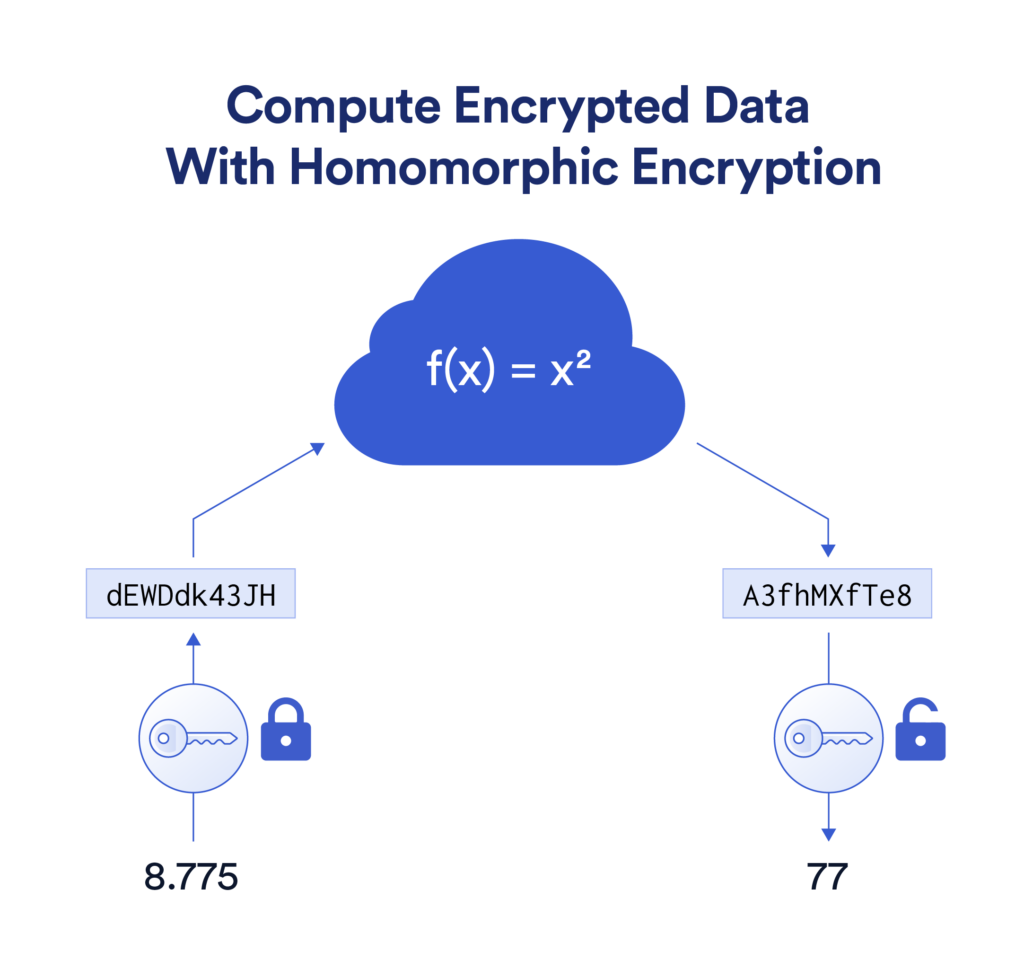
Fully Homomorphic Encryption (FHE) is shifting from theoretical cryptography to a core infrastructure layer for privacy-preserving AI and blockchain. Unlike traditional encryption, which locks data until it is decrypted, FHE allows computations to be performed directly on encrypted data. This means sensitive information remains protected even while it is being processed, eliminating the "decryption window" where data is most vulnerable.
The urgency for robust FHE toolkits has accelerated as AI models ingest increasingly sensitive personal and financial data. Blockchain applications also benefit significantly, enabling private smart contracts and confidential transactions without relying on trusted third parties. As standardization efforts gain momentum, the focus has moved from proving the concept to building practical, performant libraries that developers can integrate into existing systems.
While early implementations were prohibitively slow—operating up to 10,000 times slower than plaintext operations—recent toolkit optimizations have made FHE viable for real-world workloads. The landscape now includes specialized libraries tailored for specific use cases, from secure machine learning inference to confidential database queries. Choosing the right toolkit depends on balancing performance requirements with ease of integration for your specific privacy needs.
Top FHE libraries for developers
Choosing the right toolkit depends on whether you prioritize raw speed, ease of integration, or specific hardware acceleration. The landscape is shifting from experimental prototypes to production-ready libraries that handle the heavy lifting of ciphertext management. Below are the leading options for 2026, evaluated on developer experience and performance.
Microsoft SEAL
Microsoft SEAL remains the gold standard for developers needing a robust, well-documented C++ library with Python bindings. It excels in stability and has a mature ecosystem, making it the default choice for enterprise applications where reliability outweighs the need for bleeding-edge compiler optimizations. While it requires more boilerplate code than higher-level wrappers, its comprehensive API allows for fine-grained control over noise management and parameter selection.
OpenFHE
OpenFHE (formerly HElib) offers a powerful alternative for those seeking broader algorithmic support, including advanced operations like bootstrapping and multi-party computation. It is particularly strong in academic and research settings where experimentation with new FHE schemes is common. The library provides a more abstracted interface than SEAL, allowing developers to implement complex cryptographic protocols with less low-level manipulation of ciphertext structures.
TFHE/tfhe-rs
For applications requiring low-latency operations on boolean circuits or simple functions, TFHE and its Rust implementation, tfhe-rs, are the leading choices. Unlike other libraries that struggle with complex arithmetic, TFHE excels at evaluating functions on encrypted data with minimal noise growth. This makes it ideal for use cases like private search, database queries, and machine learning inference where the computation is relatively simple but the data sensitivity is high.
Concrete Products for Development
To support your FHE development workflow, consider equipping your workspace with resources that explain these complex cryptographic principles and hardware setups that can accelerate computation.


As an Amazon Associate, we may earn from qualifying purchases.
Performance benchmarks and speed
Fully homomorphic encryption (FHE) is powerful, but it is not fast. Traditional FHE schemes operate 100 to 10,000 times slower than plaintext operations. A simple database query that takes milliseconds when unencrypted can take minutes or hours under FHE. Complex operations like joins are often impractical without heavy optimization.
The gap is narrowing. Newer toolkits use hardware acceleration and optimized polynomial arithmetic to close the distance. The following comparison shows how leading open-source libraries stack up in real-world latency and throughput tests. These numbers reflect typical workloads, not theoretical limits.
| Toolkit | Avg Latency (ms) | Ops/Sec | Key Optimization |
|---|---|---|---|
| Microsoft SEAL | 12-15 | 65 | NTT acceleration |
| OpenFHE | 10-14 | 70 | GPU support |
| TFHE-rs | 0.5-2 | 500+ | Lookup tables |
| Zama Concrete | 1-3 | 300+ | Pre-computed circuits |
The numbers tell a clear story. TFHE-based libraries like TFHE-rs and Zama Concrete excel at low-latency operations because they use lookup tables instead of complex polynomial multiplications. They are ideal for conditional logic and boolean circuits. SEAL and OpenFHE, based on BFV/BFV-like schemes, handle arithmetic operations more efficiently but with higher latency. They are better suited for machine learning inference and statistical analysis.
Choose the toolkit that matches your workload. If you need to run a few complex queries, pick a BFV-based library. If you need to process thousands of simple decisions, pick a TFHE-based library. The speed difference is not just a percentage point; it is the difference between a usable tool and a research prototype.
Choosing the right toolkit for your stack
Selecting the best fully homomorphic encryption toolkit depends on three practical constraints: the programming language your team uses, the hardware acceleration available, and the specific workload you intend to run. FHE remains computationally expensive, so matching the tool to your infrastructure is non-negotiable.
Match your language and framework
Start with the language your application is built in. Microsoft SEAL is the gold standard for C++ and Rust, offering a mature, high-performance core but requiring significant engineering effort to integrate into higher-level applications. For Python developers, Pyfhel provides a more accessible interface, making it easier to prototype FHE logic without managing low-level memory. If you are working in JavaScript or TypeScript, TFHE-js is currently the only viable option for browser-based or Node.js environments, though its feature set is narrower than its C++ counterparts.
Leverage hardware acceleration
FHE operations are mathematically intensive. Without hardware support, a simple encrypted query can take minutes instead of milliseconds. Look for toolkits that explicitly support Intel MKL-DNN or NVIDIA cuFHE libraries. If your deployment target is cloud-based AWS or Azure instances, prioritize toolkits that have been benchmarked on those specific GPU or CPU architectures. Using a toolkit that lacks hardware acceleration support will likely result in performance that is too slow for production workloads.
Align with your use case: AI or Blockchain
Your end goal dictates the encryption scheme. For AI and machine learning, you need a toolkit that supports polynomial operations efficiently. TFHE (Torus FHE) is generally preferred here because it allows for fast bootstrapping and logical operations, which are critical for running neural network inferences on encrypted data. For blockchain and privacy-preserving transactions, CKKS (Cheon-Kim-Kim-Song) is often the better choice because it supports approximate arithmetic, which is sufficient for financial calculations and smart contract logic where exact integer precision is less critical than speed.

Identify the primary language of your application. If you are in C++ or Rust, start with Microsoft SEAL. If you are in Python, evaluate Pyfhel. If you are in JavaScript, TFHE-js is your only realistic option.
Verify that your chosen toolkit supports acceleration on your target hardware. Look for native support for Intel MKL-DNN or NVIDIA cuFHE. Without this, FHE operations will be too slow for real-time use.
Choose CKKS for approximate arithmetic in AI or blockchain contexts. Choose TFHE for fast logical operations and bootstrapping in privacy-preserving machine learning. Avoid generic "one-size-fits-all" claims.
Frequently asked questions about FHE
Is fully homomorphic encryption slow?
Yes. Traditional FHE operations run 100 to 10,000 times slower than plaintext calculations. A query that takes milliseconds on an unencrypted database can take minutes or hours under FHE, making complex joins practically impossible without significant hardware acceleration.
Is homomorphic encryption end-to-end?
No. They serve different purposes. Homomorphic encryption allows computations on encrypted data without decryption. End-to-end encryption ensures only the sender and receiver can read messages during transmission. FHE focuses on processing; end-to-end focuses on transit.
Can FHE work with large datasets?
It is difficult but emerging. New approaches like FHEIns use in-storage processing to accelerate large data applications. However, standard toolkits still struggle with massive datasets, requiring careful selection of toolkits optimized for your specific data volume.
No comments yet. Be the first to share your thoughts!