
Get fully homomorphic encryption 2026 right
Before you deploy fully homomorphic encryption (FHE) in production, you need to verify that your infrastructure can handle the computational weight. FHE is not a drop-in replacement for standard encryption; it is a heavy lift that requires specific hardware and software alignments. Skipping these prerequisites will result in latency that makes your application unusable.
First, assess your compute resources. FHE operations are significantly more expensive than plaintext or standard symmetric encryption. You will need GPUs or specialized accelerators to maintain acceptable response times. If you are running on standard CPU-only instances, your throughput will likely bottleneck before you reach a viable user experience.
Second, choose a library that matches your programming language and compliance needs. The ecosystem is still maturing, so pick a well-audited SDK like Concrete or TFHE-based libraries that offer production-ready bindings. Ensure the library supports the specific primitives your application requires, such as polynomial multiplication or bootstrapping, without forcing you to rewrite your core logic.
Finally, map your data flow. Identify which parts of your pipeline truly need privacy-preserving computation. Not every query requires FHE. By limiting FHE to sensitive, high-value operations, you reduce the overall computational load and simplify the deployment architecture.
Walk through the steps
Deploying FHE in production requires shifting from theoretical benchmarks to operational reality. The gap between academic proofs and live traffic is where most projects stall. You need to manage noise, select the right primitives, and monitor latency.
Follow this sequence to move from environment setup to a verified, low-latency deployment.
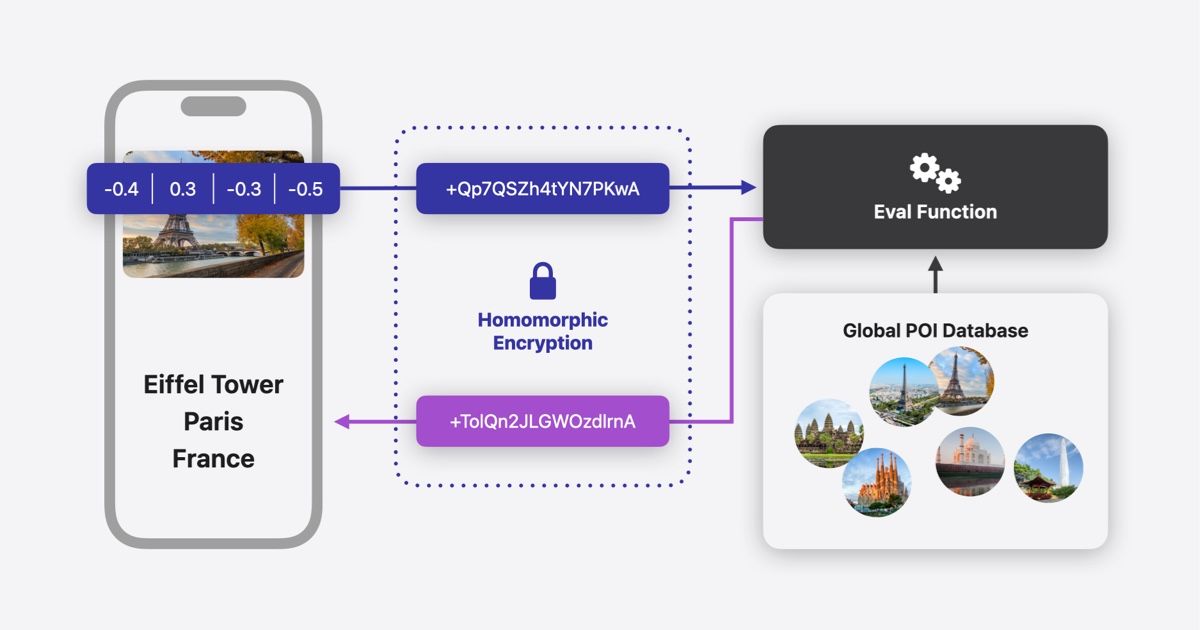
Install the FHE runtime library and its dependencies. Most production stacks rely on specific C++ or Rust bindings for performance. Ensure your system has enough RAM for ciphertext expansion, which can grow 100x to 1000x larger than plaintext.
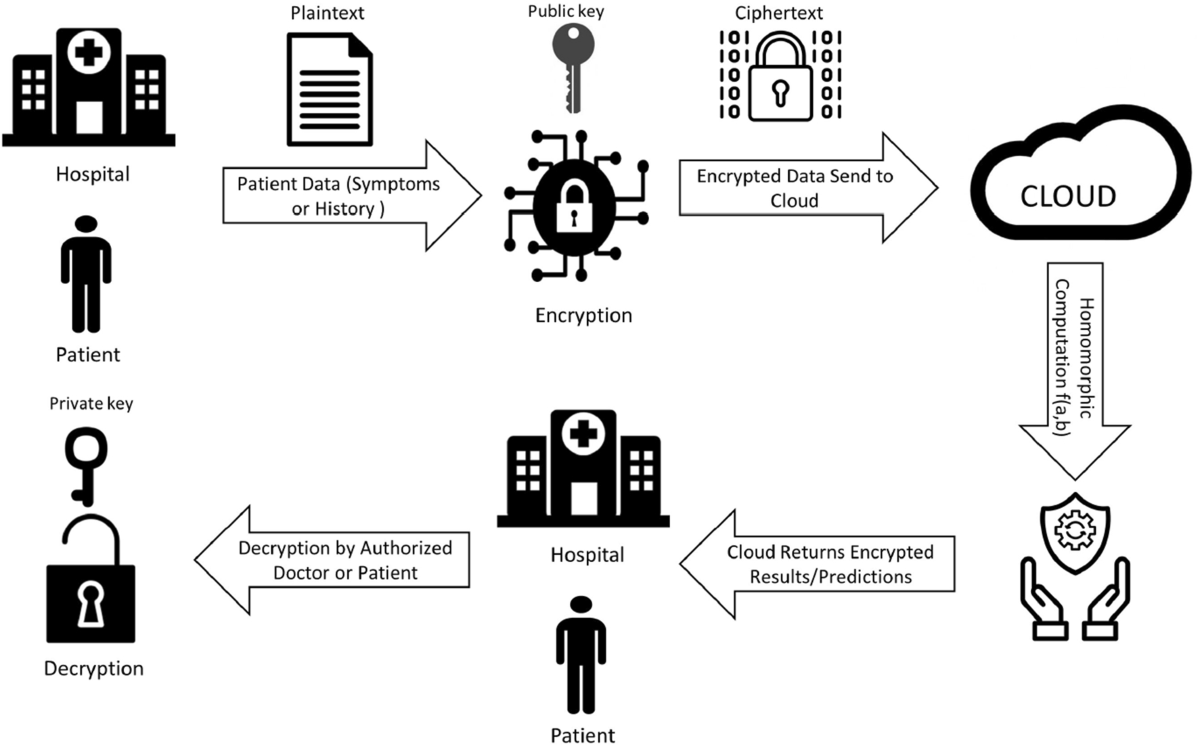
Choose your security level and polynomial modulus degree. Higher security requires larger parameters, which increases computation time. Start with the lowest security level that meets your compliance needs to minimize latency overhead.
Run a simple homomorphic addition or multiplication test. Record the time it takes to encrypt, compute, and decrypt. This baseline helps you detect performance regressions as you add complexity to your workload.
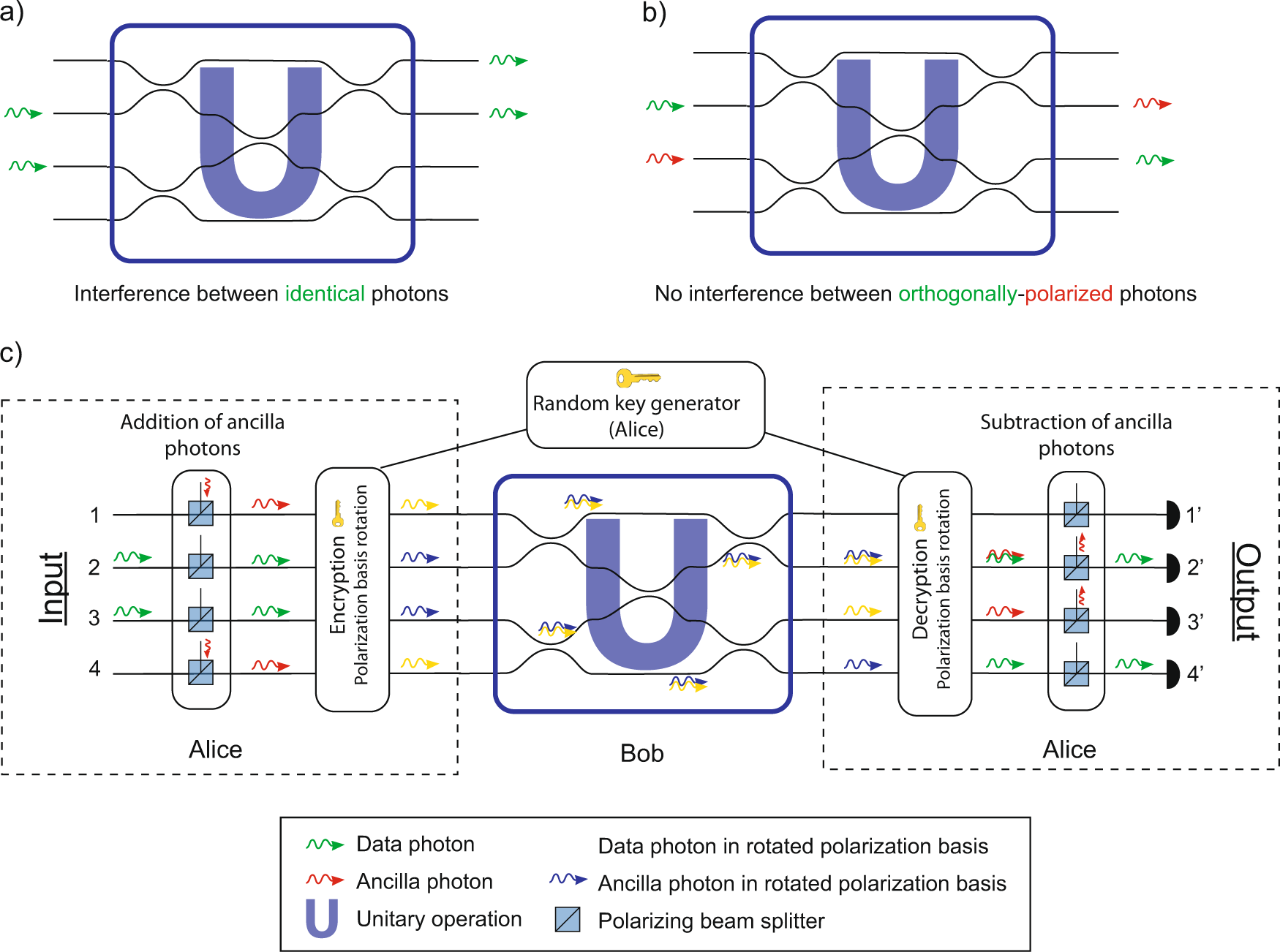
Break complex operations into smaller, FHE-friendly primitives. Avoid large loops or unbounded iterations. Use bootstrapping sparingly, as it is the most expensive operation in the pipeline.
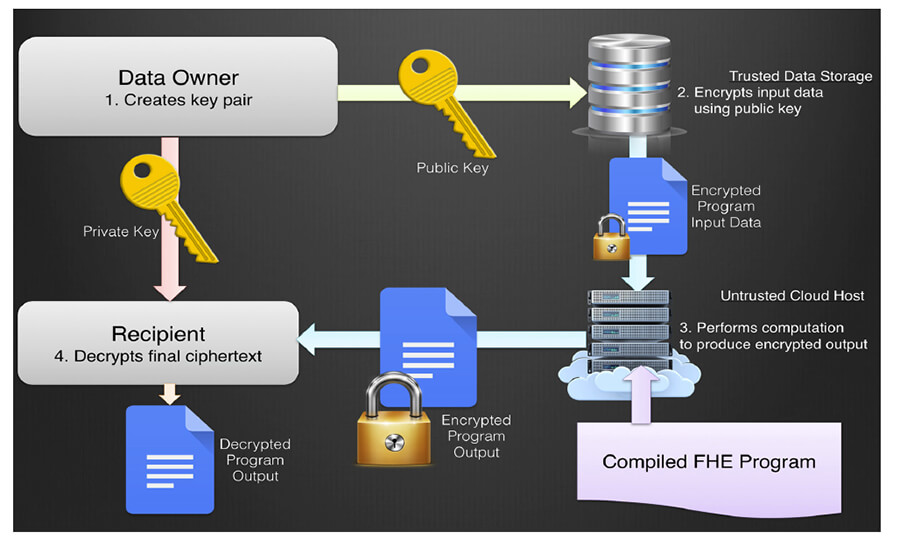
Test with real-world data distributions, not just random noise. Check for edge cases like zero values or large integers. Ensure the output matches the plaintext result within acceptable tolerance.
Before going live, run through this final checklist to ensure stability.
-
Verify parameter set matches security requirements
-
Confirm latency meets SLA thresholds
-
Test error handling for decryption failures
-
Document the bootstrapping strategy
Common mistakes that break production FHE
Deploying FHE is not just about choosing a library; it is about understanding how the math interacts with your infrastructure. Many teams treat FHE as a drop-in replacement for plaintext operations, which leads to performance cliffs and silent correctness errors. The following sections outline the most frequent pitfalls and how to avoid them.
Ignoring bootstrapping costs
The most common mistake is underestimating the cost of bootstrapping. In FHE, operations introduce noise. When that noise exceeds a threshold, you must run a bootstrapping procedure to refresh the ciphertext. This process is computationally expensive and can slow down your application by orders of magnitude.
Do not assume your workload is bootstrapping-free. Profile your circuit depth carefully. If your logic requires many sequential operations, you must account for the latency of each bootstrap event. Consider using noise-free schemes like TFHE for low-latency gate operations if your use case allows.
Treating ciphertext like plaintext arrays
Developers often try to map plaintext data structures directly to ciphertext containers. This approach fails because FHE schemes do not support random access or efficient iteration. You cannot loop over a ciphertext array in the standard way.
Instead, design your algorithms around parallelizable operations or specialized homomorphic primitives. Use lookup tables (LUTs) for non-linear functions, but be aware that table size grows exponentially with input bits. Keep your data structures flat and predictable to minimize the overhead of homomorphic evaluation.
Skipping correctness verification
In plaintext code, a bug might cause a wrong result. In FHE, a bug can cause the entire computation to fail or produce garbage that looks plausible. Many teams skip rigorous testing because they assume the math is "secure," but security does not equal correctness.
Always implement a verification layer. Run your FHE circuit on small, known plaintext inputs and compare the decrypted output against the expected result. Use unit tests for individual homomorphic gates and integration tests for the full workflow. Never deploy to production without this validation step.
Fully homomorphic encryption 2026: what to check next
Before moving FHE into production, teams often hit the same practical roadblocks. Here are the most common questions about latency, costs, and deployment strategies in the current landscape.
No comments yet. Be the first to share your thoughts!