
In the evolving landscape of Layer 2 blockchains, achieving Paradex-style privacy without relying on trusted councils demands a shift toward fully homomorphic encryption (FHE). Paradex’s recent upgrade to encrypted state diffs, posted as blobs on Ethereum L1 with ZK verification, marks a milestone in FHE L2 privacy. Yet, this hybrid model still gates full access behind a Privacy Council of three entities: Paradex Foundation, Paradex, and Karnot. Users gain an escape hatch for emergencies, but independent verifiability remains elusive. FHE toolkits from FHEToolkit. com offer a path to encrypted state diffs blockchain operations that compute directly on ciphertexts, eliminating decryption risks entirely.

Paradex’s architecture encrypts L1 state diffs using hybrid techniques: random symmetric keys per update, asymmetrically encrypted for council members on the Stark curve. ZK proofs enforce correctness without revealing plaintext. This prevents observers from reconstructing balances or positions over time, a leap from pre-v0.14.1 eras when chain state was analyzable. On L2, private data access now requires authenticated RPCs, blocking casual snooping.
Paradex Privacy Mechanics Under the Hood
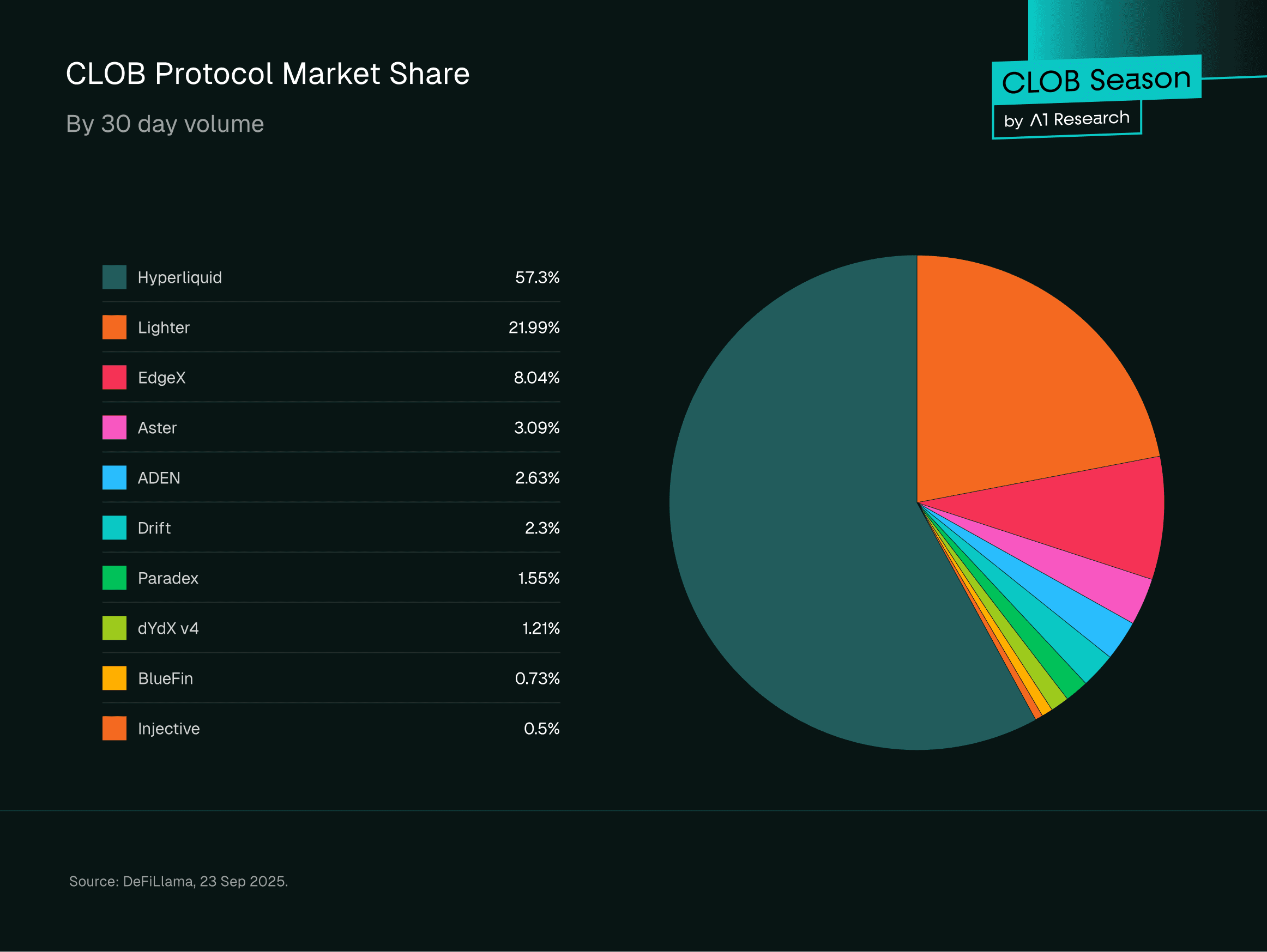
Diving into specifics, Paradex posts these encrypted diffs regularly within its zkrollup framework. The council holds decryption keys solely for contingencies, like platform downtime, ensuring users can recover funds. This setup contrasts sharply with transparent L2s where every trade etches public history. Paradex positions itself as the sole perp DEX delivering scalable privacy via encrypted positions, outpacing rivals in institutional-grade trading.
Paradex leads on Privacy: remains the only perp DEX offering comprehensive privacy at scale through encrypted positions. (Paradex on X)

However, this model’s reliance on a quorum introduces centralization vectors. A compromised council or quorum failure could expose data, albeit with user safeguards. Enter FHE, where computations on encrypted data yield encrypted results, verifiable publicly sans keys. FHEToolkit. com equips developers with libraries for just this: tamper-proof, private onchain compute.
Why FHE Outshines Paradex for Private L2 Compute
FHE sidesteps ZK’s proof generation overhead and council dependencies, enabling Paradex FHE alternative protocols. In Paradex, ZK wraps correctness around encrypted diffs; FHE bakes privacy into the computation fabric. Consider Dero’s FHE paradigm: the sole chain where breaking encryption is the only attack vector, unassailable by chain analysis. Paradex approximates this but falls short on full decentralization.
FHEToolkit. com’s toolkits optimize for L2s, supporting homomorphic operations on encrypted states without decryption. Developers build dApps performing private perps, lending, or derivatives directly on ciphertexts. This aligns with Fhenix’s privacy taxonomy: advancing beyond TEEs or MPC quorums to global, programmable confidentiality on Ethereum.
Picture an L2 rollup where state transitions encrypt deltas homomorphically. Sequencers compute aggregated positions on ciphertexts, post FHE-verified diffs to L1. No council needed; anyone verifies computations match via homomorphic properties. FHEToolkit. com provides SDKs with tutorials for this exact workflow, targeting Web3 privacy innovators. Paradex’s blob-posted diffs inspire, but FHE elevates to private L2 compute toolkits. Users submit encrypted orders; the chain homomorphically matches and updates without plaintext exposure. ZK can still attest final states, but core logic stays obscured. This hybrid FHE-ZK future scales Paradex privacy sans trust assumptions. Recent Paradex enhancements, per docs, underscore hybrid encryption’s role: symmetric keys randomized per diff, council-encrypted asymmetrically. FHE generalizes this, distributing computation power across nodes without key silos. Secret Network’s DeCC hints at encrypted blockchains; FHE realizes it programmably. For developers eyeing Paradex-like perps with superior privacy, FHEToolkit. com delivers. Encrypted trades, positions, and PnL compute onchain, verifiable yet confidential. As L2s proliferate, FHE bridges the gap from selective encryption to universal privacy.Implementing Encrypted State Diffs with FHE Toolkits
About the Author